




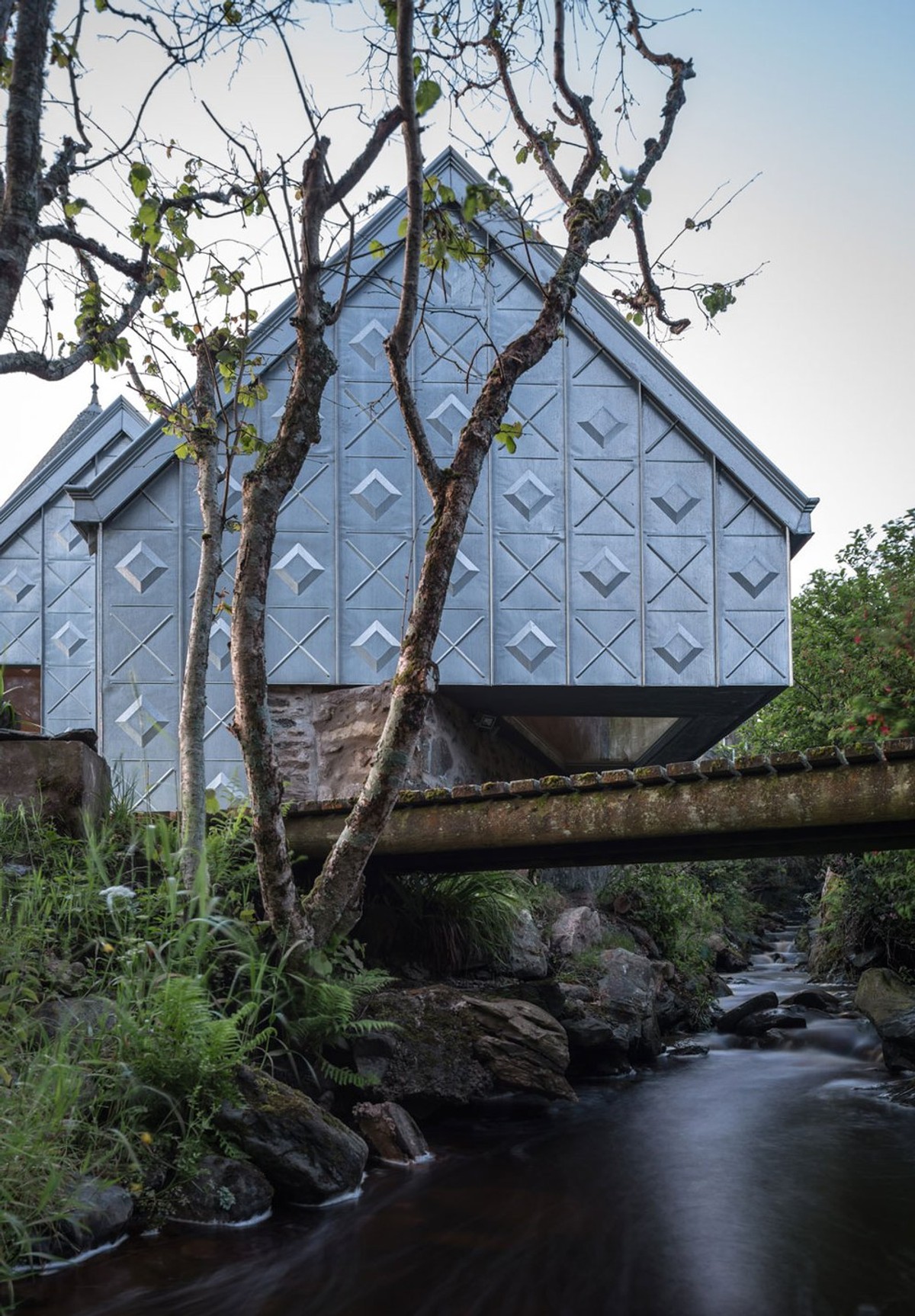
Ill. 1. Studio Weave, Midden studio, 2015. Photo: Studio Weave
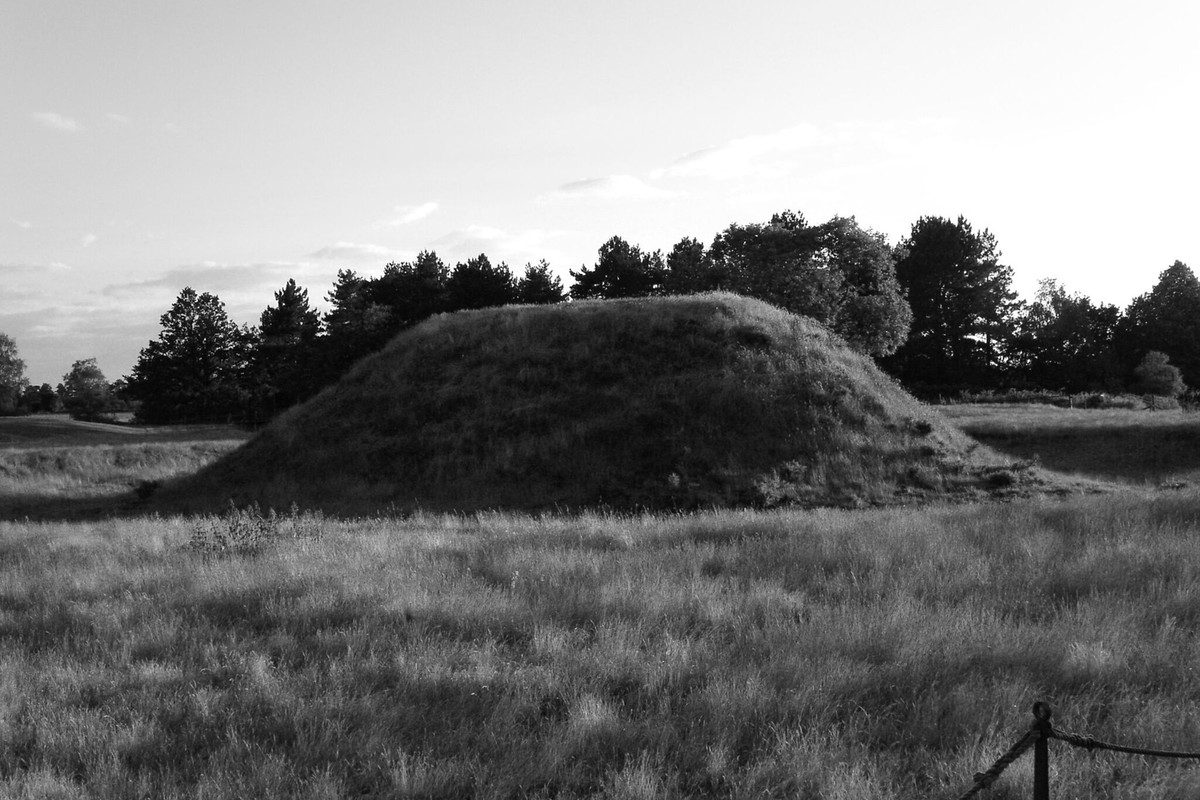
Ill. 2. Burial mound, Sutton Hoo, Suffolk. Photo: wikimedia commons
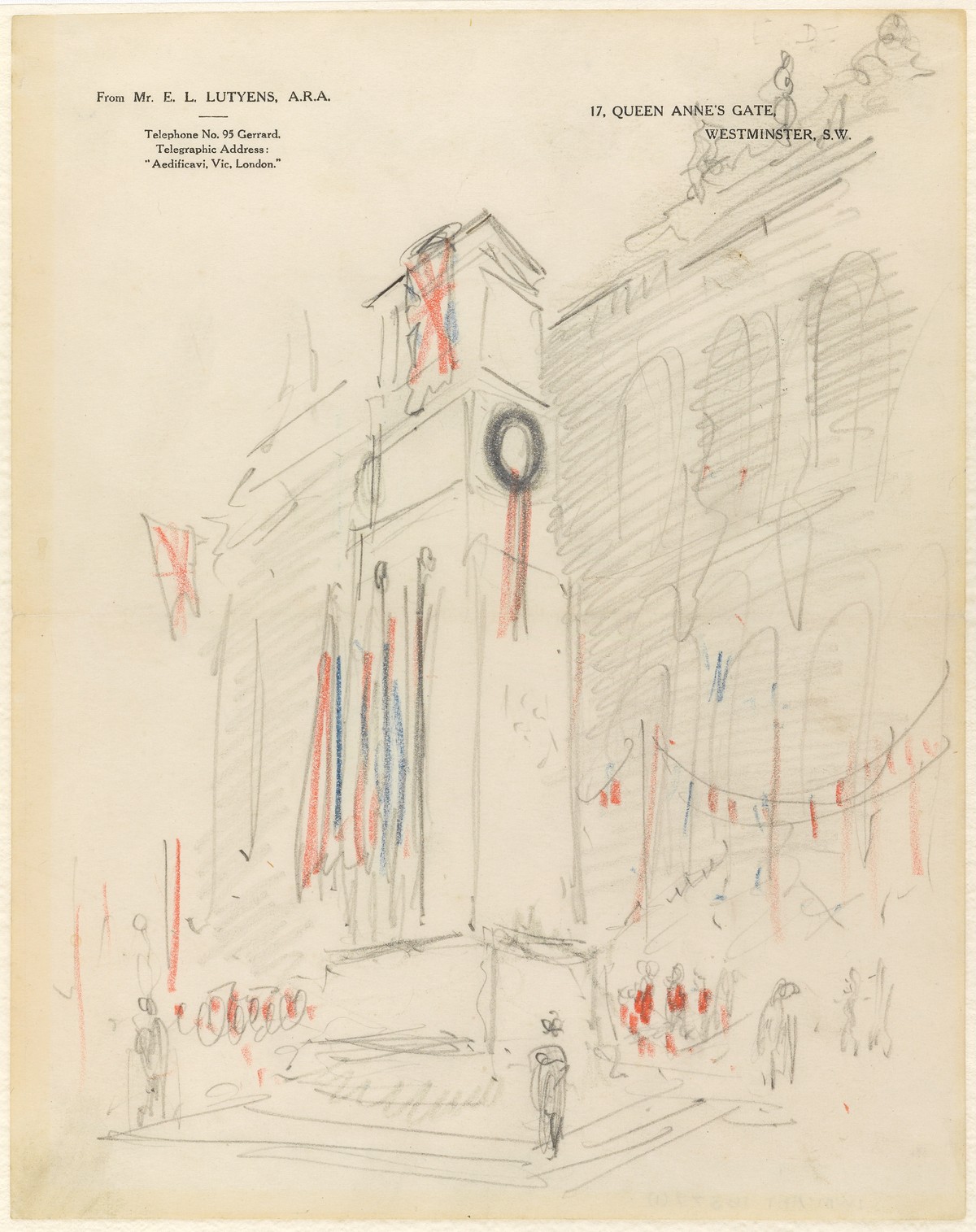
Ill. 3. Edwin Lutyens, The temporary cenotaph, 1919. Drawing: Imperial War Museums
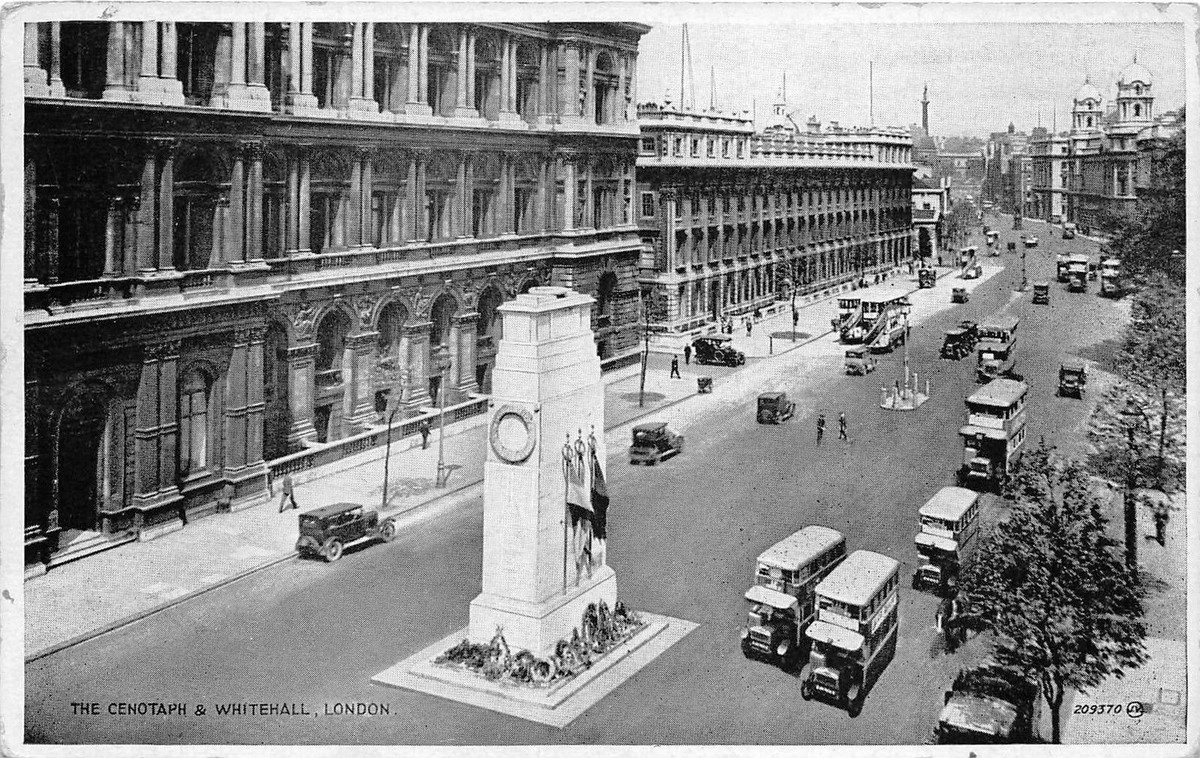
Ill. 4. Edwin Lutyens, Cenotaph, London, 1920. © Valentine’s “Bromotone” Postcards.
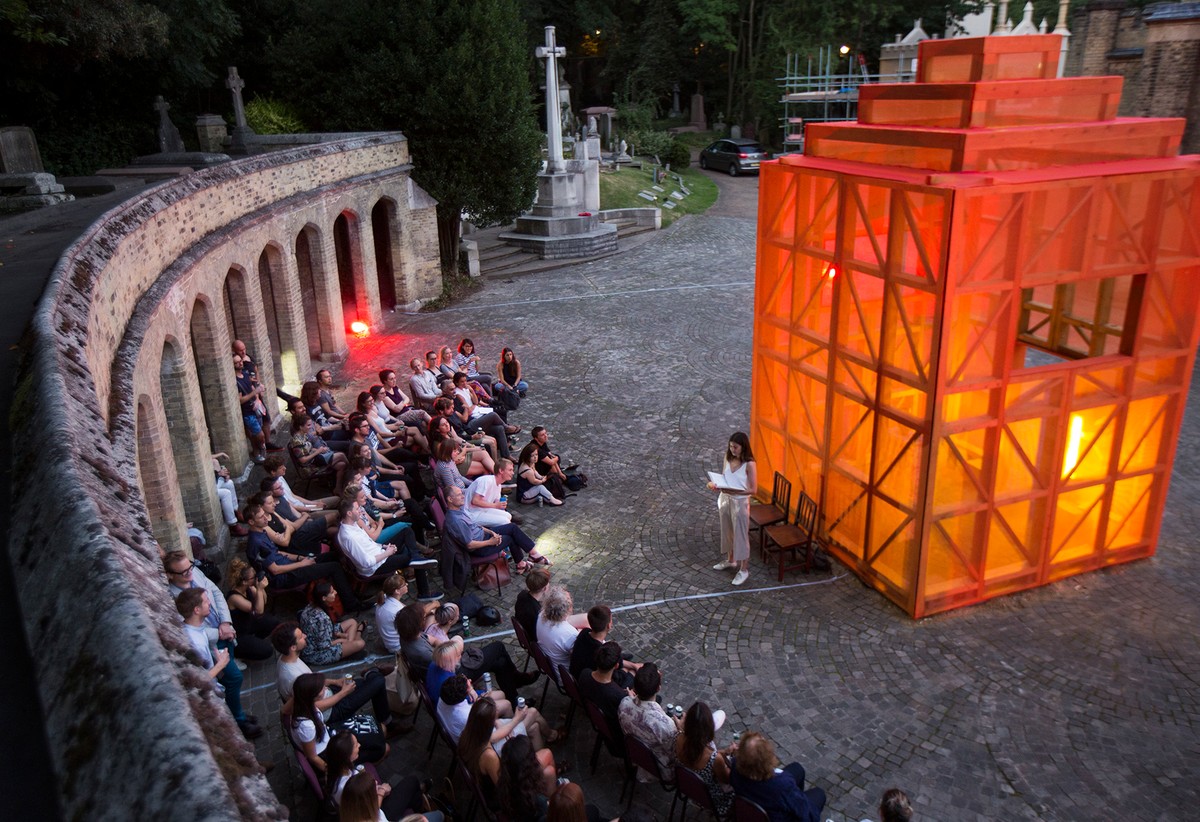
Ill. 5. Sam Jacob Studio, A Very Small Part Of Architecture, 2016. Photo: Sam Jacob Studio
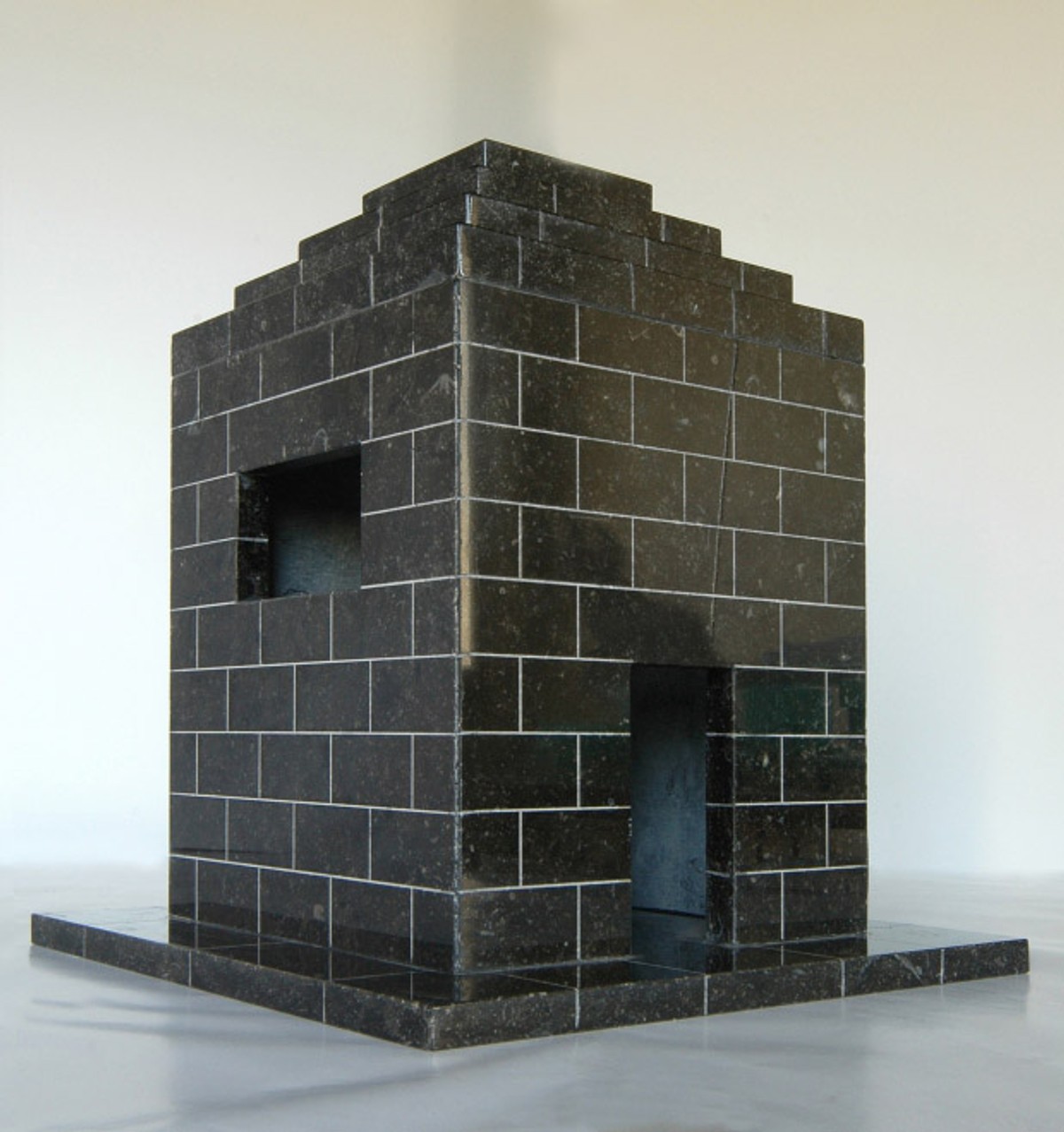
Ill. 6. Adolf Loos, Mausoleum for Max Dwořák, 1921. Photo: The Albertina Museum, Vienna.
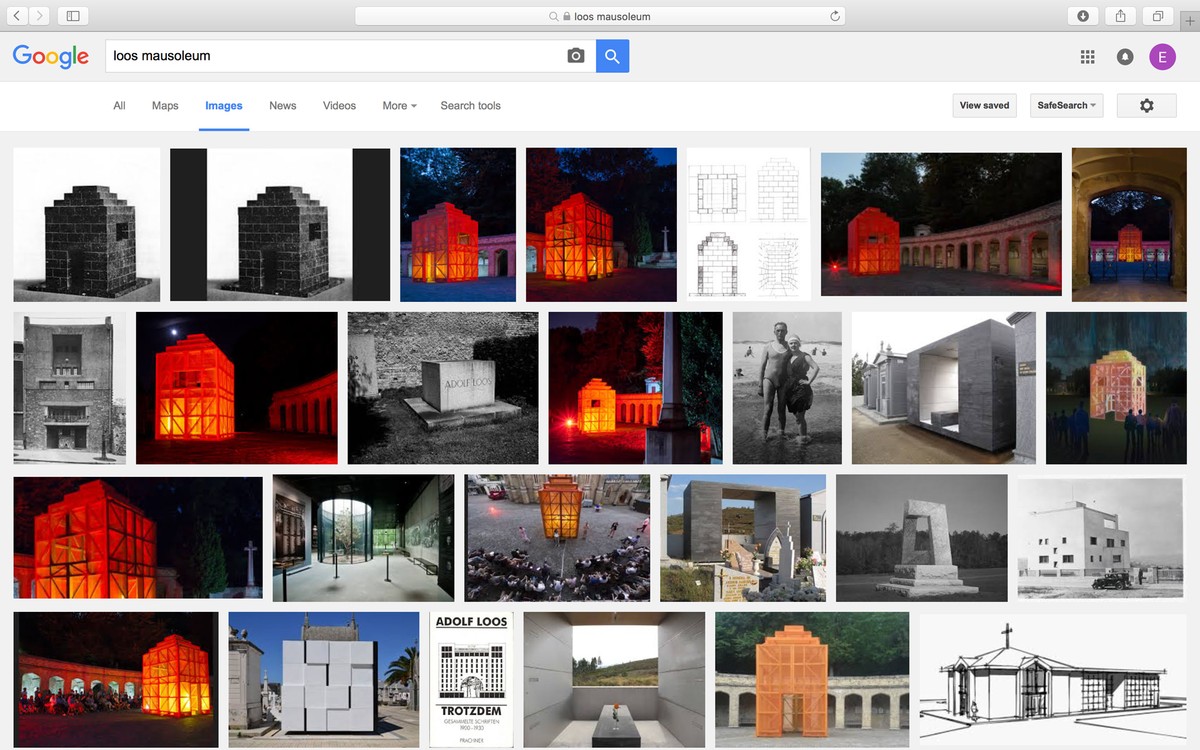
Ill. 7. Screenshot of Google search for ‘Loos mausoleum’.
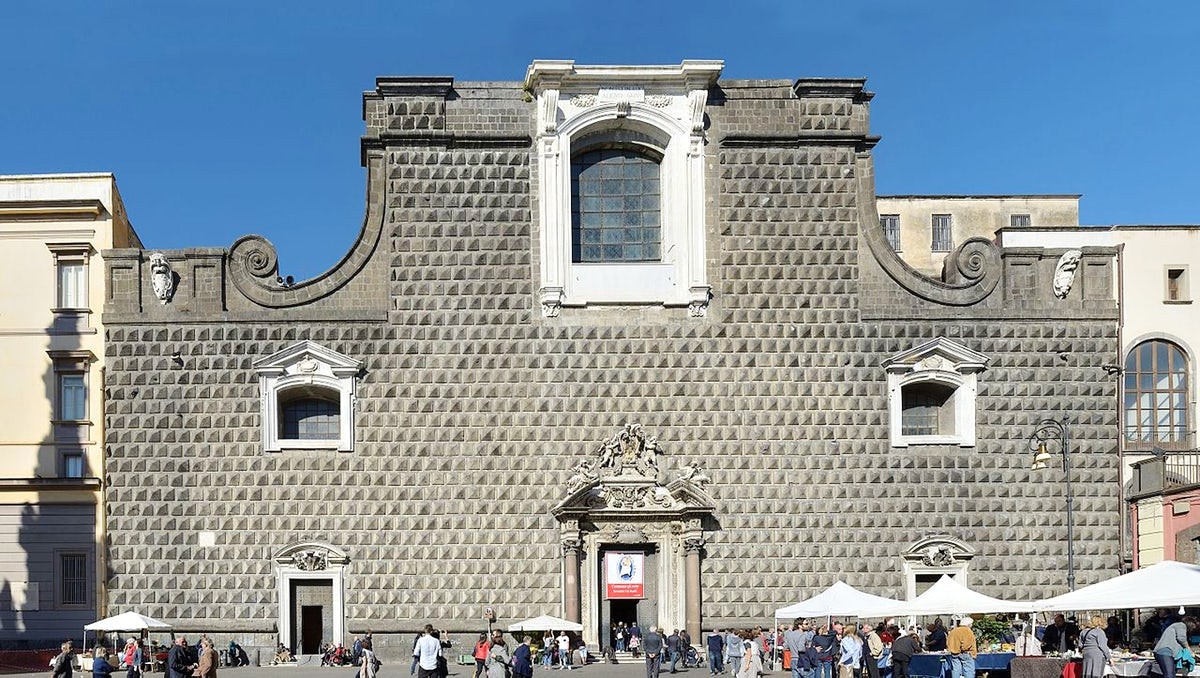
Ill. 8. Gesù Nuovo, Naples. Photo: wikimedia commons
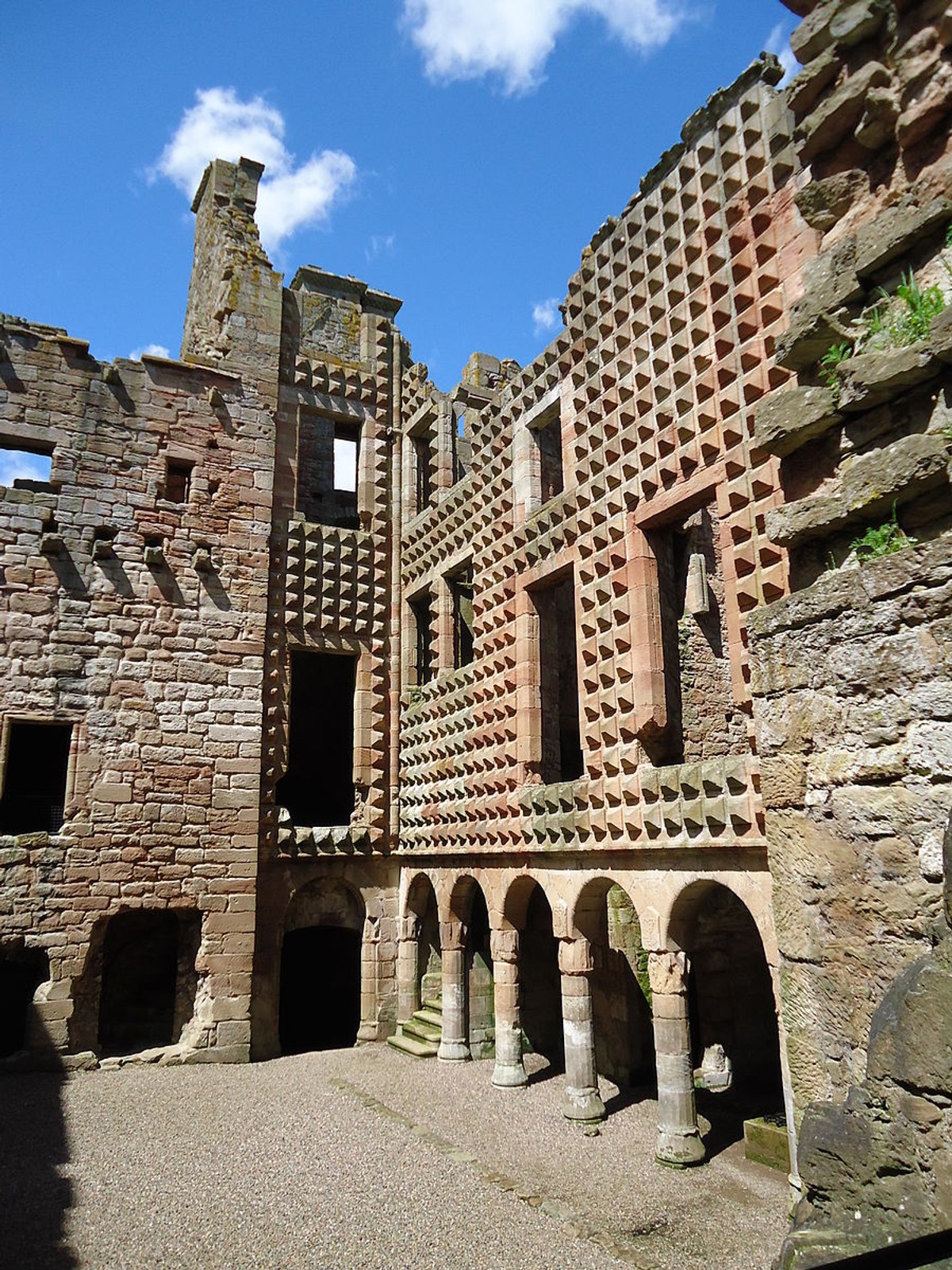
Ill. 9. Chrichton Castle, Chrichton. Photo: wikimedia commons
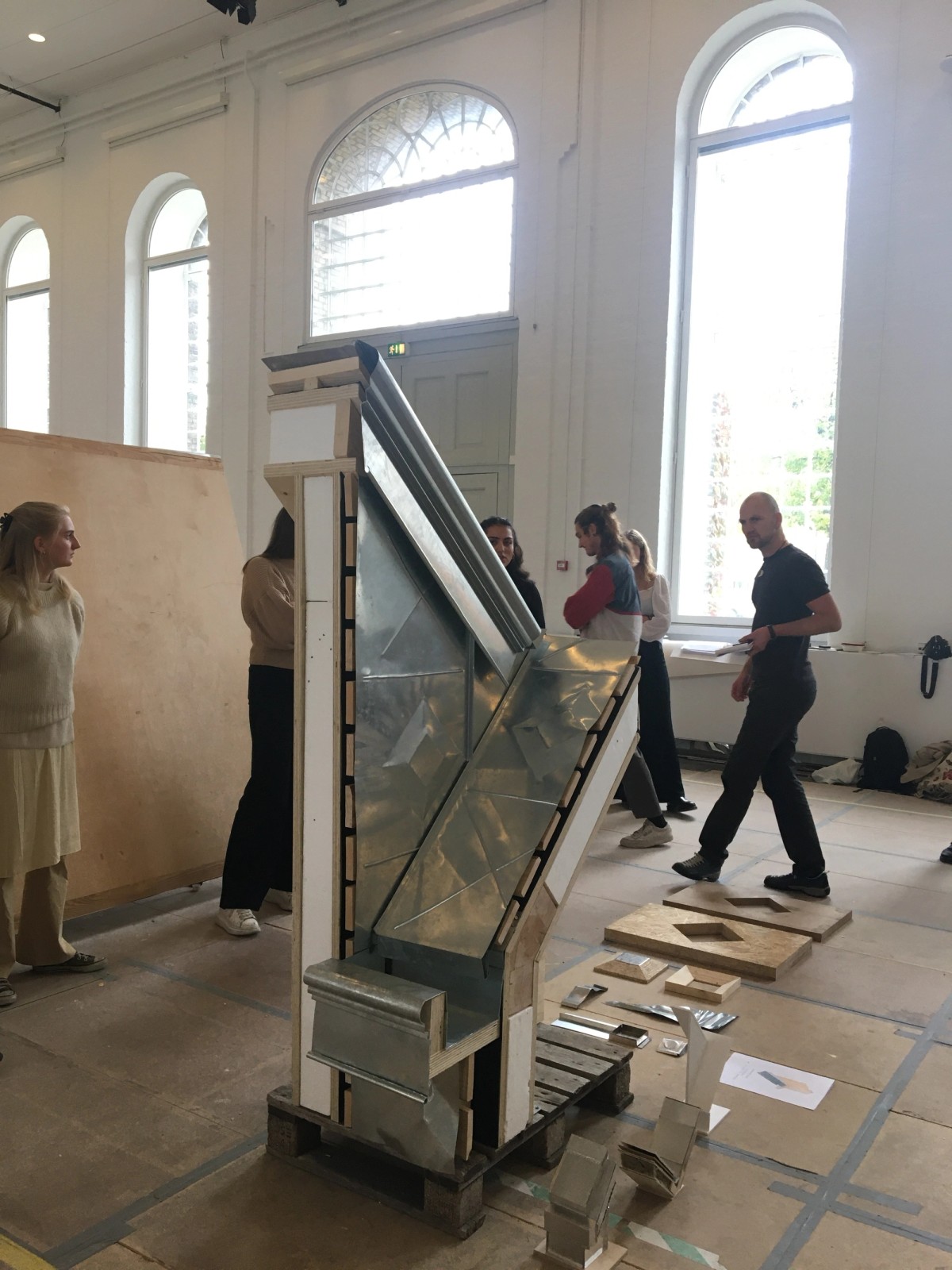
Ill. 10. Full scale model of joint in Midden Studio by students at The Royal Danish Academy. Photo: Morten Birk
While the past forms the present, the present also re-forms the past.
Our memories are reformed through retelling events and stringing them together into histories. Analysis is a type of retelling. It is a process of writing, re-writing and over-writing the past, until we have formed a more or less fixed memory. Psychoanalysis is a version of this process, in which the subject is asked to re-tell stories from their past. Each re-telling sheds new light on the subject, and brings new facets into focus.
The Bass Pro Shops Pyramid in Memphis, Tennessee, is a retelling of the Great Pyramid at Giza. The retelling makes us understand what a pyramid can be (the elemental shape, pushing against the sky), and it also unlocks new comprehension of the original (a shiny thing sitting by the river, no detail, just massing). It makes the original artefact seem somehow less definitive but also gives it new importance, through being copied.
This process of reproducing architectural artefacts (such as a pointed arch, or a pitch roof) is a process of remembering. In order to recall building elements, we analyse architecture from the past. In doing so, we come to understand the drives that shaped that architecture. Those drives, and the decisions which follow from them, were channelled through an architect or a client or may even have stemmed from a wider cultural norm. Copying building elements is a way of understanding ourselves as a group: by intimate examination of others’ decisions we can glimpse their psyches – and hence our own. Imagining the process of architecture as analysis is a way of understanding ourselves, not as individuals but as something bigger – what we could call society.
The process of psychoanalysis is to some extent backed up by neuroscience. We can measure how neurons are reinforced by repeat action. So repeated recall makes memory stronger. Each time we analyse, we alter, but we also reinforce. So in this speculative analogy, of architecture as analysis, each time we reproduce an architectural form, we are both reinforcing an idea of ourselves and doing an instant demolish and rebuild.
Much architectural history looks at lineages and typology as a way to understand why architecture looks the way it does. This essay is not about lineages or typology. It is about the how lineage gets made. Analysis is a key stage in the reproduction of architecture. As such, understanding key concepts of analysis changes the way we understand how architectural reproduction works.
In this text, four psychoanalytical concepts will be explored analogously with processes in the architecture discipline: cathexis and catharsis; death drive, or Thanatos (a term popularised by Paul Federn, expanded by Lacan); Eros drive and Jungian collective unconscious.
For Freud, Thanatos is explained by the fact that deep in the human psyche is a vestige of our original state – chaotic material yet to become coherent life. This unconscious memory manifests itself, Freud speculated, as a “death drive, the task of which is to lead organic life back into the inanimate state.” We can, more simply, understand this as self-destructiveness. There is a whole history of architecture to be written solely about the buildings we have destroyed. But we can also see the death drive in the architecture of death – the desire to return to an inanimate, perfect state.
Eros, the erotic drive, is such a central plank of psychoanalytical theory that it has filtered through to mainstream understanding. It is easy to think this is why a lot of people are interested in psychoanalysis at all – it gives them a legitimate reason to talk about sex in public. In discussing the erotic drive, we might understand architecture as immortality. Architecture has a unique ability to outlive its creators.
Cathexis is the process of investment of mental or emotional energy in a person, object, or idea. It is related to the idea of catharsis – expressing and therefore processing emotions. An extreme argument is that all architecture is cathexis, because without cathexis we would only have buildings, without any meaning. The analysis itself can lead to cathexis – by paying close attention to an object, you lend it value.
Jung’s concept of the collective unconscious refers to the idea that at the core of the unconscious mind there are shared elements common to all humans that are not shaped by individual experience. In this text, I argue that it might act in both directions – it is both a generator of architectural language and also the ultimate repository of architectural forms.
Can we propose new architecture via this conception of analysis? If the aim of psychoanalysis is to release repressed emotions and experiences, and make the unconscious conscious, then the aim of using an analogous process with architecture might enable us to better understand the architectural unconscious, and perhaps allow us to finally move on from having to constantly replay the past. Ironically, one aim of psychoanalysis is to end psychoanalysis.
CASE STUDIES
There is a long, tired argument in architectural discourse about origins: What was the first building? Adolf Loos had an original take: “If we were to come across a mound in the woods, six-foot-long by three-foot-wide, with the soil piled up in a pyramid, a sombre mood would come over us and a voice inside us would say, ‘There is someone buried here.’ That is architecture.”
Is the first architectural act an attempt at cathexis? Conversely, is the pleasure we take from observing tombs a manifestation of Thanatos? Staring at perfect stillness. Feelings of grief fundamentally tie into one’s own sense of mortality – and they are not always negative feelings.
Freud writes in the essay On Transience, 1915: “Transience value is scarcity value in time.”“We possess, as it seems, a certain amount of capacity for love – what we call libido – which in the earliest stages of development is directed towards our own ego. Later, though still at a very early time, this libido is diverted from the ego on to objects, which are thus in a sense taken into our ego.”
Here Freud is linking the concepts of ‘the object’ and love. In a sense, he is explaining how we learn to love. Freud then goes on to point out the problem: “If the objects are destroyed, or if they are lost to us, our capacity for love (our libido) is once more liberated; and it can then either take other objects instead or can temporarily return to the ego.” You could say, then, that monuments are a solution to this problem – they are a form of transitional object which helps the libido move from one object to another. “But why it is that this detachment of libido from its objects should be such a painful process is a mystery to us and we have not hitherto been able to frame any hypothesis to account for it. We only see that libido clings to its objects and will not renounce those that are lost even when a substitute lies ready to hand. Such then is mourning.”
The Cenotaph is at the centre of official London – the focus of official mourning in the United Kingdom, by representing all the dead. By being empty, it serves as a vessel for mourning, or cathexis. At the same time, it is a cathartic tool, focusing the mind and aiding emotional outpouring.
Edwin Lutyens, the Cenotaph’s architect, chose a Greek form – ecumenical and not Christian. In a sense, he was reaching back past the divisions of the Christian world, to a more universal (if problematically European) form. It was an attempt to draw from the collective unconscious, and therefore communicate to everyone at a profound level. And once the memorial was built, this also worked in the opposite direction. The new (old) form becomes associated with the loss, and over time it became part of our collective unconscious. It also becomes associated with the nation-building project: A site of shared memory. Carved in white perfect, unchanging Portland Stone – it represents what the mortal body is not.
‘Their name liveth forever more’ is engraved on the monument. It is profoundly pathetic, vulnerable and hopeful at the same time: An attempt to respond to Thanatos.
In his 1938 essay provocatively titled The Death of the Monument, Lewis Mumford, a radical critic and philosopher heavily influenced by Freud, wrote: “The notion of a modern monument is a contradiction in terms; if it is a monument, it is not modern, and if it is modern, it cannot be a monument.” Because of the forward-looking sensibility of modernism (a culture born with scars from World War I), the typology of monument was problematic. Obviously, there were plenty of attempts, some pretty successful like the unprecedented Vietnam War Memorial in Washington D.C. The question now is how can we produce a monument after Modernism?
To answer this question, we might frame a parallel question: Where does architecture take place? Is it in the building, is it somewhere between the person and the building, is it in the memory? Is it only ever mediated through representation? Sourced from the collective unconscious? Mumford perhaps thought that modernism could not be anchored to the past by heavy masonry, but by thinking about where the architecture takes place perhaps we can site where the memorial can be, not in the bricks and mortar, but in cathexis.
In the piece A Very Small Part of Architecture, Sam Jacob Studio attempted to create an X-ray of a monument. A monument about the process of analysis, built within Highgate Cemetery, among the many memorials to the dead. A Very Small Part of Architecture is a building about buildings. A design which is the analysis.
It is adifferent kind of memorial. Not one dedicated to a person or to remember the past but instead to imagine possibilities and alternative futures – futures which are inevitably altered by analysing the past. It was a 1:1 copy of an unbuilt Loos original, a square chamber made of blocks of Swedish black granite with a ziggurat roof 20 foot high.
In 1910, Loos wrote, “Only a very small part of architecture belongs to art: the tomb and the monument. Everything else that fulfils a function is to be excluded from the domain of art.” Analysis and re-analysis is the story of the Loos tomb, the following is roughly what occurred between 1921 and 2019: The original design was lost. However, a model was made from the original drawings. The model was then photographed, and that photograph was digitized and uploaded onto the internet. We re-analysed the image of the model and generated a new set of drawings. The construction drawings became the 1:1 scale model.
This is a good example of how the present reforms the past, or at least retelling stories shifts history. Now when you search for Loos Mausoleum, the reproduction dominates the results.
Midden Studio came from drawing and re-drawing historic buildings. Through close analysis, we were trying to draw out a quality of hardness. By digging into the repeated historical attempts to represent hardness, we hoped to uncover some archetypical hardness, drawn from the collective unconscious. It was the reproduction and analysis which created the architecture. Again, the analysis itself can lead to cathexis. No analysis, no architecture.
Midden Studio has now been subsumed back into the churn of architectural analysis, being dissected and rebuilt by a new set of architect-analysts.
Architecture thrives on analysis – constantly revisiting its own references, haunted by its own past. Ideas tumble down through time, each one being re-analysed and at every stage giving us a chance to better understand ourselves.
Ultimately, architecture is about us and our psyches. Being conscious of this would be a good thing. By better understanding the psychoanalytical potential within architectural analysis, we may gain a better understanding of the process of cultural reproduction.
Taking responsibility for the process of analysis might help architecture, as a discipline, design better for the psychological reality of the contemporary moment. Perhaps we can avoid the inevitable cyclical attempts at father killing which form so much of architectural culture. Corbusier rejecting the Beaux-Arts, Venturi rejecting Corbusier. Each generation has its oedipal moment rejecting the tropes of the previous generation, doing their best to eradicate the work of their fathers or teachers, literally or figuratively.
Architecture not only uses and embodies psychoanalytical processes ‒ in an important sense it is analysis. Understanding architecture as analysis might help us get what architecture really is: The most tangible expression of the most elusive thing, our own minds.
—
Eddie Blake visited the Royal Danish Academy for the international lecture series The Art of Analysis on September 26, 2019.
Sigmund Freud – "The Ego and the Id", in On Metapsychology (Middlesex, 1987), p. 380.
Adolf Loos “Architecture”(Vienna: Neue Freie Presse, 1910)
Sigmund Freud “On Transience”, trans. James Strachey, International Journal of Psychoanalysis no. 23 (1942): 84–85
Sigmund Freud “On Transience”, trans. James Strachey, International Journal of Psychoanalysis no. 23 (1942): 84–85
Sigmund Freud “On Transience”, trans. James Strachey, International Journal of Psychoanalysis no. 23 (1942): 84–85
Lewis Mumford, “The Death of the Monument,” in Circle: International Survey of Constructive Art (London: Faber and Faber, 1937), 263–270
Adolf Loos “Architektur”, Sturm, no. 42 (15 December 1910), reprinted (in English) in Yehuda Safran and Wilfried Wang, The Architecture of Adolf Loos (London: Arts Council of Great Britain, 1985), 104–109
Næste: Sustaining Curiosity
Ill. 1. Studio Weave, Midden studio, 2015. Photo: Studio Weave
Ill. 2. Burial mound, Sutton Hoo, Suffolk. Photo: wikimedia commons
Ill. 3. Edwin Lutyens, The temporary cenotaph, 1919. Drawing: Imperial War Museums
Ill. 4. Edwin Lutyens, Cenotaph, London, 1920. © Valentine’s “Bromotone” Postcards.
Ill. 5. Sam Jacob Studio, A Very Small Part Of Architecture, 2016. Photo: Sam Jacob Studio
Ill. 6. Adolf Loos, Mausoleum for Max Dwořák, 1921. Photo: The Albertina Museum, Vienna.
Ill. 7. Screenshot of Google search for ‘Loos mausoleum’.
Ill. 8. Gesù Nuovo, Naples. Photo: wikimedia commons
Ill. 9. Chrichton Castle, Chrichton. Photo: wikimedia commons
Ill. 10. Full scale model of joint in Midden Studio by students at The Royal Danish Academy. Photo: Morten Birk