




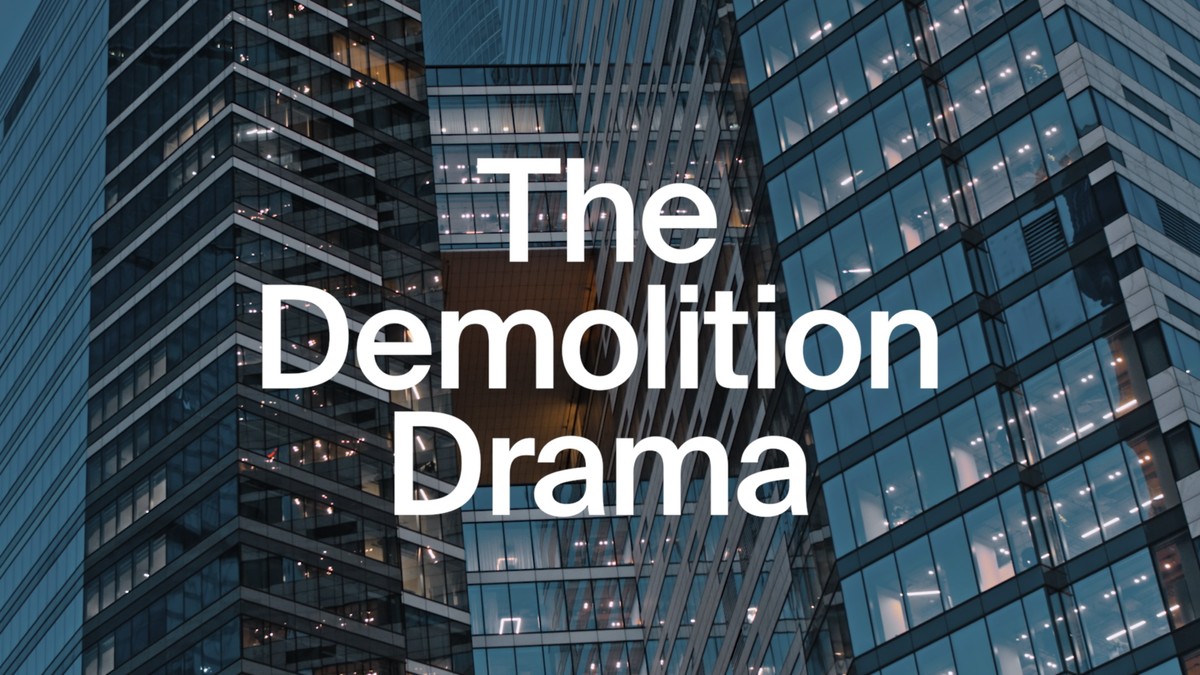
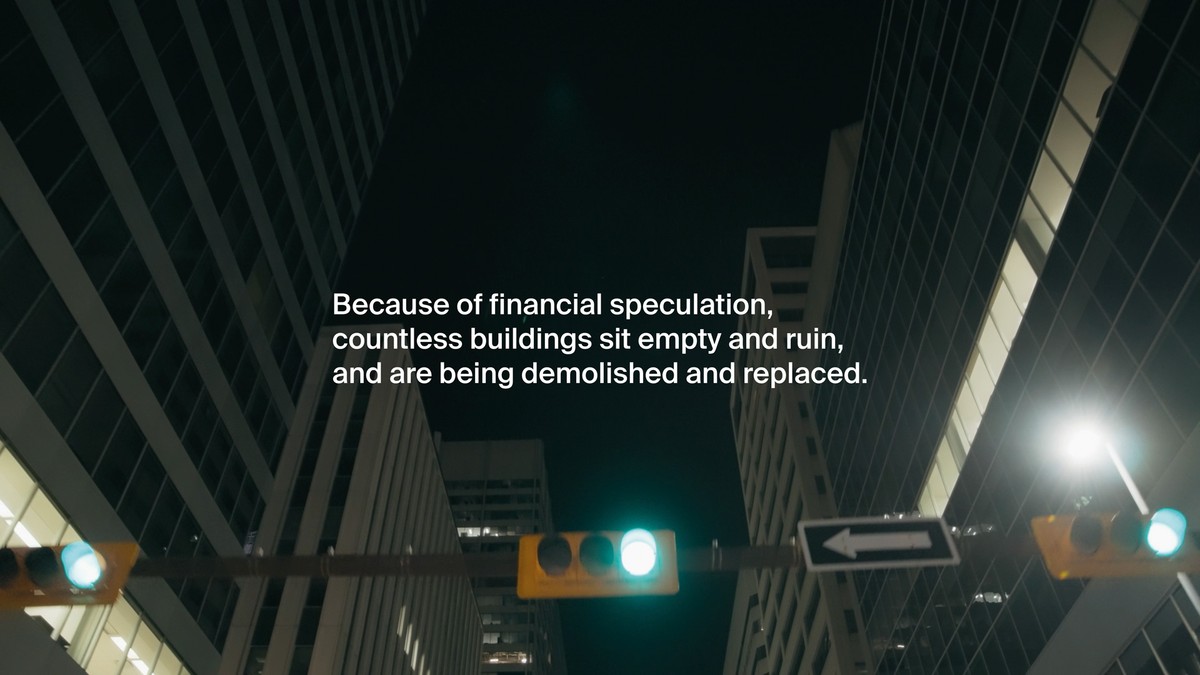
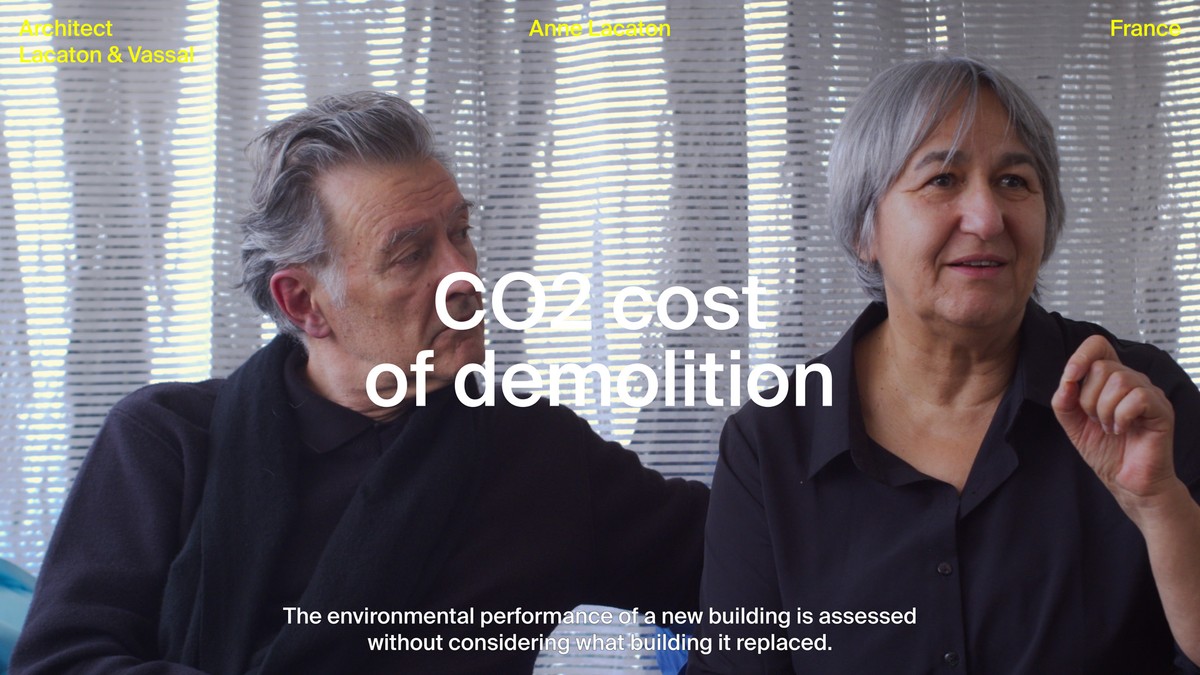
Ill. 1–10. Film Stills from “The Demolition Drama” by s+ (station.plus, D-ARCH, ETHZ) for HouseEurope!
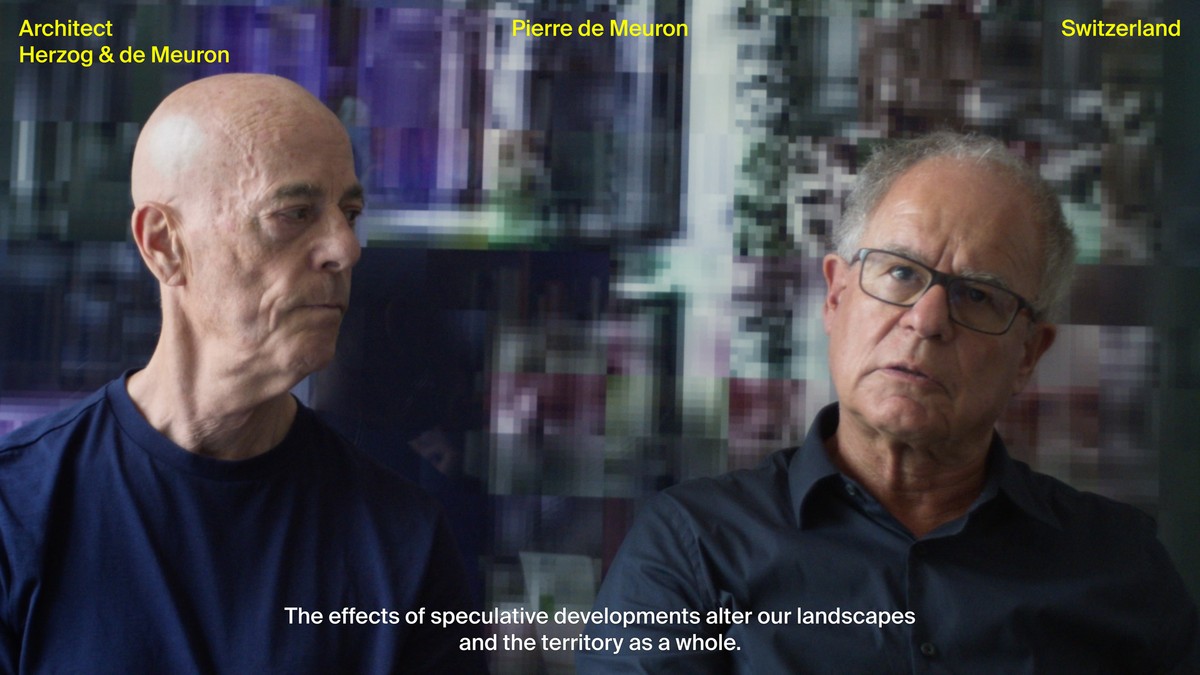
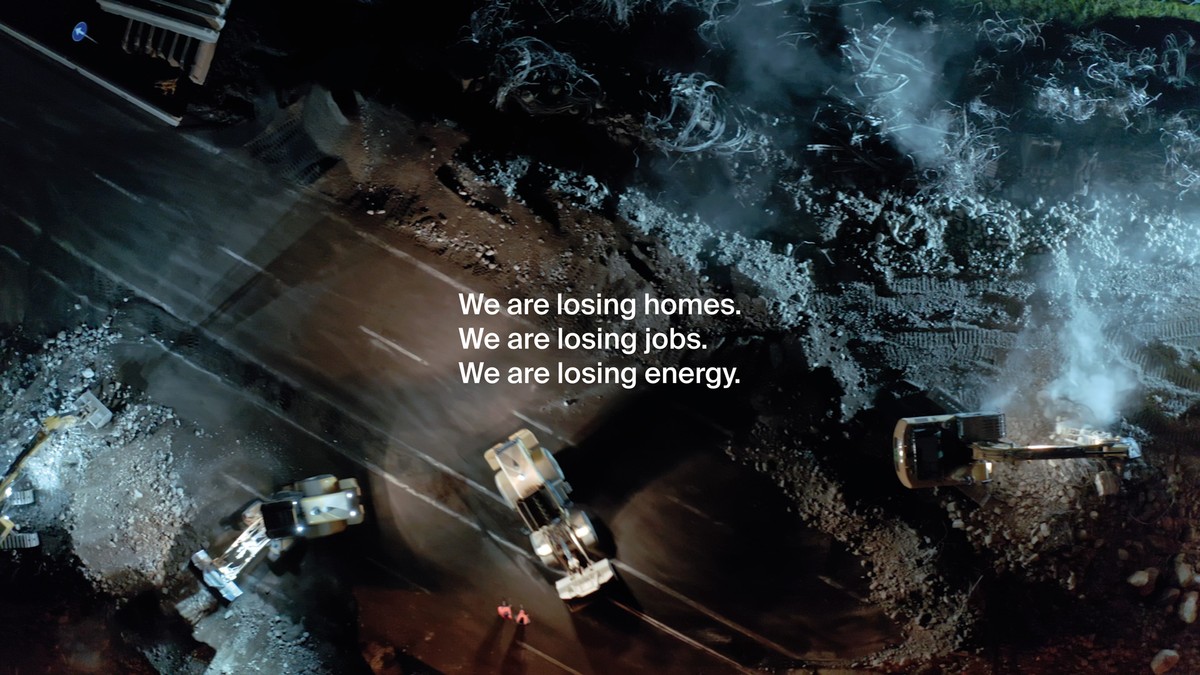
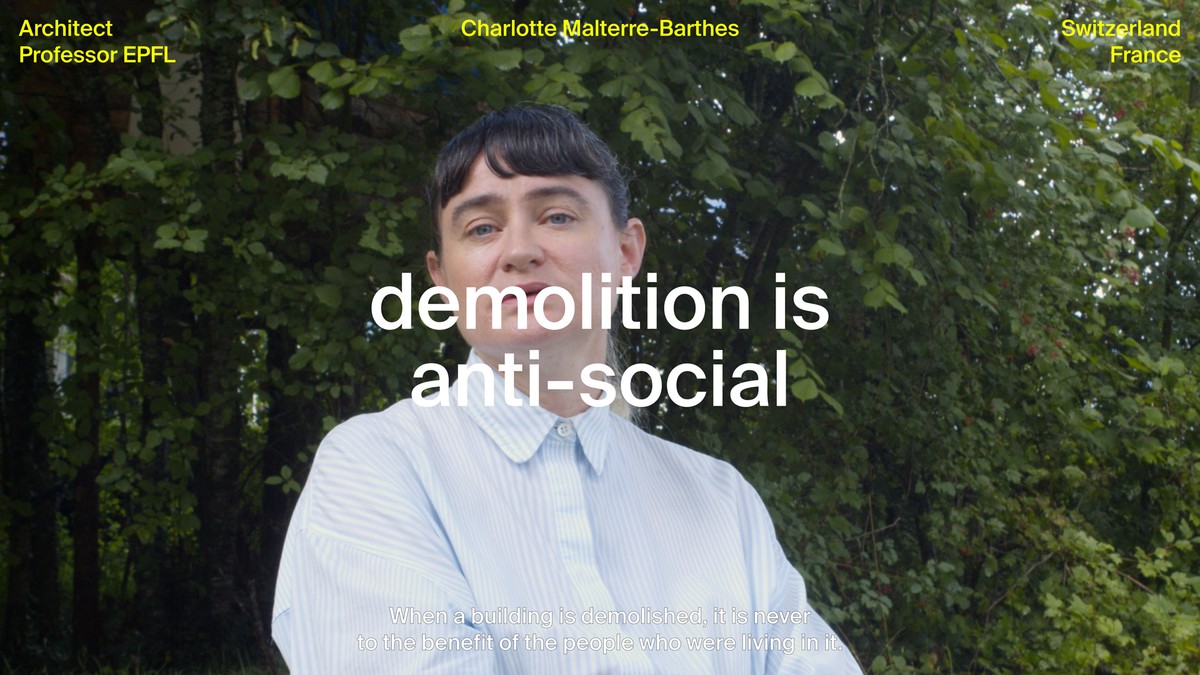
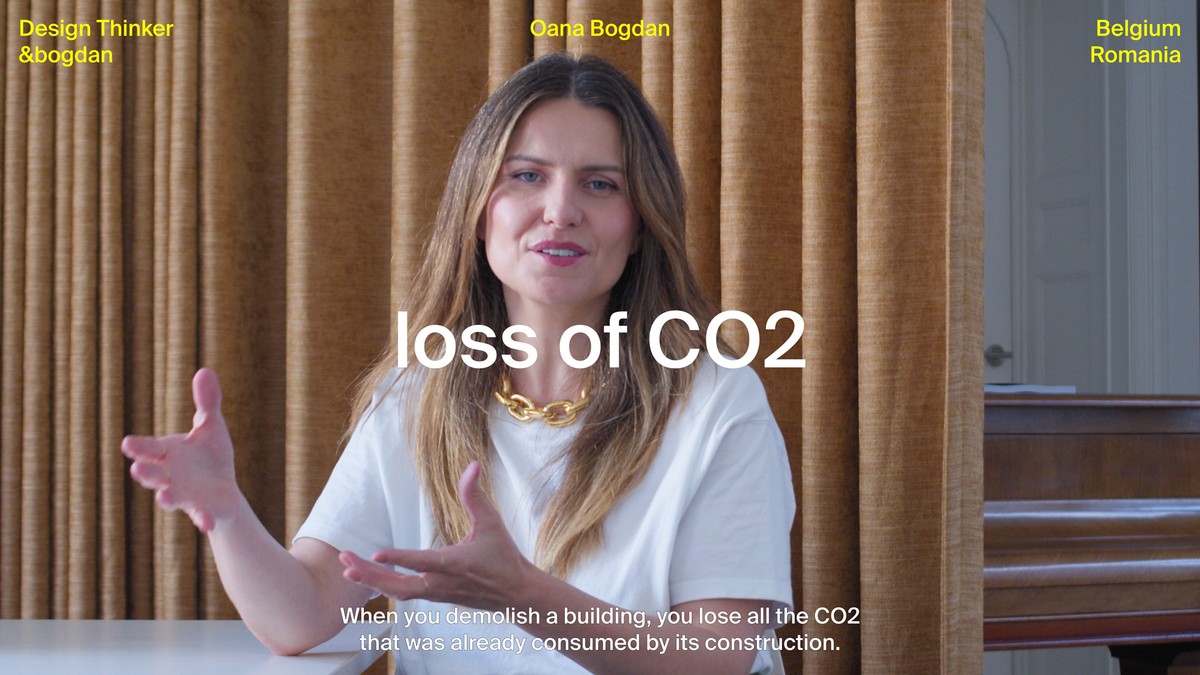
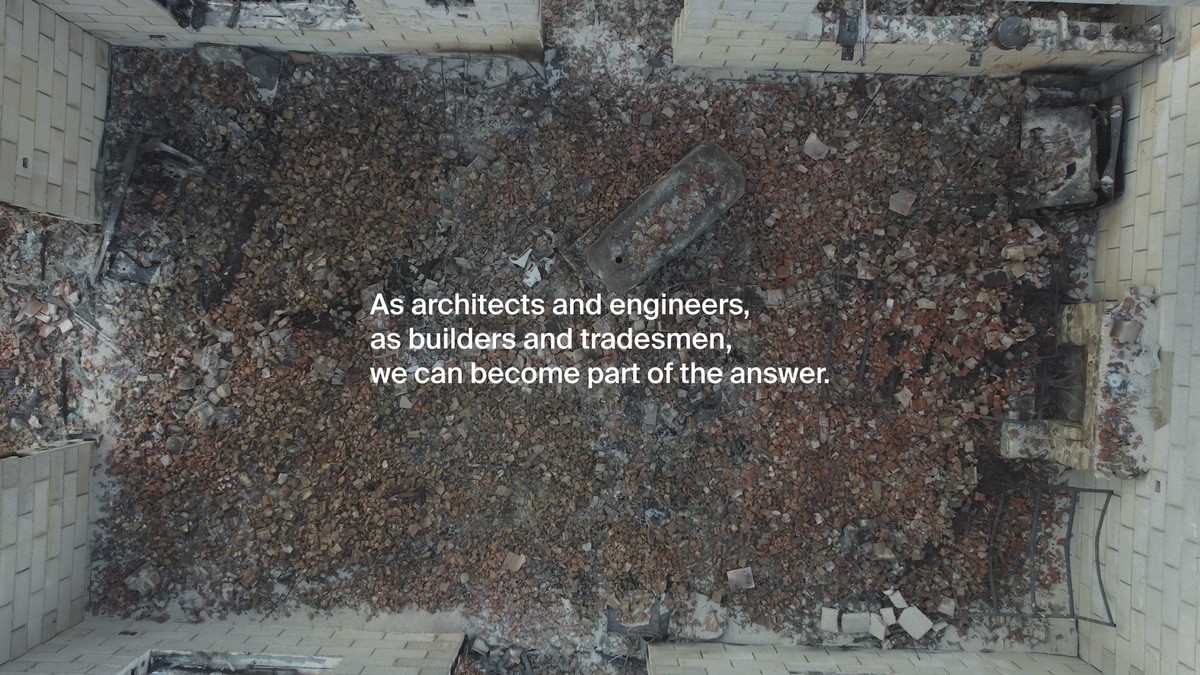
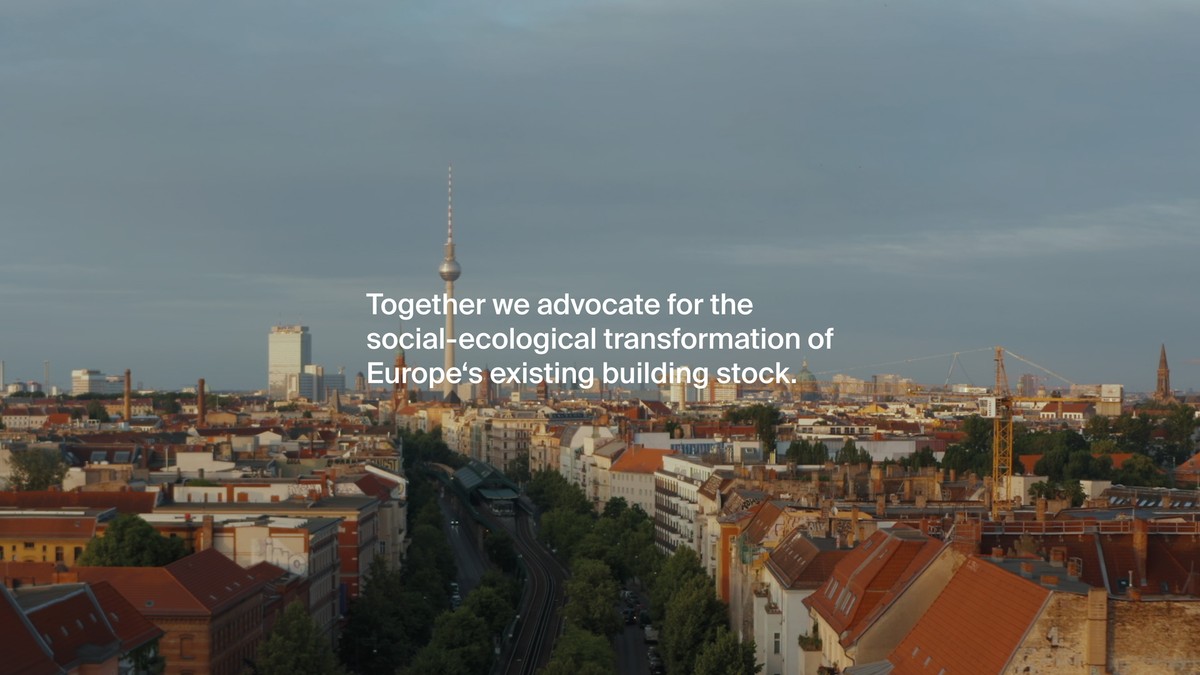
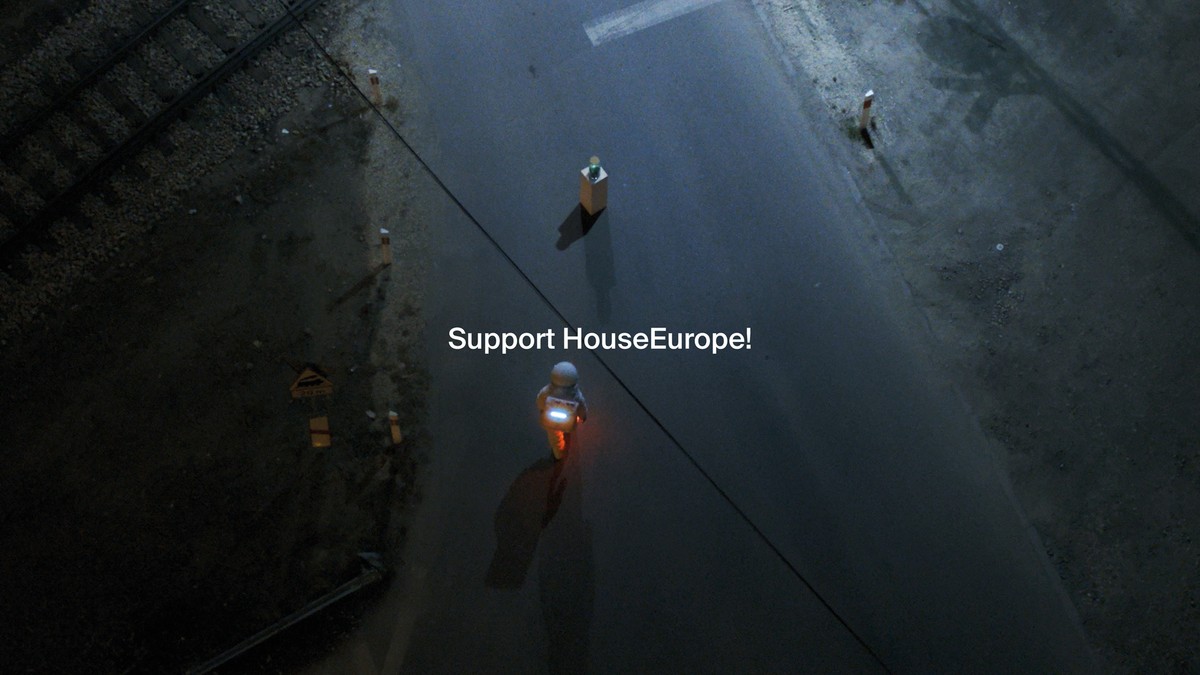
This piece was conceived as a co-written conversation between architect and educator Beata Hemer, and HouseEurope!,a citizens initiative that campaigns for EU-level legislation that prioritizes the preservation, adaptation, renovation, and transformation of the existing building stock, over demolition and rebuilding, driven by financial speculation.
The process started with watching the film The Demolition Drama produced by s+ (station.plus, D-ARCH, ETHZ) for HouseEurope!, in which architects, economists, sociologists and transformation specialists talk about how buildings today are treated as investments rather than spaces for people to live. Due to financial speculation, millions of square meters sit empty and ruin, or they are being demolished and replaced: From functioning family homes to abandoned industrial and office spaces. This creates social and environmental problems. These concerns and how to deal with them were the basis for the following conversation.
BEATA HEMER: I would like to go directly to, what I find being the core question for architects today - for those architects that are struggling with the fact that we as a profession are complicit when it comes to contributing to a large amount of CO2 emissions, namely: How to organize and how to take action. I have a sense, probably shared with others, that we must move fast, in order to keep up with the rapid changes of the climate emergency, and that action needs to be rather radical. The film The Demolition Drama, seems to offer an answer as to how to incite such an action. It is straightforward in both content and representation, it offers a call for action, and most importantly it offers a concrete initiative to join. Therefore, the film is a great outset for discussing precisely how to organize and how to take action.
Finding alliances and common ground(s) – to organize – is crucial for creating change. The construction industry consists of a vast network of different actors; consultants, entrepreneurs, economists, regulators, developers, architects. As architect Charlotte Malterre-Barthes describes it in the film, it is a “chain of space production”KILDE?, where architects play a role, entrenched in and interdependent of other disciplines. On this level, there seems to be an opportunity to find allies – to find those people in other disciplines that share values and interests, and that are willing to join forces and complement each other’s competences and skills – that is creating alliances.
Parallel to this, I see another level of organizing, which is within the architectural profession, a profession represented in a range of sectors: Private offices, municipalities, and academic institutions. In each sector we have cultivated different skills when it comes to material knowledge, communication, drawing, writing, and craftsmanship, and we seem to work within different temporalities – e.g. the slow pace of research, and the fast pace of competition architecture. If it is important to find allies across disciplines, it is equally important to find allies that go beyond the imagined containers of research, practice, and activism within the profession.
What constitutes an alliance, how do we establish one? The answer might be that of finding a common ground. It might be productive to imagine a series of common grounds, in order not to confuse it with consensus-making. What is crucial is that we - a critical mass of individuals/organizations across and within the profession - can agree on something concrete. Something we can say collectively yes or no to. It requires that the demands or whatever we agree on, are precise and specific. The film, by pointing at a specific kind of demolition, one which is driven by speculation and a profit-driven real estate practice, is creating a common ground, through which we can organize. It is presenting a problem which is very precise and specific, it is not just about any kind of demolition.
When making the film, you must have been quite conscious about how to frame a problem and communicate arguments, and how to incite action and mobilization. Could you expand on this, on let us say the strategic aspect of the film?
HOUSEEUROPE!: For us, film is both – method and tool. Station+ – our chair at ETH Zurich – has a tradition of producing films and video clips that compress an argument so it becomes very clear and may be communicated easily without losing its complexity. But through producing a film, we are not only creating an output format, but we are educating ourselves through working on the film. If the argumentation in the film appears to be sound, we have most likely found a convincing answer to our question on the way.
BEATA: Another aspect of the film, which also seems very well thought-through, is the aesthetic and visual expression, which is almost on the verge of advertisement or propaganda, with effectful background music and drone views. I get a sense that you are deliberately creating a hype and re-directing desire. Is that an appropriate reading of the film?
HOUSEEUROPE!: The film’s aesthetics are deeply indebted to Christopher Roth who was part of the founding team of Station+. The style carries a certain hesitance to formally abolish the world of slick form, smooth surfaces and immersive slogans and leave it to the neo-liberal advertisers. We often say that working on the system, means working in the system. So yes, you are right, the film’s hype aesthetics and compressed argumentation are meant to lower the threshold to allure a larger public, and make a complex problem more tangible. That being said, this film still caters very much to an audience that has some point of contact with the architectural world. We are currently working on the next film that is made for a public that is not concerned with the built environment in their daily lives.
BEATA: It is not difficult to agree with what is argued for in the film – to stop demolition, driven by a speculative real estate practice. I would say it is almost difficult to disagree…
HOUSEEUROPE!: It really depends on who you ask. In our bubble, most certainly it seems very difficult to disagree. But time and time again in discussions we are confronted with seemingly valid arguments for demolition and building anew. For example, the ecological long-term effect of running an old building with higher energy demands in operation, against a new building that is emission neutral in use. Obviously, a new building seems more sustainable, if you just compare the energy needed for running the building, but this calculation does not include the CO2 that has already been emitted constructing the building nor the emissions its demolition would cause. We can win that discussion and make it clear why we need new legislation to support the issue – the market will not do it for us! But we need to be aware of the fact, that we navigate a highly ideological field where belief usually prevails. So, we also have to work on those beliefs. Hence the film…
BEATA: The film is also, inevitably, touching upon many other topics, which can be seen as part of a new paradigm, one that with architectural theorist and philosopher Hélène Frichot words could be described as a repair-paradigm, where jobs in the construction industry are rerouted from building new to repairing and transforming the existing building mass. Do you see your initiative as being part of instigating such a paradigm shift?
HOUSEEUROPE!:HouseEurope!is not altruistic. At the core lies the motivation to create more socially just and ecologically sound cities in Europe, but also to create a meaningful, economically viable and future-proof environment, for architects to put into service their full professional potential for the greater good. In that regard, we are not so concerned with the architects as a group to organize amongst them, but to find ways how relevant stakeholders such as banks, developers and politicians that have a truly sustainable agenda can realize renovation projects – with the help of architects, of course.
BEATA: So, in part, this very much relates to what was mentioned before, the importance of finding allies within the chain of space production, including banks and developers, and not to see the architecture profession as isolated, politically independent, and self-sufficient. Still, it can be thought-provoking to imagine a strike within the profession – where all architectural offices, let us say in Denmark, would refuse to use cement in their projects. It is so tangible and specific and could as such qualify as a common ground, one of many, from which to organize. It would also be a way to prove or at least test the political and economic power and impact that the profession has within the building industry.
HOUSEEUROPE!: We see a problem in this opt-out strategy, because it creates a reflex on the other side which mixes action and cause in a way that is counterproductive to the original intention. Instead, we need a broad, informed public that jointly looks for solutions. That is why we decided to start a movement through the tool European Citizens’ Initiative, which allows informed citizens to have a say in the formation of policies which affect us all. One thing that struck us as very peculiar, for example, was that conservatives had somehow successfully disentangled very interdependent topics in the public debate: Building is either green or social. It is completely absurd because a truly sustainable strategy also includes a socially just concept. But by concerting such a stand-off between green and social, for the public, green architecture is now seen as not social, and social housing cannot be sustainable ecologically. A strike, like you imagine, might just deepen the trenches, no?
BEATA: I am not sure a strike would deepen the trenches, at least not if there have been established alliances with other actors/professions in the building industry, which support the cause. But I guess there are some actors in the industry which are difficult to make alliances with. Cement producers for example. But that is inevitable in a paradigm shift, that some types of business simply cannot continue as they operate today. I completely support your vision of a broad, informed public that jointly looks for solutions, but I also think that we are in a time now where a variety of tactics and political action is needed – and that might include strikes and opt-outs, in alliances across professions, simultaneously as films like The Demolition Drama are being broadcasted to the public.
HOUSEEUROPE!: Sure, desperate times call for desperate measures. Yet, we wish to see a new political consciousness in a wider public, that wants to actively engage and shape the political discourse. In this regard, we find it quite thrilling that within the architecture world, that traditionally has not been at the forefront of revolution, forms a quite visible politicization especially among young architects. HouseEurope! is definitely not only trying to be an inspiration, but a real test of how far we can push our political agenda to change the current ways of doing. It is clear, that we are running out of time and out of options. So, we need to act now, and we need to act fast. Join us now at HouseEurope!
–
Ludwig Engel, futurologist and urbanist, and Jolene Lee, architect and partner at b+, are part of HouseEurope!, a growing team of citizens that brings together diverse perspectives and expertise from the fields of architecture, labor and politics. They are committed to creating precedents for the social-ecological transformation of how we live together. In Denmark, HouseEurope! is represented by Tamara Kalantajevska. See all members at houseeurope.eu/24-team
Beata Hemer is a trained architect, Teaching Assistant Professor and program responsible for the MA-programme Political Architecture:Critical Sustainability at the Royal Danish Academy. Her practice outside academia is rooted in self-organized building projects, community archiving and mapping practices, with alternative economies and activism as reoccurring interests.
Watch the 11-minute version of the “The Demolition Drama” on houseeurope.eu
See for example the ”Global Status Report for Buildings and Construction”, published by of The United Nations Environment Programme (UNEP)
Station+ (s+) is a teaching and research platform at the Institute for Design at the Department of Architecture, ETH Zurich. s+ was founded as an architecture TV station to further explore the potential of video and film as design tools for form-making beyond the built object, between fact and fiction, in space and time. More info at station.plus
Simply put, a European Citizens’ Initiative, or ECI, is a great tool for direct democracy. Much like the Swiss referendums that allow a popular vote on new laws, the ECI enables citizens from all EU countries to propose new laws or changes to existing ones. If one million EU citizens from at least seven countries support the cause, the European Commission must consider the proposal and dedicate a working group. This gives citizens a direct say in the EU policy-making process and helps bring attention to important issues. More info at citizens-initiative.europa.eu
Næste: Bliver byggestop et vilkår for arkitekter?
Ill. 1–10. Film Stills from “The Demolition Drama” by s+ (station.plus, D-ARCH, ETHZ) for HouseEurope!