Squatting culture represents a critique of the formal housing market and most often involves a community. Recent graduate Sean Li has studied squatting culture in his diploma project and here presents findings and proposals.
11 min
From the well-known Christiania to the floating buildings of Fredens Havn, from all the traces of Ungdomshuset to Folkets Hus, from the very first attempt in Sofiegården to Bolsjefabrikken, squatting in Copenhagen is a widespread spatial practice. Urban Squatting has represented a radical, accessible, grassroots means of fighting the housing crisis, lack of public space and other spatial issues. Moreover, it is embedded with a rebellious attitude towards established authorities, rules and ways of living within rigid frameworks. Urban squatting as a spatial practice offered alternative forms of self-help or self-organisation around housing and infrastructure; reclaiming this history can help us to create a more experimental, contextualised urban life.
This article aims to prompt discussion and carries out a spatial investigation of three autonomous public territories[Ill. 1] at different scales on Den Sorte Firkant (the Black Square ) [Ill. 2]: A food-sharing fridge (2020-now) [Ill. 3], a building (Folkets Hus, squatted in 1971-now) [Ill. 4] and a playground (Byggeren, 1973-demolished in 1980) [Ill. 5]. By employing architectural ethnography to re-understand and revisit the relationship between space, agency, autonomy, grassroots, makeshift, and community, this article asks how we live with precarity and build on it together.
A POTTED HISTORY OF THE EMERGENCE OF URBAN SQUATTING IN COPENHAGEN
Urban squatting in the global north is the practice of occupying abandoned or unoccupied buildings without permission from the legal owner. It is most commonly practised in large cities. Squatters typically take up residence in abandoned buildings and sometimes make necessary repairs to the property to make it livable. Squatters are also acutely aware that their choice to take control of their housing needs has become increasingly precarious and ephemeral due to the increasingly tightened law enforcement.
Squatting in Copenhagen dates back to the 1960s when it was seen as a form of resistance to the housing crisis of the era, particularly concerning affordable housing for youth and students. This wave of squatting saw a number of squats set up in the city and surrounding areas.
The second wave of squatting emerged in the 1970s–1980s It was primarily driven by the counterculture movement and student protests against the Vietnam War. Young people dissatisfied with the mainstream society and housing market began occupying abandoned buildings in the inner city, particularly in the Nørrebro and Vesterbro districts. This wave saw the emergence of many large squats, some of which still exist today. Two other moments are associated with setting up the freetown of Christiania and one squarely located in the neighbourhood of Nørrebro, channelling community grassroots activism and serving as a critical point of development for the squatting movement.
The third wave of squatting in Copenhagen began in the 1990s. It focused more on social and political issues, such as the rights of refugees and immigrants and the fight against gentrification. This wave of squatting saw the emergence of several projects dedicated to tackling these issues.
The fourth wave of the squatter movement in Copenhagen emerged in the 2000s and continues to the present day. This wave is characterised by a more fragmented and decentralised movement that is focused on creating alternative social and cultural spaces, where some confrontative squatting occurred.
MAKESHIFTING TOGETHER
Squatters in Den Sorte Firkant used DIY practices to restore and rehabilitate their spaces, creating a makeshift city.
Folkets Hus was squatted in 1971 and has since formed the framework for countless grassroots political, cultural, and social activities. Over the years, the house has been in a constant state of change, and the sensitivity to the needs of the local environment is the house's strength. The building formerly housed a factory but was squatted to become a self-governing residential building to cater to the housing shortage in the 1970s. Later, it became a meeting point for the local community and cultivated various activities such as folk music and theatre. In the 90s, Folkets Hus achieved the status of an approved, self-governing cultural centre under Copenhagen Municipality and still functions as such.
In the five decades of makeshift, this house was used by a local television station, a permanent user-managed café, a shared kitchen, a gym for free boxing training for the queer community, a place for teaching Tai Chi and so on. [Ill. 6] This occupying and re-habilitation process was significant in remaking these spaces and depended on sharing practices and know-how. Moreover, the rehabilitation operates according to a joint meeting of all house users, which is held every three months. Between joint meetings, the house affairs are handled by a smaller administration group (called A-gruppen), elected for one year at a time at the annual general meeting.
Squatters create a public space that is sufficiently functionally sensitive, through direct democratic means, to be able to connect with the users of the public space to the greatest extent possible and to be functionally adapted to such connections.
In the case of Byggeren and the shared fridge, makeshift is more about using materials. For the shared fridge, recycled materials like pallets, easily found in the neighbourhood, were used [Ill. 7]. In Byggeren, more scrap and equipment from the site were used with some of the larger steel pipes even becoming the playground itself [Ill. 8]. In addition, all the facilities on the site were built by local residents and families together or brought onto the site. This is because it used to be just a vacant lot. One of the main reasons for the Battle of Byggeren in 1980 may have been the emotional anger of the locals as they watched the playground they had worked so hard to build being torn down.
From the use and recycling of materials and resources to the ever-changing function of space, squatting generates alternative forms of collective self-management and building processes. This makeshift urbanism represents a blueprint for alternative urbanism which often has malleable forms of organising, working, and living. It raises questions about rigid urban planning and the possibility of a different kind of city within the built environment, one that is often makeshift and profoundly precarious.
BUILDING ALTERNATIVE INFRASTRUCTURE
Squatting has represented a form of creative architectural experimentation and a legacy of expansive social infrastructure far beyond the squats' four walls.
Firkantens Byggelegeplads, or "Byggeren", was a construction playground in Den Sorte Firkant’s neighbourhood from 1973–80. The local community established it in response to the municipality's plans to renovate the area as a parking lot. Byggeren became a popular spot for children, particularly those from immigrant backgrounds who could not afford other institutions. A study in 1979 showed that around 185 children had used the playground over a month, with 1/3 being of immigrant descent. Byggeren became a municipal leisure club in 1974 and employed a Kurdish worker, providing an early example of integration. It was open daily with voluntary, unpaid staff and was used by the neighbourhood kindergartens in the morning and as an open space in the afternoon.
During the seven years of Byggeren's existence, it provided infrastructure for the community in different forms. It became a playground, a kindergarten, a centre for community activities and, for a time, a fortress during the Battle of Byggeren. Moreover, it had become a space to cater to early integration.
Meanwhile, Folkets Hus offers an alternative to contemporary urbanism and includes alternative bookshops, cafés, cinemas, community ping pong tables, concert venues, galleries, neighbourhood social centres, and workshops. Since 2020 there has been a food-sharing fridge that emerged in the neighbourhood through the Folkets Hus, practising the sharing spirit with the idea of zero waste. [Ill. 9]
Squatting in public space speaks to architectural activism that combines community design, participation, and understanding of the built environment as a source of continuous invention and reinvention. There is a need to reconnect architecture with broader movements for the right to public space, which calls for a radical rethinking of the role of architecture and a move to place architecture at the service, an alternative infrastructure of a larger project to remake and transform cities. The spatial practice that squatter movements embody shows us the means of how we make space together, alerts us to contested urban memories, denied histories, and (im)possibilities which are congealed in the very fabric of the city, its buildings, architectures, and infrastructures.
SPACE OF APPEARANCE
In the fifty years of Copenhagen's squatter movement, they have continued to produce shelters, homes, a lot of public space, a lot of conflicts, and a lot of violence for society, for the city, and for the community, becoming a collective resistance to capitalism and the rigid modernist practices of urban renewal as well as the collective memory of the city. In these spaces and spatial legacies, there are echoes of what Hannah Arendt has to say about the space of appearance:” Where I appear to others as others appear to me, where men exist not merely like other living or inanimate things, but to make their appearance explicitly."
This concept then coincides with spatial practice in the squatter movement. The squatter movement and Hannah Arendt's idea of the space of appearance emphasise a need for public spaces where individuals can come together to interact, express themselves, and engage in collective action. Squatters create physical places that allow people to gather with one another and organise against oppressive systems.
Similarly, Arendt's concept of the space of appearance refers to a shared public realm where citizens can meet face-to-face to discuss political issues and make decisions together. Both movements recognise that it is essential for individuals to have access to these spaces in order for them to be able to take part in meaningful political discourse.
Hannah Arendt argues that the space of appearance is also a fragile creation of action that exists only when actualised through deeds or words. It is a delicate yet powerful space created by the actions and words of individuals when they come together to undertake a joint project. It appears, often suddenly, and is sustained by continued action and deliberation, but it can also disappear in an instant when collective activities cease. It is a potential space whose realisation depends on people's actions and speech and a historical space arising from efforts to bring about change.
As a fragile creation, squatters' space must be continuously brought into being through action; those actions are fading away. It is established only when people join together to deliberate and converse about matters of public importance and vanishes immediately when these actions cease. It is a potential space that is actualised through the actions and words of those who have come together to fulfil a shared mission. It may manifest abruptly, like the battle of Byggeren, or grow gradually from efforts to modify particular laws or policies, like Folkets Hus’s decades of fights and struggles.
The legacy of squatting is one of solidarity and collective action. Squatting has been a way to express dissent, reclaim public space, create utopias, and build togetherness. [Ill. 10] Squatting has been a powerful tool to challenge the dominant forms of urbanism and to develop alternative models of living and being together. It is a call to explore new ways of living, inclusive and resilient, which can be used to challenge the realities of financialisation and commodification in urban environments.
When we talk about the spatial legacy of the squatter movement and how to go about building together, and looking back at Hannah Arendt's concept of space, the production of a space that ultimately inspires public life can be like a protracted tug-of-war. Everyone is constantly making an effort, taking action, shouting, and maintaining a delicate and arduous balance. This delicate, precarious balance, built together is that public life which we aspire to, where no one loses and no one wins.
This article examines the case of squatting in Copenhagen as the spatial practice of collective self-help and self-organisation around public space and infrastructure. It explores how squatters have used DIY practices to restore and rehabilitate their spaces, creating a makeshift city and an alternative public space through direct democratic means. It also looks at how this infrastructure they built together has provided an alternative to contemporary urbanism with its alternative but community-created programmes. Finally, the article looks at the concept of the space of appearance, as outlined by Hannah Arendt, and the relation to the spaces created by squatters, emphasising the need for public spaces where individuals can come together to interact, express themselves, and engage in collective action for civic engagement and meaningful political discourse.
–
Sean Li is an architect recently graduated from the master program Political Architecture: Critical Sustainability. The article takes its point of departure in his thesis project with the same theme.
Alexander Vasudevan, The Autonomous City: A History of Urban Squatting (London: Verso Books, 2023).
“Tidslinje over BZ-bevægelsens historie: Her er de vigtigste vendepunkter,” DR, accessed 29 January 2023, https://www.dr.dk/historie/webfeature/bz-historie.
“Byggeren,” Leksikon for det 21. århundrede, accessed 31 January 2023, https://www.leksikon.org/art.php?n=3162.
‘Byggeren overgiver sig aldrig’, Politiken, 16 April 2020, https://politiken.dk/debat/kroniken/art7737365/Byggeren-overgiver-sig-aldrig.
Samuel Burgum, “This City Is An Archive: Squatting History and Urban Authority,” Journal of Urban History 48, issue 3 (September 2020).
Hannah Arendt, The Human Condition (Chicago: University of Chicago Press, 2013), 198–199.
Arendt, The Human Condition, 198–199.
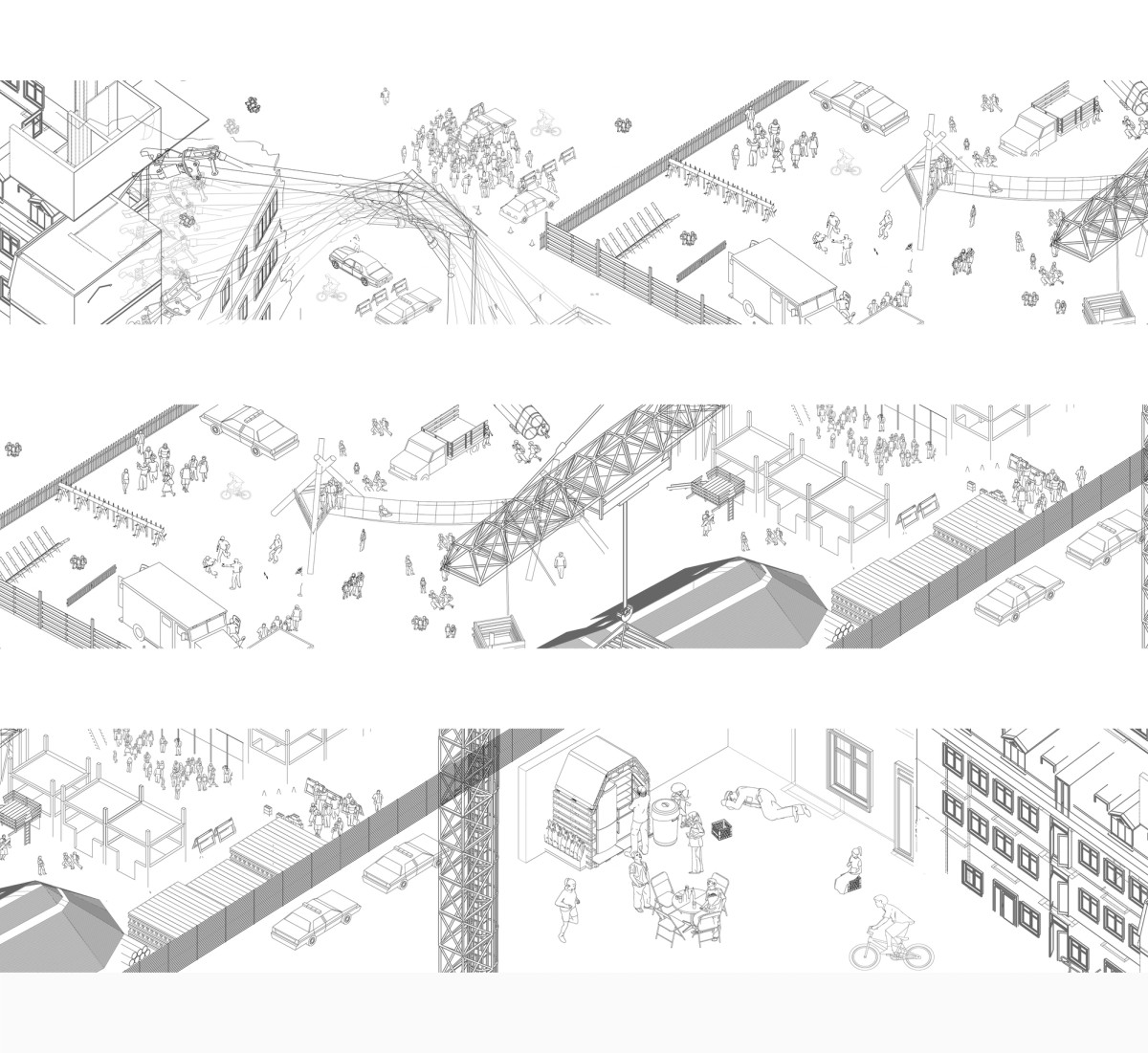
Ill. 1. Architectural ethnography of the den sorte firkant
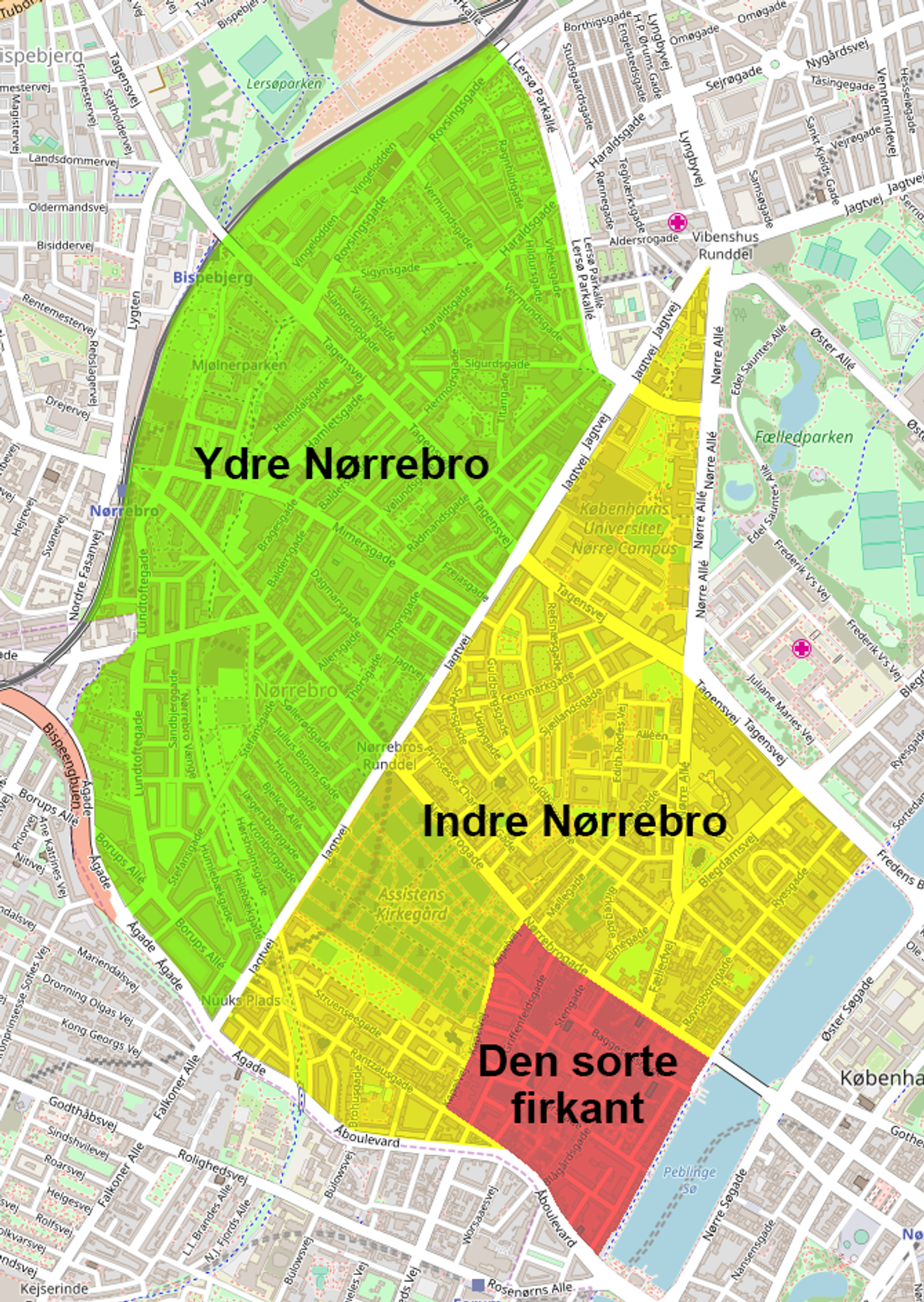
Ill. 2. Den sorte firkant
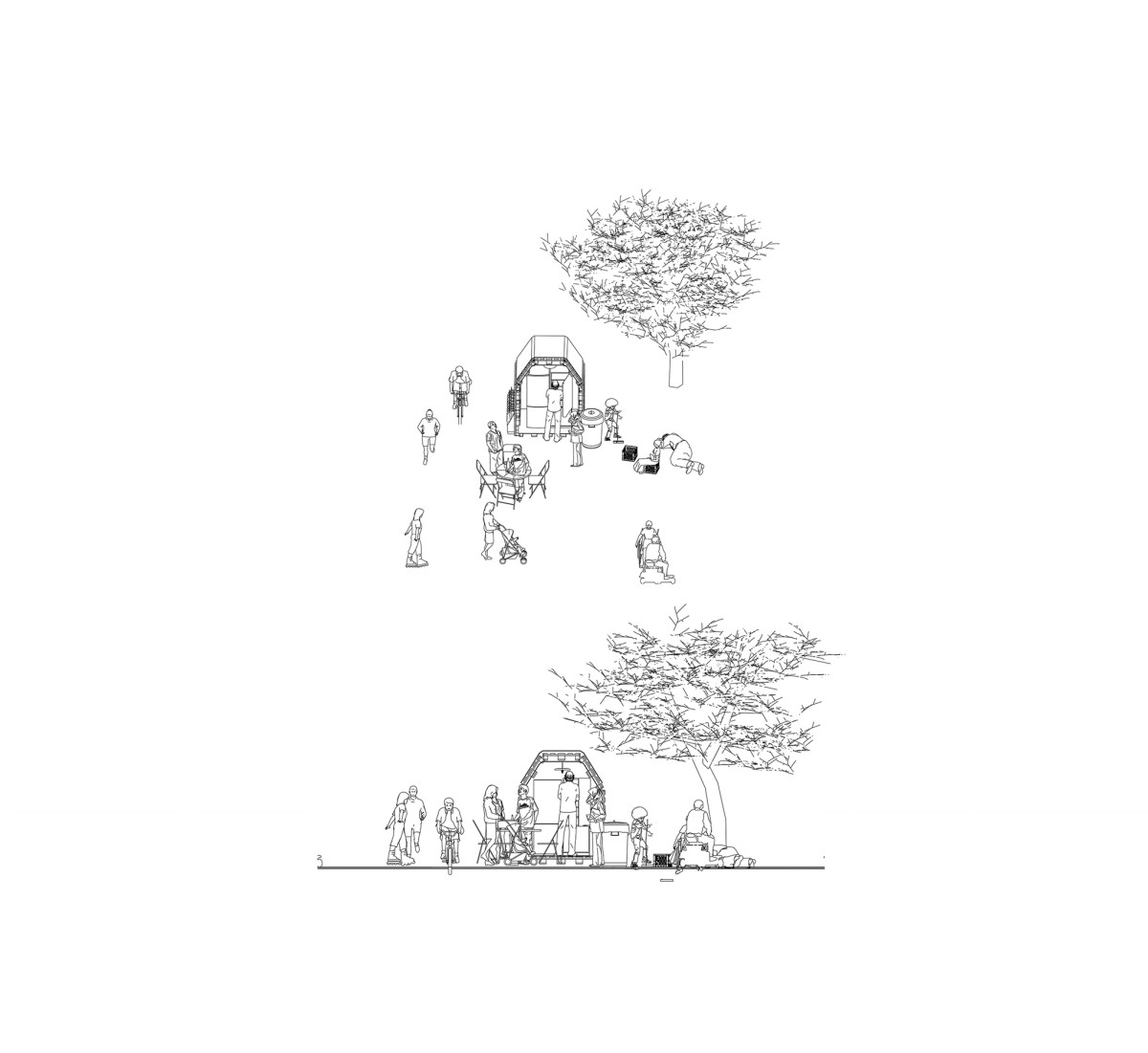
Ill. 3. Architectural ethnography of the food exchange fridge
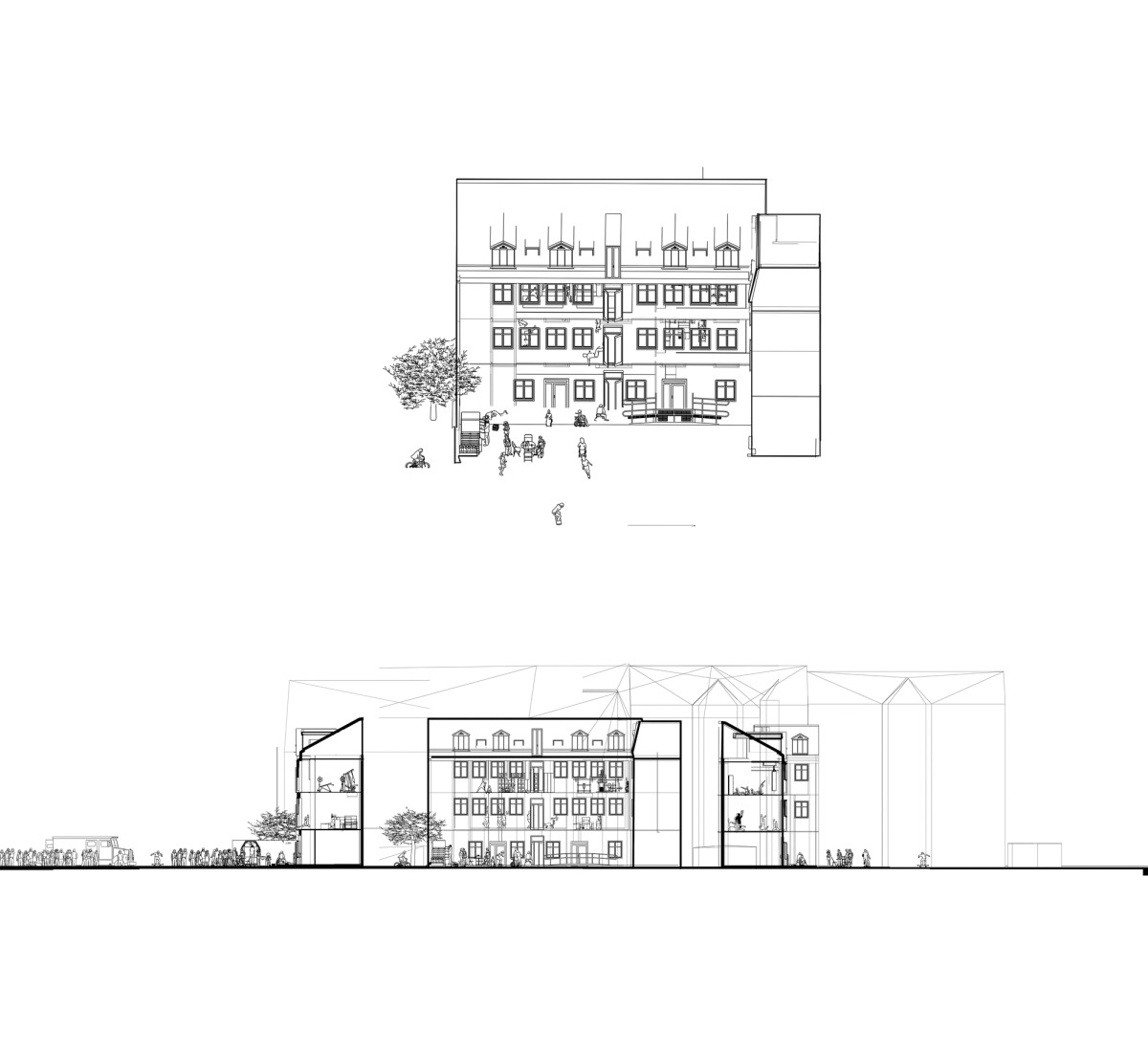
Ill. 4. Folkets Hus
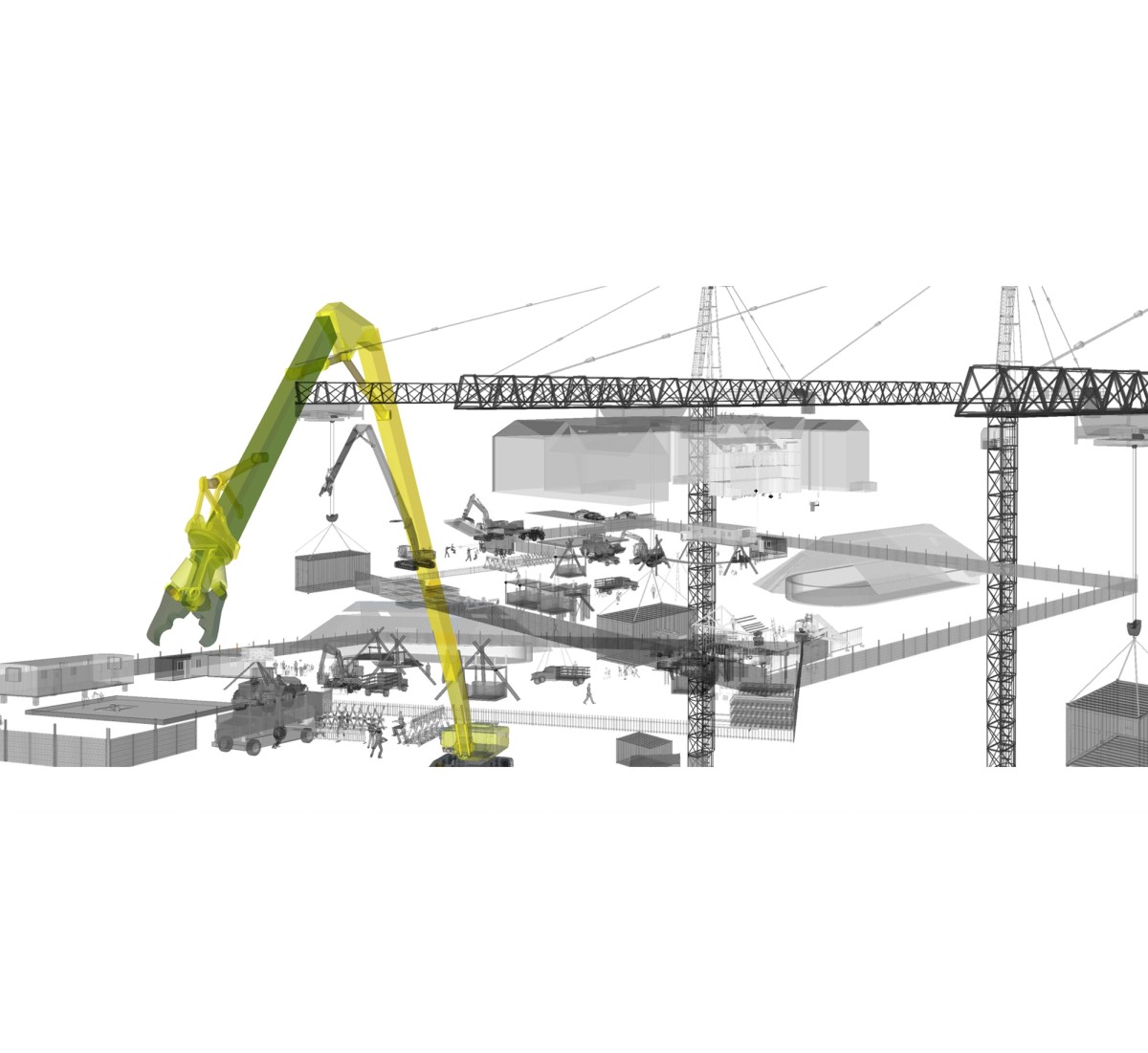
Ill. 5. Firkantens Byggelegeplads (Byggeren)
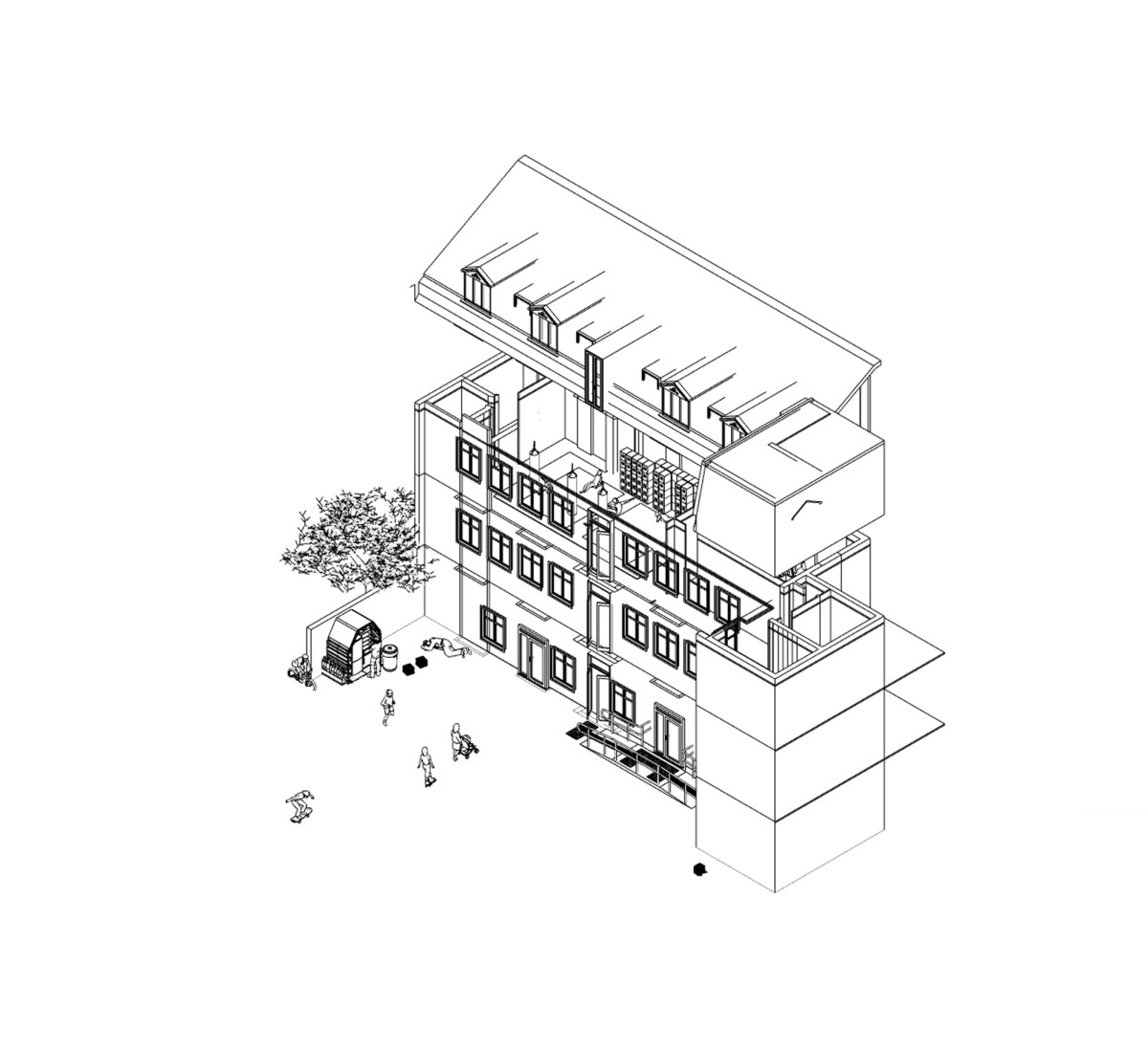
Ill. 6. A gym for free boxing training for the queer community in Folkets Hus
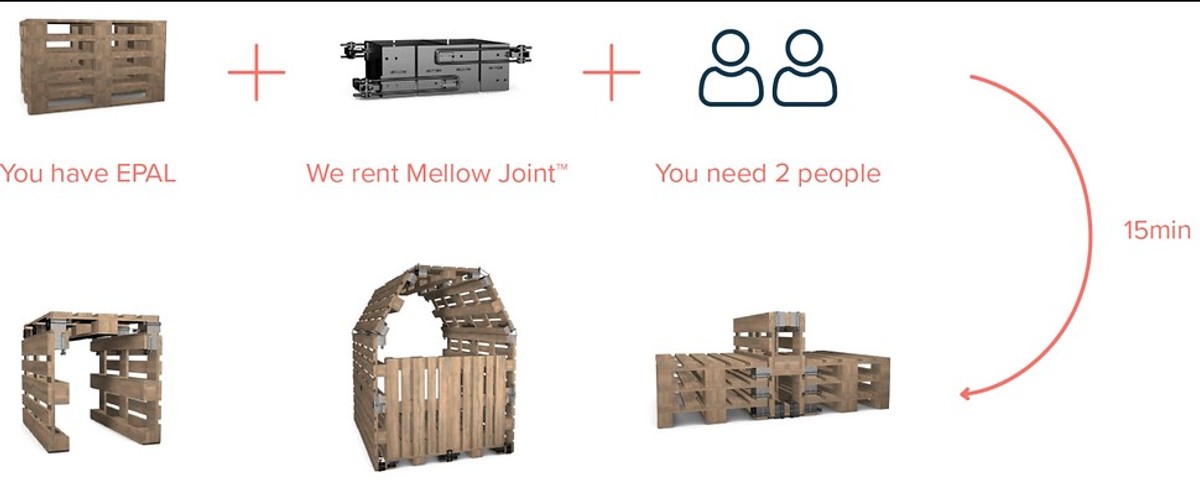
Ill. 7. The reuse processes of building the food exchange fridge
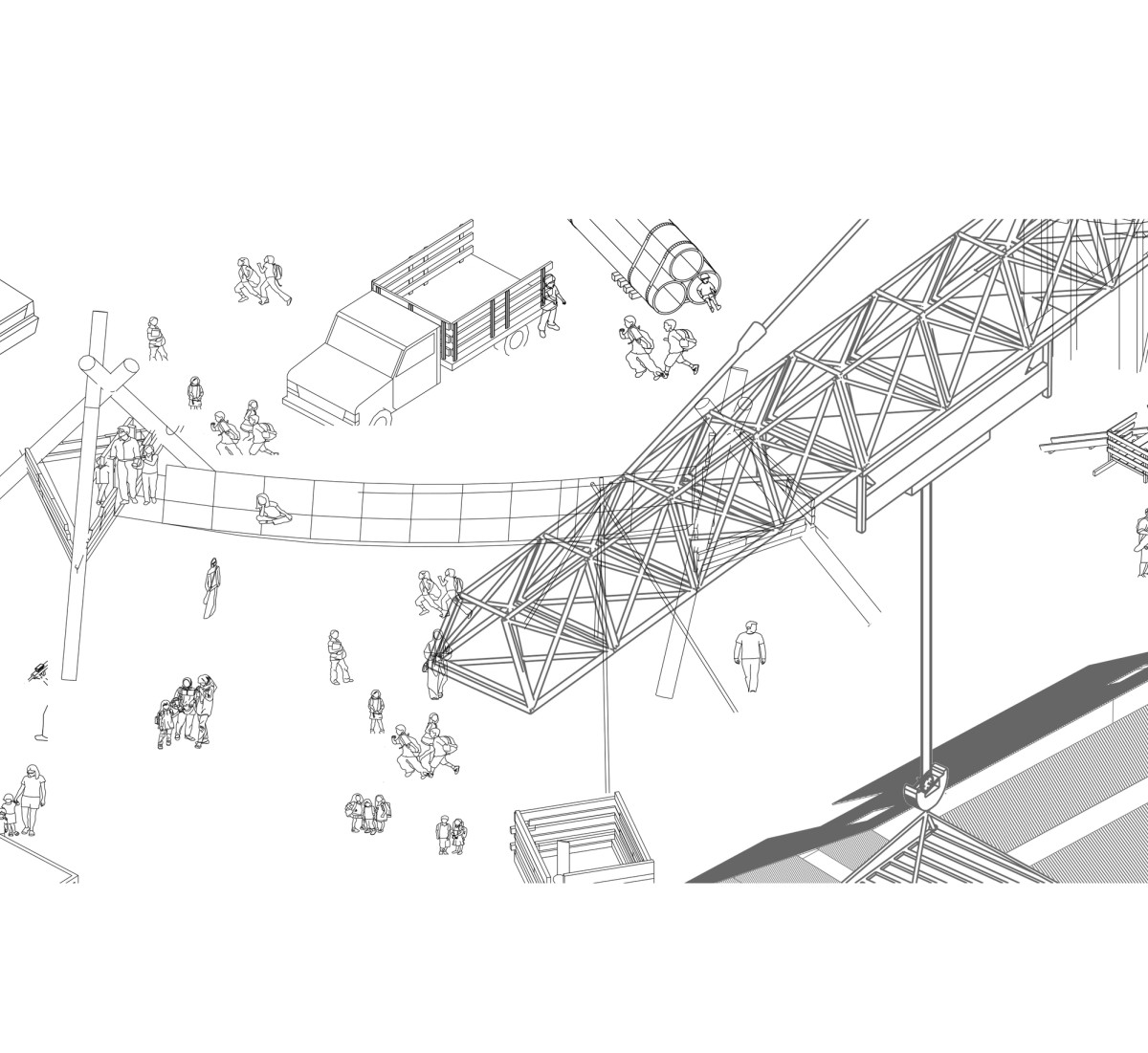
Ill. 8. Firkantens Byggelegeplads
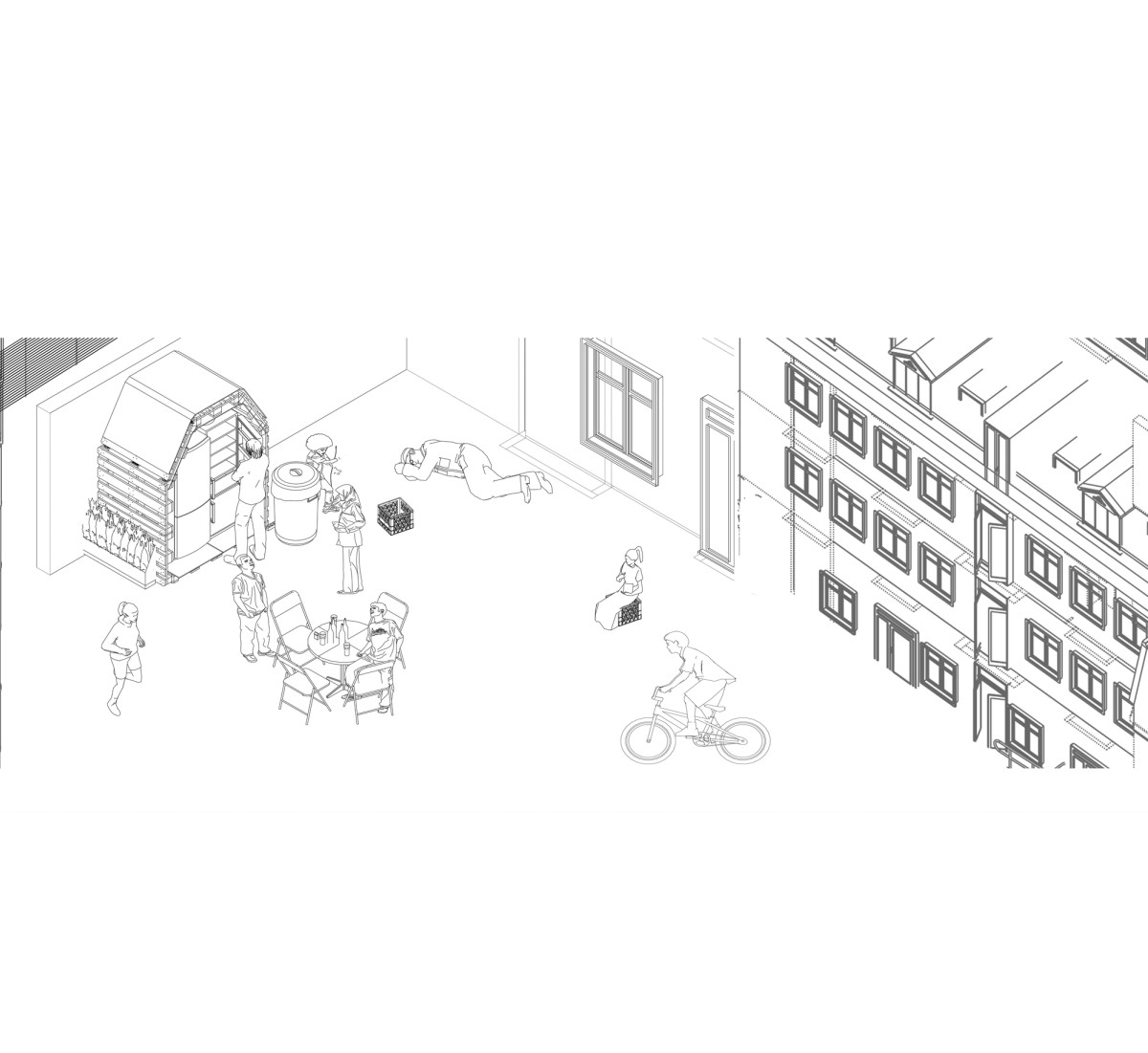
Ill. 9. The people’s behaviour in between the fridge and Folkets Hus
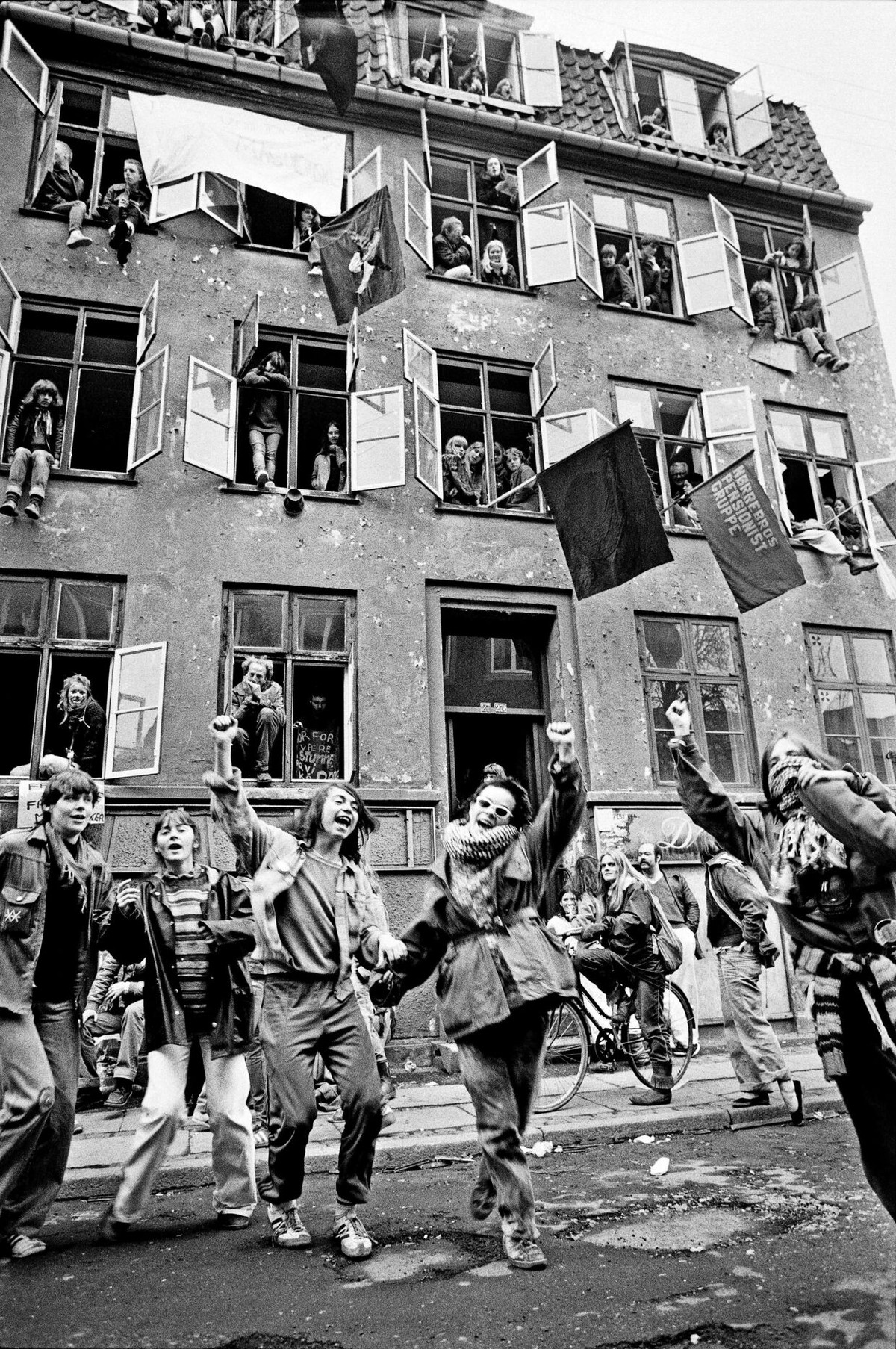
Ill. 10. Korsgade 25 the first squatted spot around the den sorte firkant