After the 1973 energy crisis, a vibrant underground environment emerged in Denmark, intending to fundamentally change attitudes toward consuming natural resources. This sudden awakening of consciousness was particularly evident among students in the energy fields of department 3A at Royal Danish Academy and Danmarks Tekniske Højskole (now DTU). Meanwhile, the student revolt also influenced fellow students inside the academy, making them reflect on how an architect could confront social issues. That is how FREJA emerged as an interdisciplinary study group.
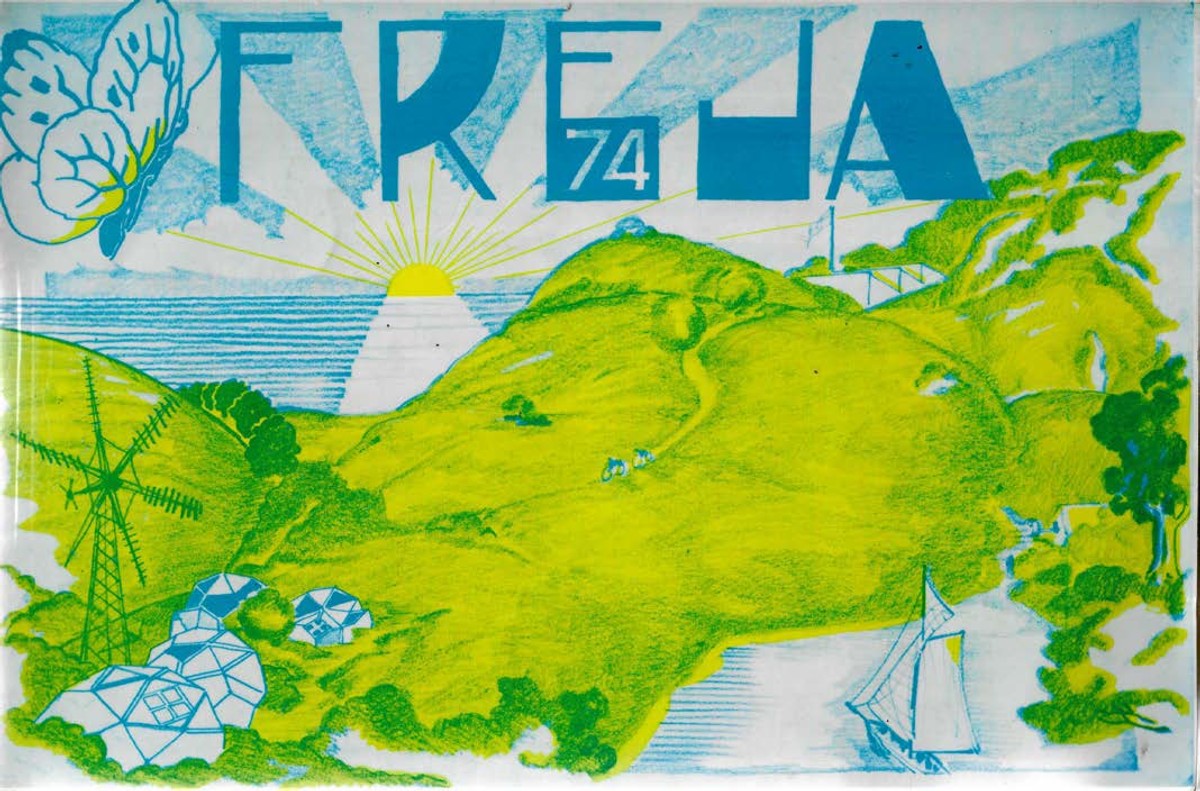
They published FREJA books and booklets as a result of their studies, which called attention to the increasingly alarming state during the rapid yet blind economic growth of the time. This book focuses on all aspects of everyday life, from energy, education, ecology and construction technology to agriculture, recycling, transport, clothing, housing and transportation. FREJA’s publication offers highly practical and professional solutions to architecture, sustainability, and community. After that, the practice was continued by founder Niels Blegvad Stenz as a studio inside the academy. [Ill. 1]
FROM SUBMARINE TO MØN
In the nearly twenty years that FREJA was active, they were based in a space called Submarine at the Royal Danish Academy. They also met on Møn to discuss magazines, possible competitions, and specific practices. Submarine and Møn became important spatial symbols to the organization, and those places became common memories to all participants.
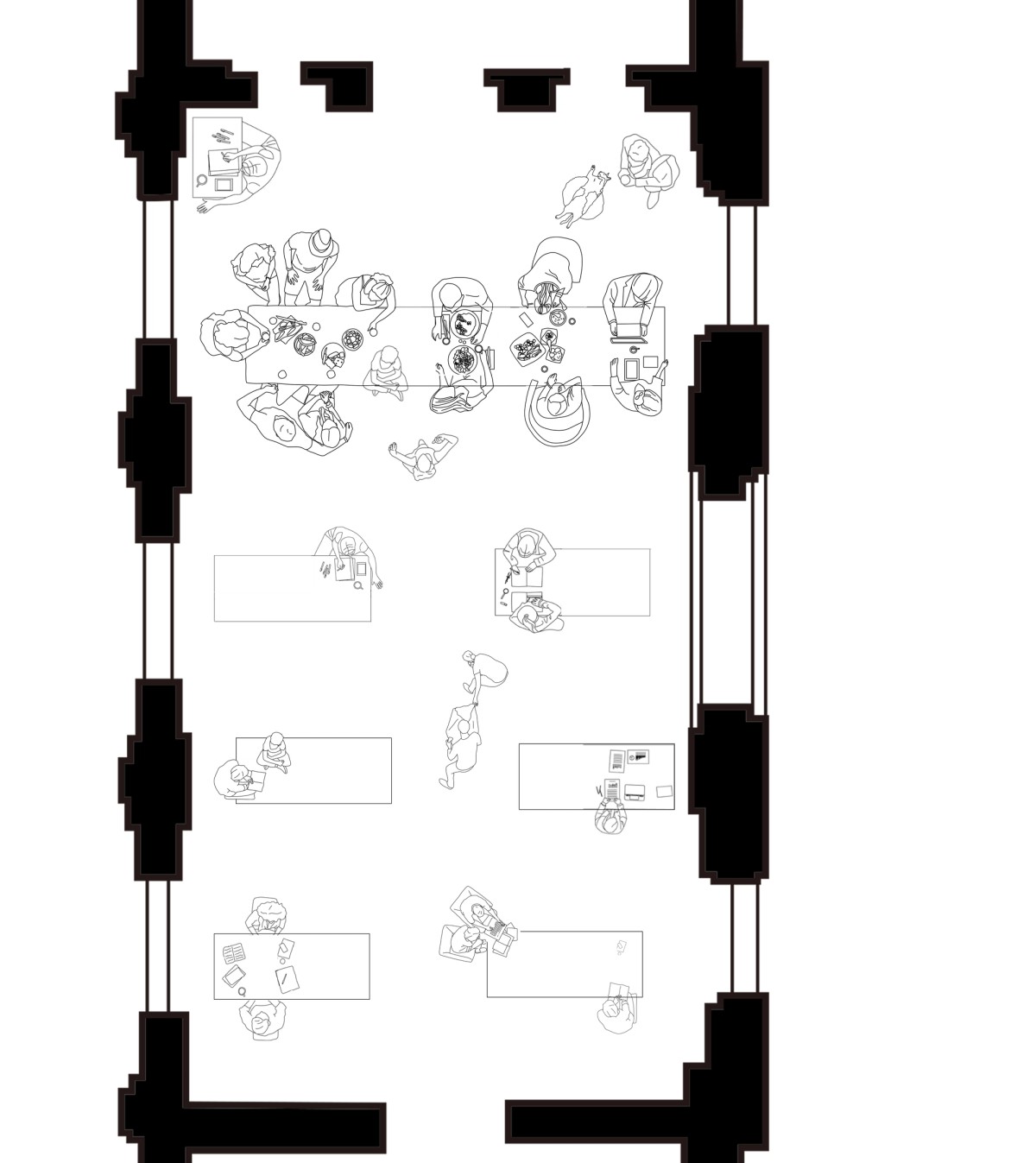
The Submarine, FREJA’s base, was also the students’ studio. I have tried to reproduce the layout of the space and show how it was used according to a description by former members of FREJA, Jens Hvass and Jens Christian Christensen. [Ill. 2]Teachers and students here are the regulars of this space, which helped give the space its character. In particular, Niels Blegvad Stenz, also known as Hassan, was a man of great charm and resources who always attracted crowds around him.
Furthermore, because FREJA was originally an interdisciplinary organization. It became a meeting place for architecture students, people from other schools, people of all backgrounds, foreigners, girlfriends, boyfriends, strangers, a dog, school security and cleaning staff. People would gather around long tables to eat, study, discuss, chat, and drink with many students outside Copenhagen. It became a home away from home.
The above makes the Submarine sound like what Ray Oldenburg would call a third space. One that anchors community life and facilitates and fosters broader, more creative interaction. Morrison would describe it as the fourth space. Morrison: “New social environments in the knowledge city can combine elements of the first and second place (co-living); of the second and third place (co-working).” Morrison takes the combination of the second and third spaces as the rational instrumental result of development, a kind of re-reflection on the reflection of modernity. However, slightly different from Morrison’s fourth space, Submarine is not the product of postmodernism but has a shadow of the pre-modern. It is more like a literary public sphere, which Habermas founded in the investigation of the 18th and 19th centuries. It is a kind of conscious transformation connected to both intimate (the traditional drawing room) and public spheres and tied to the use of rational-critical thought, which were eventually felt in the political consciousness of the public sphere, effecting political change. To some extent, this space reflects FREJA’s actual situation, transitioning from the private and professional sphere into the public sphere.
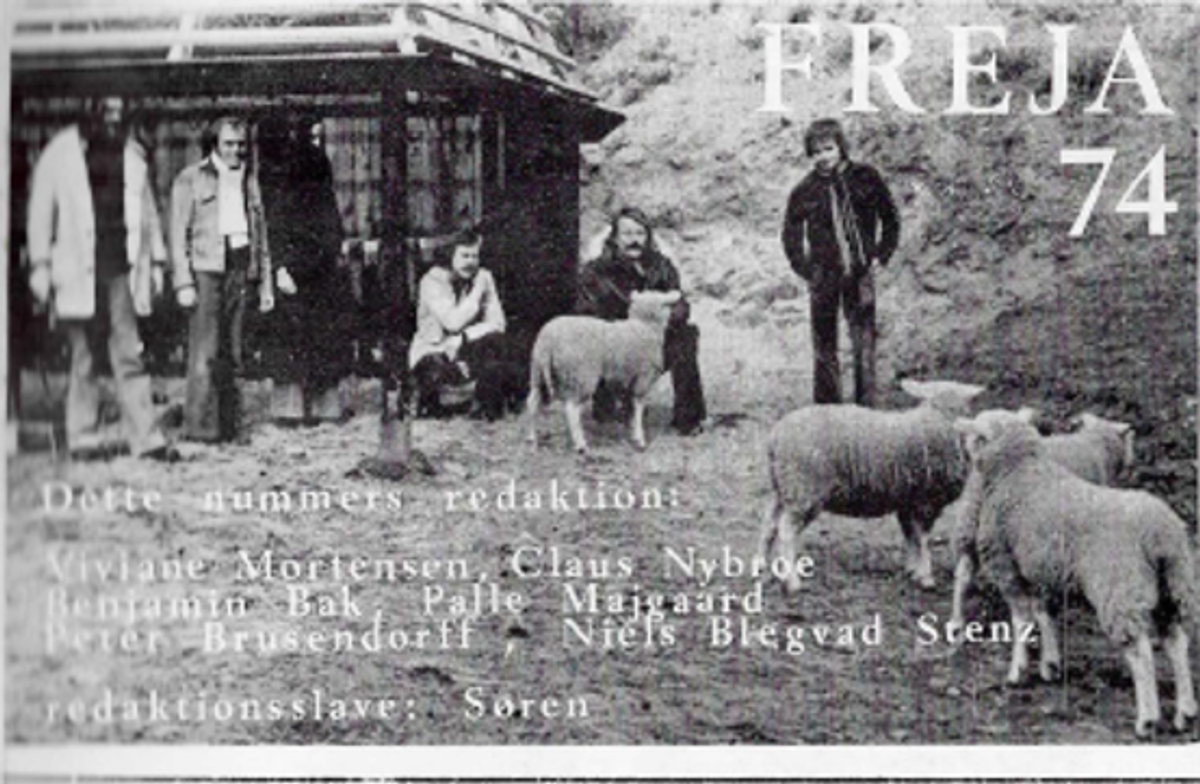
In contrast to Submarine as the organization’s basement, Møn became the organization’s summer house and, more importantly, the field of their field work. They met to live together every year and discuss the magazine’s agenda. [Ill. 3] They participated in several competitions and published a proposal for Møn. FREJA kept returning to Møn, paying attention to Møn, and bringing nutrients to the organization that was naturally rooted in the ground. After leaving architecture school, the team’s core returned to Møn to become farmers.
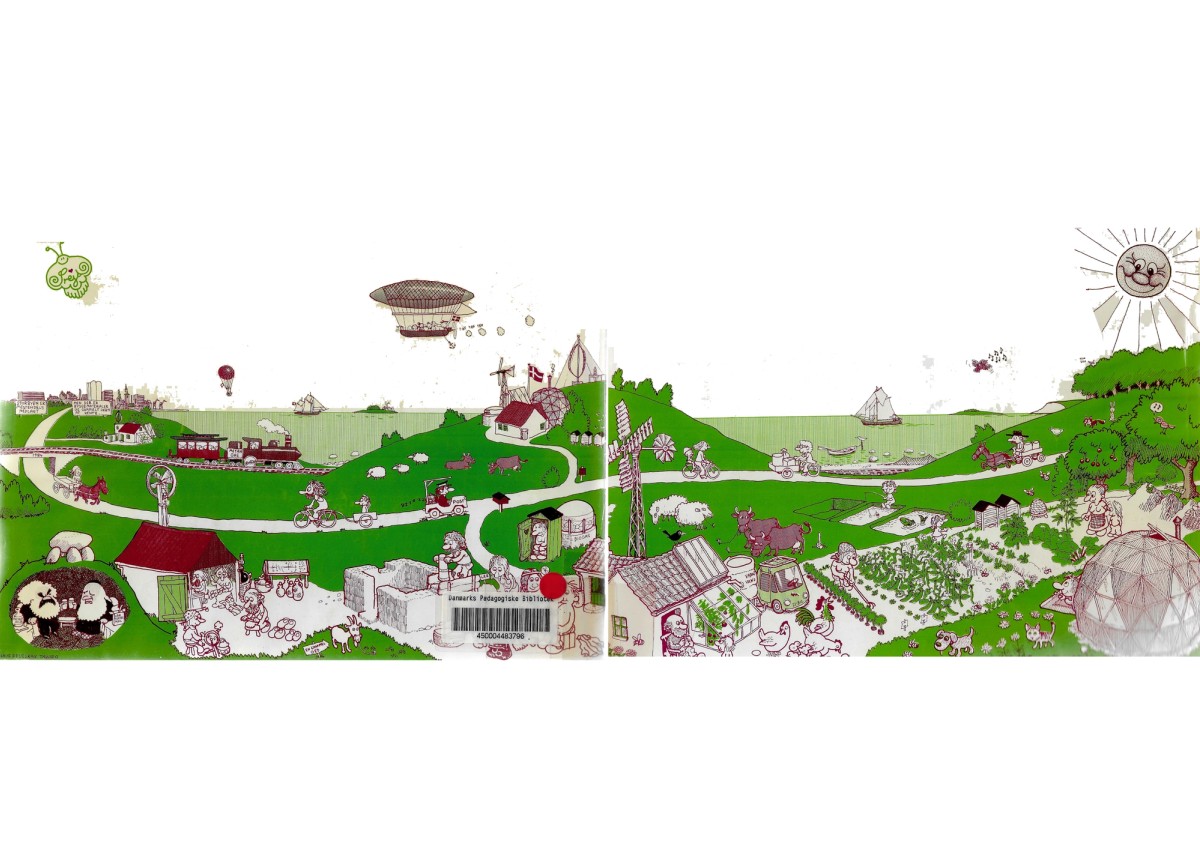
Suppose the Submarine is a spatial metaphor for FREJA’s position in the public sphere. In that case, Møn is FREJA’s locality, bringing a distinctive perspective to organization, answering the most fundamental questions: Where it came from and where it is going. The focus on the rural, the exaltation of the countryside, culminates in FREJA’s last book, where they created one of their strong architectural narratives: The big city will disappear and become the resource of building materials to develop the rural. [Ill. 4]
SITUATED IN-BETWEENNESS
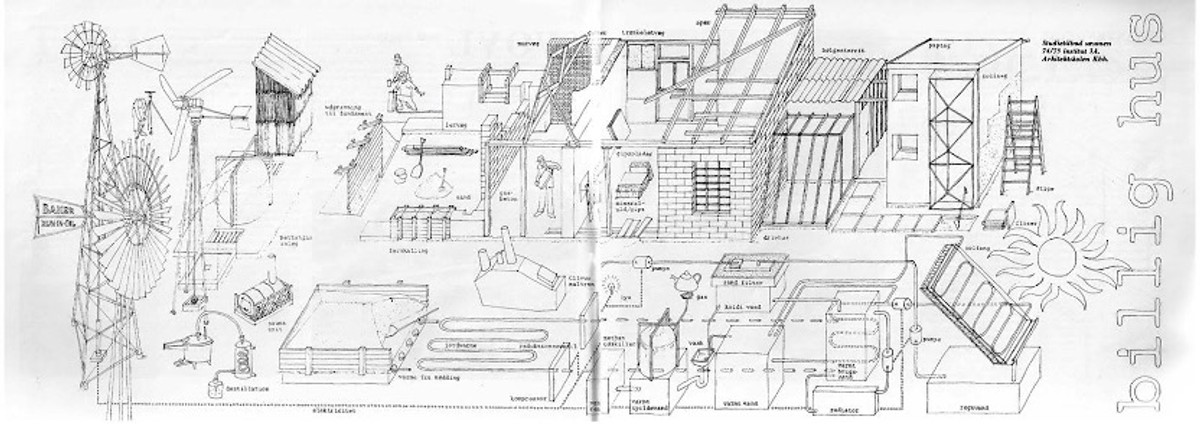
As a student organization, FREJA has always acted as an alternative problem-solver in political terms, neither mainstream Marxists nor hippies. For example, when it comes to development, they are neither against development, returning to nature ultimately, nor against technology. FREJA gives concrete and comprehensive feedback on how a community can organize. When discussing opposition to nuclear power in the face of an energy crisis, they engage with proposals on how to become energy self-sufficient at a low cost and without nuclear power. Under the premise of learning wind energy, solar energy, bioenergy and so on, they gave their solutions, even to the level of detailed design. [Ill. 5]
The same line of thinking can be seen in FREJA77, the 77th issue of the organizations’ pamphlet. It imagines a rural vision of steady development in its plans and visions, from land regulations to how to make a bio-powered toilet. In this village, everything is sustainable and self-sufficient, and the relationship with livestock is harmonious. Still, the technology is not excluded but rather an environment-friendly one, which is surprisingly consistent with the SDG that we are discussing in 2022.
This group was active in the 1970s when architects had a robust social and societal orientation and in the 1980s where, as Thyge Arnfred described: ”The traditional architectural profession was once again finding its accustomed place in the school, incidentally following the Marxist-inspired, socially critical storm, but here were people working tirelessly to find out the task of the profession, and who for that purpose acquired current knowledge and familiarity with relevant philosophical viewpoints.” FREJA allied with neither of them. FREJA began to be more and more unpopular with the school s teachers and staff. Even applying to the school for a cabinet was difficult.
An interviewee said that before his graduate defense, he was kindly reminded not to mention his relationship with FREJA, as it might affect the result. Finally, FREJA’s leading member Niels Blegvad Stenz quit and left the academy to work for his former students, drawing windows for a while, and eventually returning to Møn as a farmer.
Thyge Arnfred’s eulogy of Niels Blegvad Stenz, in which he described Niels as a Socratic hedonist, partly reflects the character of FREJA as a student organization. On the one hand, FREJA constantly questions and criticizes to provide effective discomfort for the public sphere. On the other hand, FREJA created a small world and an enjoyable intimate sphere. When we look back on this history, perhaps the best we can do as a student organization is to be FREJA: Still having the highest hopes for life, but constantly questioning, constantly giving answers, continually feeling frustrated, and continuously loving and devoting. In addition to portraying a tragic hero role, however, this article also wants to ask a series of superficial questions: When organizations move from the intimate sphere to the public sphere, what obstacles will they encounter? And what is the role of professionals, authorities, academies, established, and even ourselves, in their process of moving into the public sphere?
–
Yuxiang LI / Sean is a student at the master programme Political Architecture: Critical Sustainability at the Institute of Architecture and Culture at the Royal Danish Academy.