Measuring qualitatively, Paris is the city in the world with the most museums per inhabitant. Yet, conveniently missing from the Parisian museum landscape is a museum that focuses on French colonialism. Throughout the last couple of centuries French Museums have so often been vessels for displaying goods and material culture from colonized places. Whether it be an archeological museum, a colonial fair, or a former “Museum of the Colonies” colonial ghosts live on through renamed museums housing thousands upon thousands of contested objects scattered across France. Today, there is increasing pressure for French museums to return these objects that have longed filled their exhibition spaces and storage rooms that were acquired during the peak of European Imperialism. The French state has begun to engage in conversations on repatriation with former colonies and in some rare cases objects have been returned to their place of origin. But what does it mean to return objects without reflecting on how and why they exist in France in the first place? Perhaps the return of objects without some sort of contextualization of their existence in France enacts a sort of amnesia to the object’s indivisible relationship to French history.
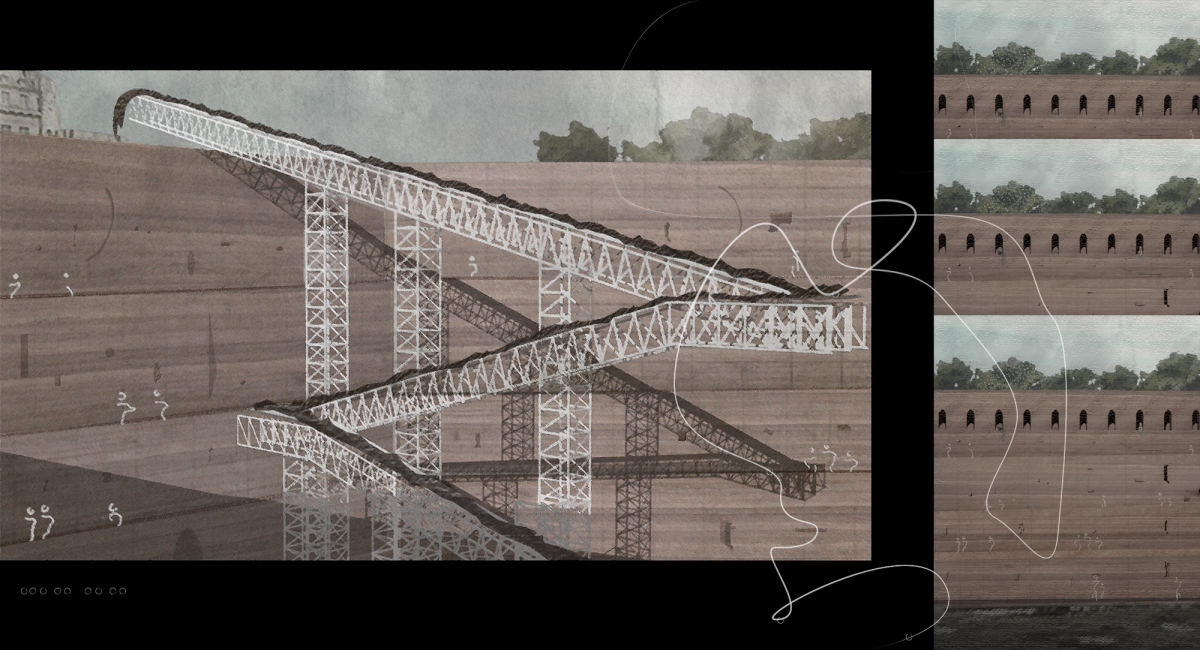
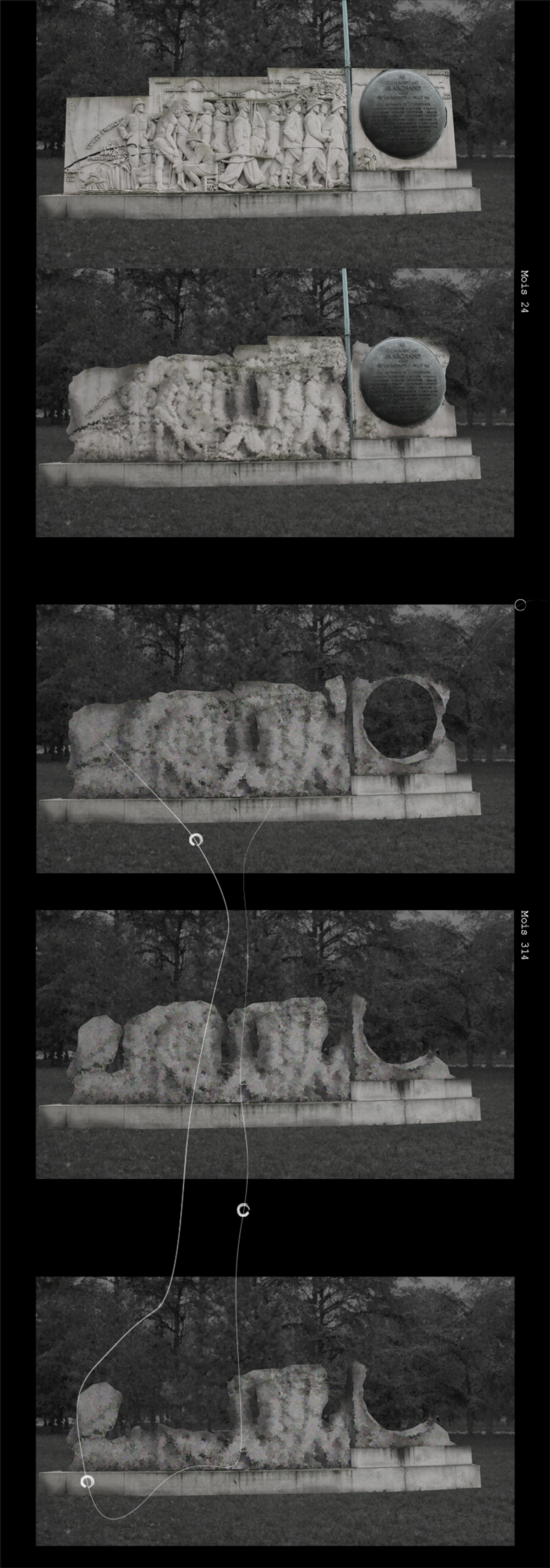
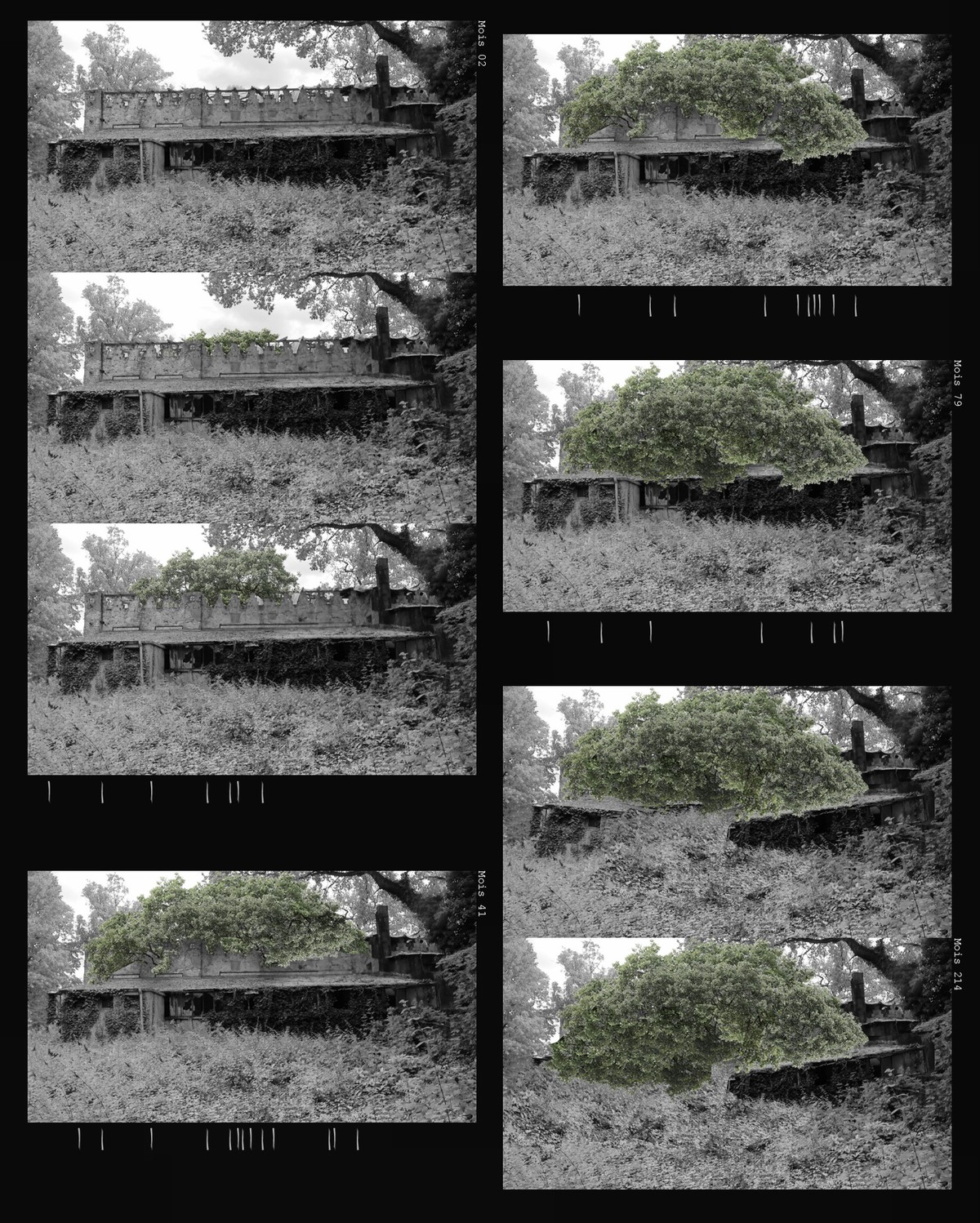
The project imagines a France which begins to actively return contested objects filling its museums. This imagined reality creates a new type of museum scattered across a forest-park east of Paris, Bois de Vincennes. The Bois de Vincennes is a large forest that houses the sites of many instances of the French colonial continuum. From the site of a former human zoo at a colonial fair, to the site of a statue celebrating the colonization of “French” Congo, to the site of a currently operating immigrant detention center that imprisons people often from former French colonies, a long walk through this park reveals multiple elements of the insidious evolution of French colonialism. The project attempts to contextualize the return of contested art in relation to these loaded sites throughout the park.
In some ways the project explores measuring absence spatially through an archive that is continuously growing into the earth with copies of looted art from former colonies of France. In other ways, the project is an un-measuring through the slow dissolving of statues celebrating colonization or the destruction of buildings that were for colonial fairs that would exhibit people of colonized lands in human zoos.
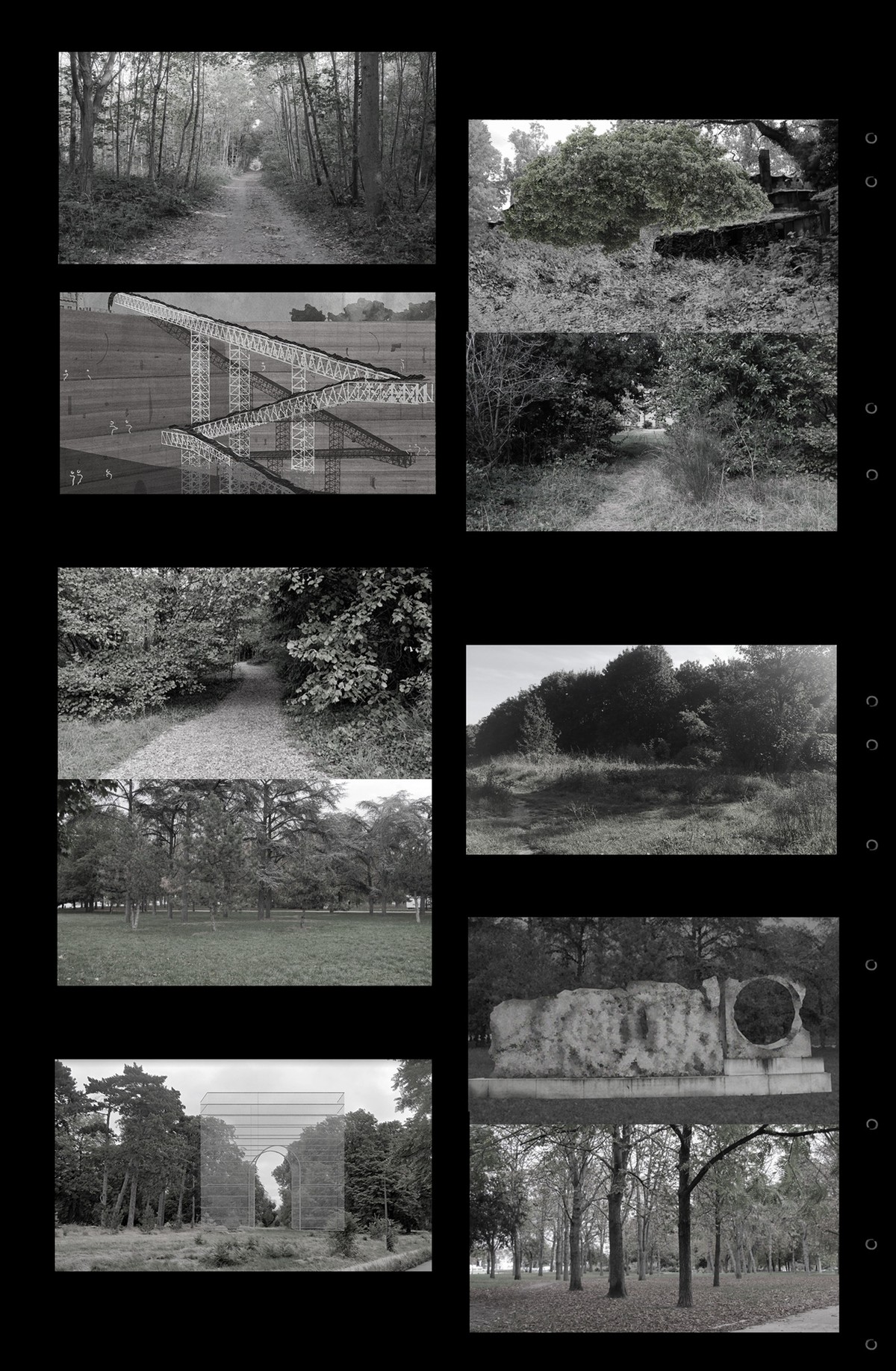
The park was temporarily known as ‘the thinking forest’ before the demolition of the influential experimental university at the park. The project seeks to engage with the park as the ‘thinking forest’ by creating interventions at these points of significance to French colonial legacy. The interventions require walking through the forest from one point to another. The intention is that the museum happens the most at the un-designed moments walking through the forest from one intervention to another where the forest may serve as space for reflection and thinking.
While the project explores elements of measuring, the immeasurable qualitative moments of walking a 25 minutes or 45 minutes through the forest between one site to another, are the heart of the project. Maybe it is okay to forget about measuring for a moment and be present in this forest of colonial phantoms.