14 min
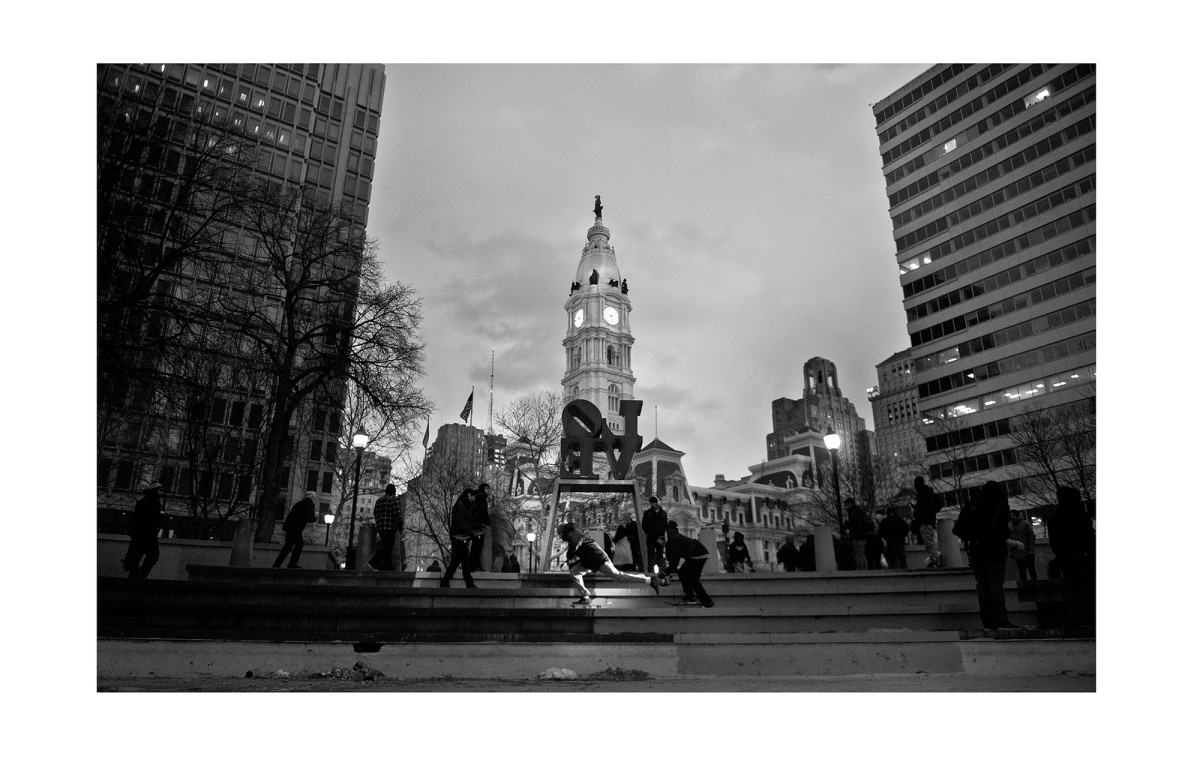
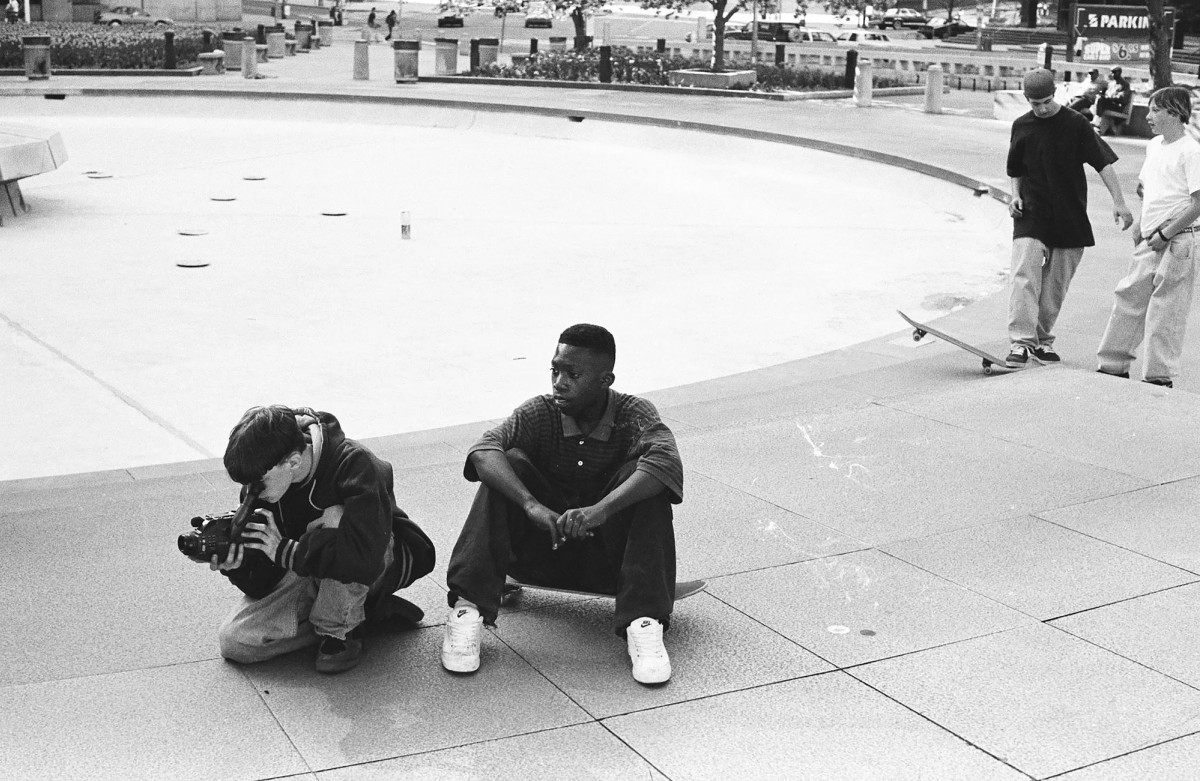
In May 2024, a plaza was completed in Malmö, Sweden, that bears a striking resemblance to a plaza in Philadelphia. John F. Kennedy Plaza, colloquially known as “LOVE Park,” was a focal point of skateboarding culture at the turn of the millennium. Enduring bans on skateboarding and hefty fines, Philadelphia skaters maintained an uneasy relationship with city officials and police for decades [ill. 1]. While the appeal for skaters never faded, the city remained opposed to skateboarding in the plaza and it was demolished in 2016. However, through remarkable community efforts and shared appreciation of the heritage of the site, a small section of the iconic plaza was rebuilt in Malmö. Employing “LOVE Malmö” as a case study, this article will investigate the cultural significance of rebuilding, examine the political contexts involved, demonstrate the potential of rebuilding, and locate LOVE Malmö within a long history of reuse and rebuilding in architecture.
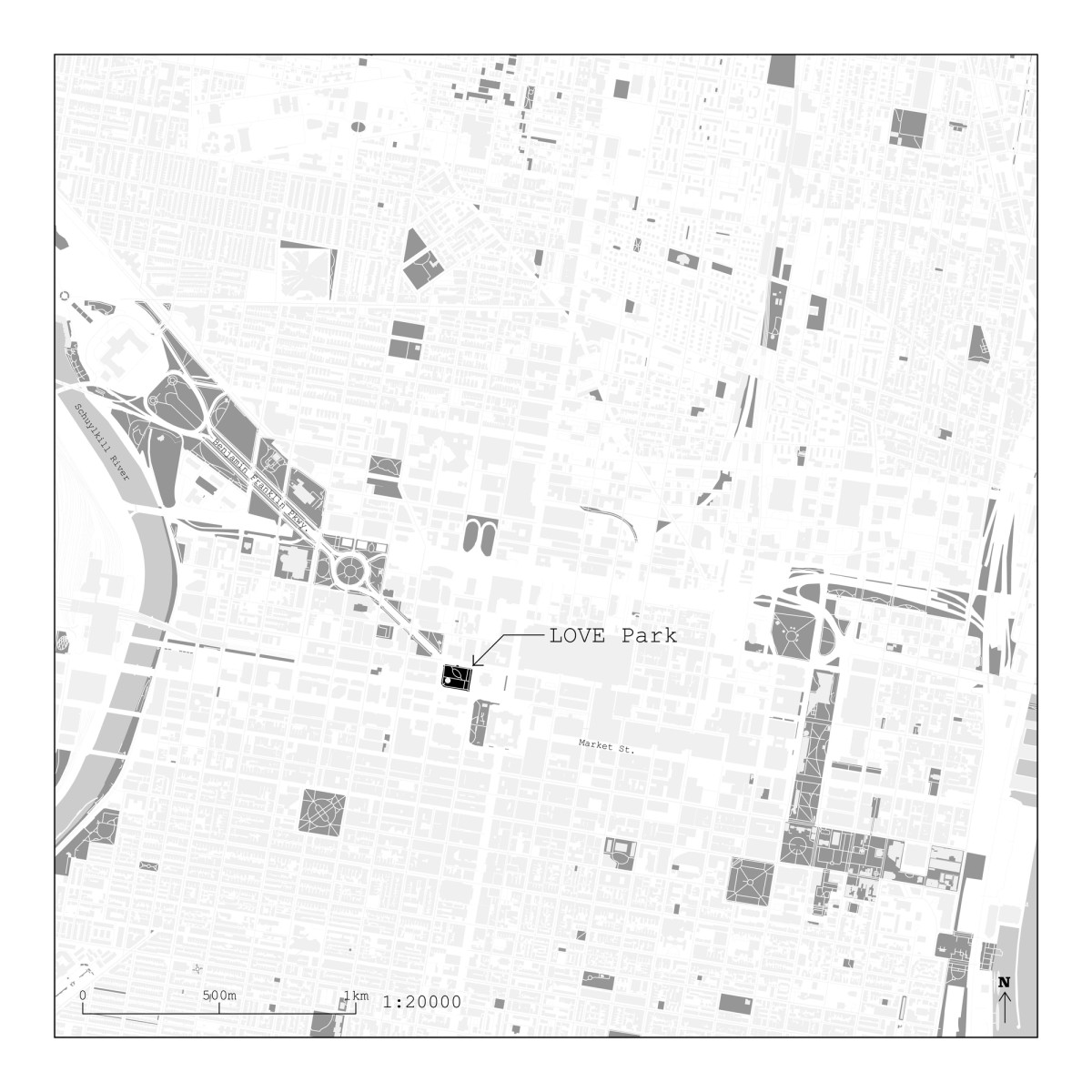
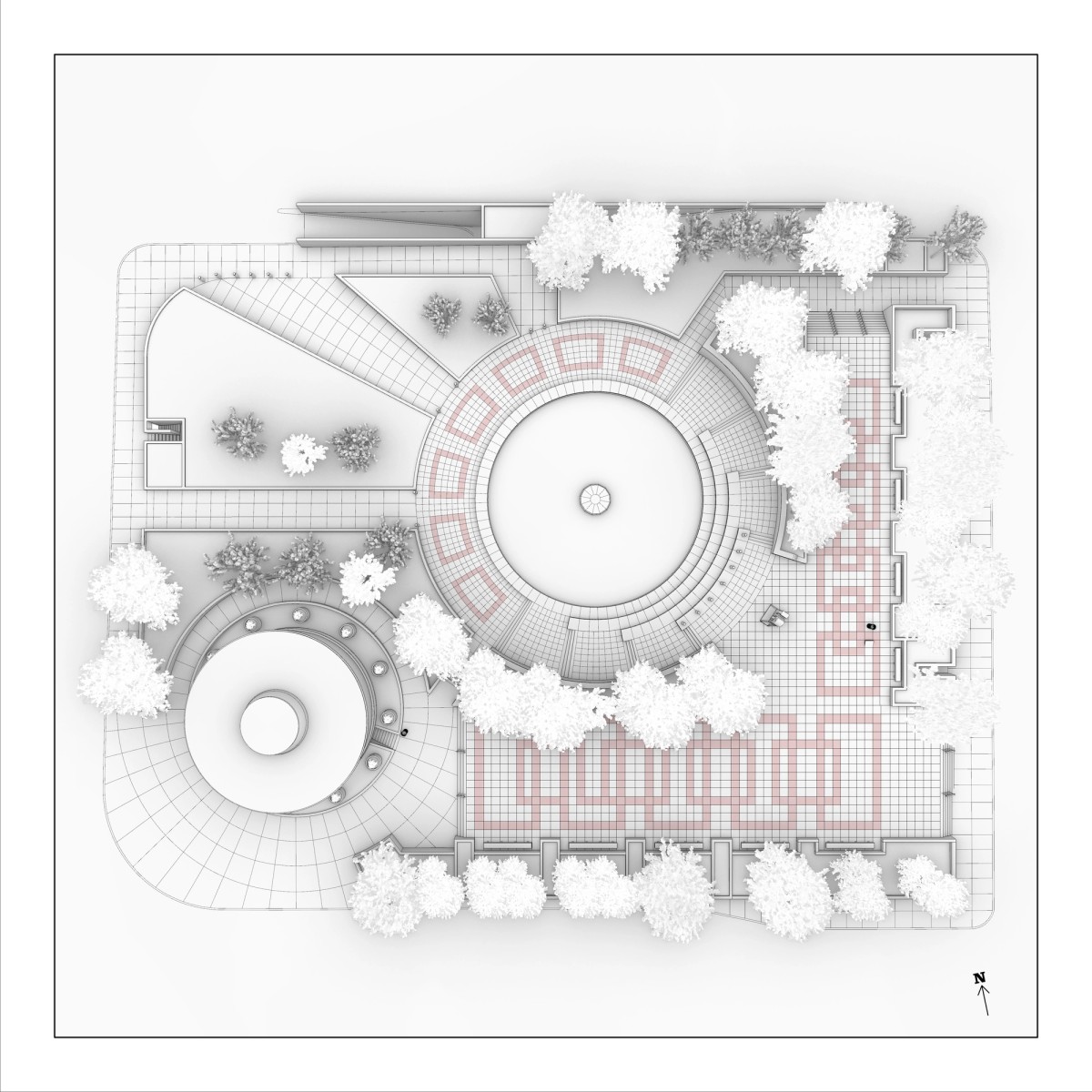
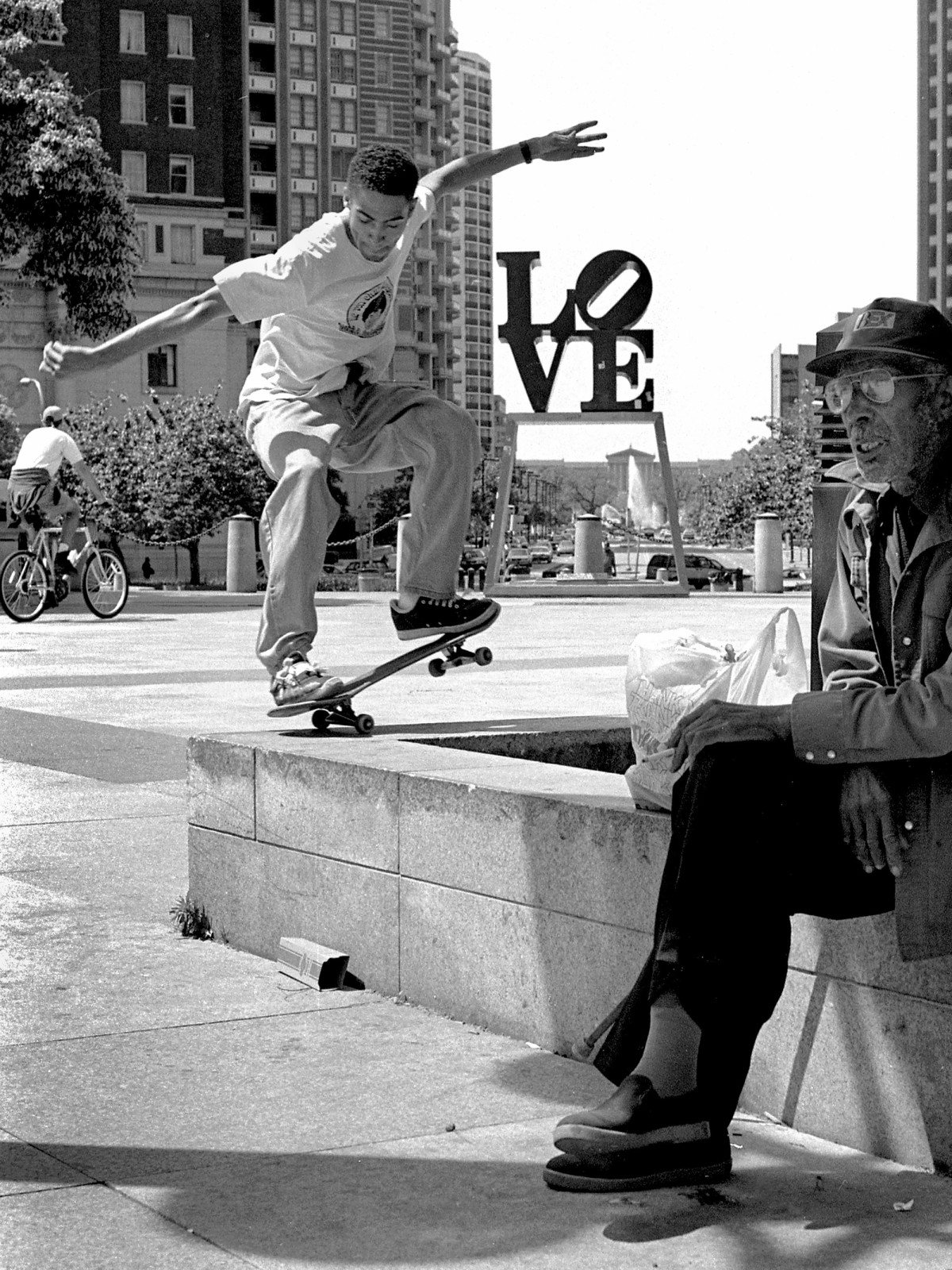
In 1683, surveyor Thomas Holme drew the gridiron plan for the establishment of Philadelphia. Stretching from the Delaware River on the East to the Schuylkill River on the West Holme followed guidelines for Roman military city plans. He provided a public square in each quadrant of the rectangular grid and one at the centre. The centre square was later filled by Philadelphia City Hall. In 1906, construction of the Benjamin Franklin Parkway cut through Holme’s grid from a site on the Schuylkill, later the Philadelphia Museum of Art, south-east to City Hall. To address the awkward six-way intersection of main roads at the centre of the city, Edmund N. Bacon proposed, in his 1932 Cornell University architectural thesis project, to replace City Hall with a roundabout and plaza. Bacon, father of actor Kevin Bacon, became director of the Philadelphia Planning Commission in 1949. He was responsible for the expansive urban renewal of Philadelphia. Like Holme, Bacon looked to Rome for precedents, but to a later period. Pope Sixtus V’s 15th century plan for Rome centred around the basilica of Santa Maria Majorie. He drew boulevards that would cut through the medieval fabric linking key monuments such as Fontana della Barcaccia and Piazza del Popolo on axes and establishing sightlines between them. “As we look back over the city of Rome, we realise each of its parts is dominated by a rich, moving piazza,” Bacon explained. Fundamental to Bacon’s design structure for Philadelphia was the tactic of connecting focal points along key axes. In addition to the Market Street axis of Holme’s 1683 plan, what Bacon called “the channel of greatest force,” the Benjamin Franklin Parkway was a key component of the designs. Bacon’s plaza concept appeared in many variations throughout the design process and was eventually included in the four-block Penn Center commercial development north-west of City Hall [ill. 2]. Architect Vincent Kling designed the plaza along with the Penn Center office towers and it opened in 1965. In 1976, the iconic LOVE sculpture by artist Robert Indiana, from which the plaza derives its moniker, was installed. Located on a site that gently slopes south to north, the plaza was oriented around a low, circular pool, 30m in diameter, with a fountain at its centre, precisely on the axis linking City Hall and the Museum of Art. Looking south-east, the plume of the fountain rose up in front of the LOVE sculpture and the clock tower of City Hall behind it. Walkways radiated out from the central fountain. On the south-east of the fountain, a semi-circle of three curved, stepped ledges rose like a Classical amphitheatre, cradled by tall walls parting in the middle for a walkway, where the LOVE sculpture was placed. Along the east and south sides were broad open areas lined with benches and generous planters [ill. 3]. Mount Airy granite from North Carolina topped all of the ledges and walls, and the plaza was paved throughout with grey rectangular cut granite [ill. 4]. Contrasting red granite traced out geometric patterns in the open spaces, evoking lively, historical urban plazas like Piazza san Marco in Venice. Built above a parking garage, and at the convergence of subway and train lines, LOVE is at the heart of Philadelphia. For a brief period after its construction, the plaza was home to vibrant public life. It was popular for eating lunch, playing chess, and skipping rope. Its proximity to City Hall made protests common. The “Rally to Stop Reaganomics” in 1982 foreshadowed the next decades of deep cuts to public housing and mental health support. By 1989, the plaza was characterised by residents as an “open-air dormitory” and “mental-health clinic.” This unfortunate state was the condition in which skaters found it. In 1984, the city enacted the first ban on skateboarding. In 1990, Mayor Ed Rendell upped fines to $300. Despite this, LOVE continued to gain popularity as skateboarding evolved and skaters found new ways to use its many features.
Plazas have provided places for convergence and encounters in cities for centuries. In our time, wherever there is smooth enough pavement to accommodate the rotation of 50mm wheels, skaters have gravitated. Architecture, explains professional skateboarder and architect Alexis Sablone, “is a site specific impetus for performance.” Over many attempts at a trick, skaters adapt their bodies to the forms and rhythms of a space. They will modulate speeds and angles of approach, in what can be a long, intense process of attempting a trick. Skaters build connections to the site and each other through this embodied experience. “The identity of individual skaters becomes meaningfully linked to particular structures,” says Sablone, be it a notable piece of architecture, or a ubiquitous city object like a fire hydrant. The street, skatepark, or plaza can be a place where lifelong friendships and mentorships form [ill. 5]. According to Sablone, “LOVE Park was arguably the most cherished skate spot of all Ibid.
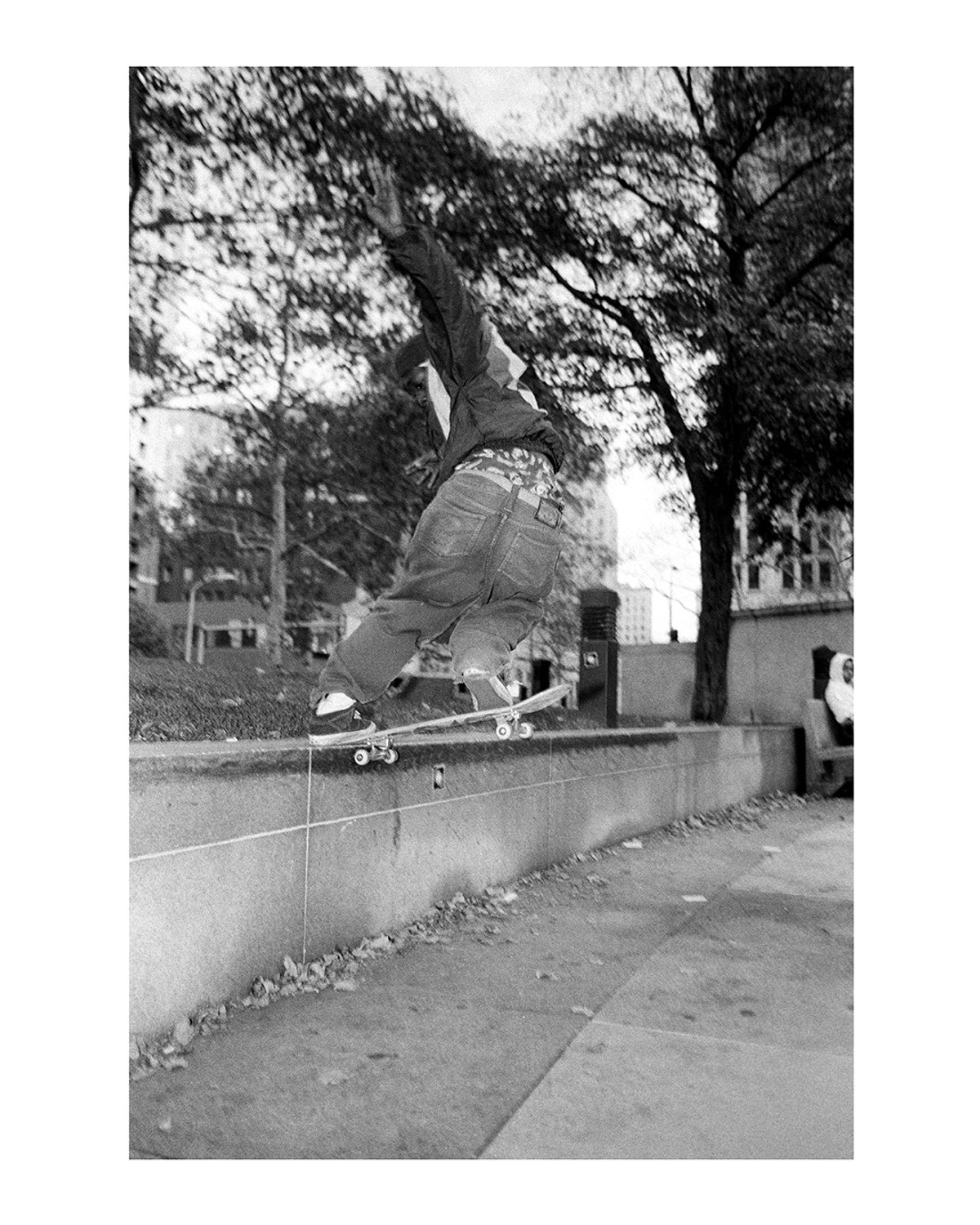
Another plaza across the country in San Francisco, Embarcadero (EMB), conceived by Lawrence Halprin, was the centre of the skateboard universe in the early 1990s. At the time, 411 Video Magazine was showcasing different local scenes around the country with regular and frequent video footage compilations on VHS. With each release, new skaters became known, and new spots became destinations. Skaters who visited San Francisco returned to their own scenes with new perspectives, propagating a new plaza-centric mode in street skating. Philadelphia skater Roger Browne recalled, “We didn’t really know the potential of LOVE park until EMB started jumpin’ off.” LOVE Park, he realised, had everything they needed. Kling’s modernist interpolation of historical forms provided smooth ground, dozens of low, unadorned granite ledges, staircases, handrails, and the long, high, drop from the top of the amphitheatre-like ledges to the bottom of the fountain which came to be known as LOVE Gap. Skaters could string together infinite combinations of grinds and slides on the ledges with flatground tricks on the pavement in lines [ill. 6]. Like Philadelphia, many urban areas across the US were partially demolished to accommodate ambitious urban renewal projects. In the same period, suburbanization drew people out of urban centres while social support was defunded. Because of this, most US cities had some kind of neglected plaza in the centre of their financial districts. “It follows that what started out as a bunch of imitation EMBs ended up fostering authentic and specific skate scenes,” explains skater and art historian Ted Barrow. In Philadelphia, that scene was rooted in LOVE Park and nurtured by videos like Dan Wolfe’s Eastern Exposure series (1993, 1994, 1996) that highlighted East Coast skaters like Ricky Oyola, Matt Reason, and Bam Margera. Later, LOVE became associated with skaters like Stevie Williams in The Reason (1999), and Josh Kalis in Photosynthesis (2000) [ill. 7]. By the time LOVE was featured in hit video game Tony Hawk’s Pro Skater 2 in 2000, it was the Mecca of skateboarding. That same year, Philadelphia city council passed a city-wide ban on skateboarding that referred specifically to LOVE. In 2002, the city announced a partial redesign at public expense, sections of paving were replaced with grass, and planters were installed to discourage skateboarding.“It was like they just stuck a knife right into the lung of the skateboard community,” skater Jimmy Gorecki recalled of the changes. “It’s an absolutely socially unacceptable thing for those paunchy councilmen to sit there in City Hall, not being able to go two inches on a skateboard, and saying these kids can’t do it,” said Bacon, who became an outspoken advocate for skateboarding in LOVE. “People come to the park to see the skateboarders,” he said. In protest of the renovations and bans, he skateboarded, albeit with assistance, across the park, at age 92. Kling, then aged 95, was also in attendance. From 2002 to 2016 there were significant community efforts by skaters to preserve the plaza for skateboarding and the benefit of the city. In early 2016, the ban on skateboarding was temporarily lifted for five days. Despite cold weather, skaters flooded the plaza [ill. 1]. Days later, in February of 2016, LOVE Park was fenced off and demolition commenced. The plaza reopened in 2018 after significant renovations. Some familiar vestiges remain: there is a new fountain and the LOVE sculpture was reinstalled. However, it is now almost totally flat, with large open areas of paving and grass which are, as intended, uninteresting to skateboarders.
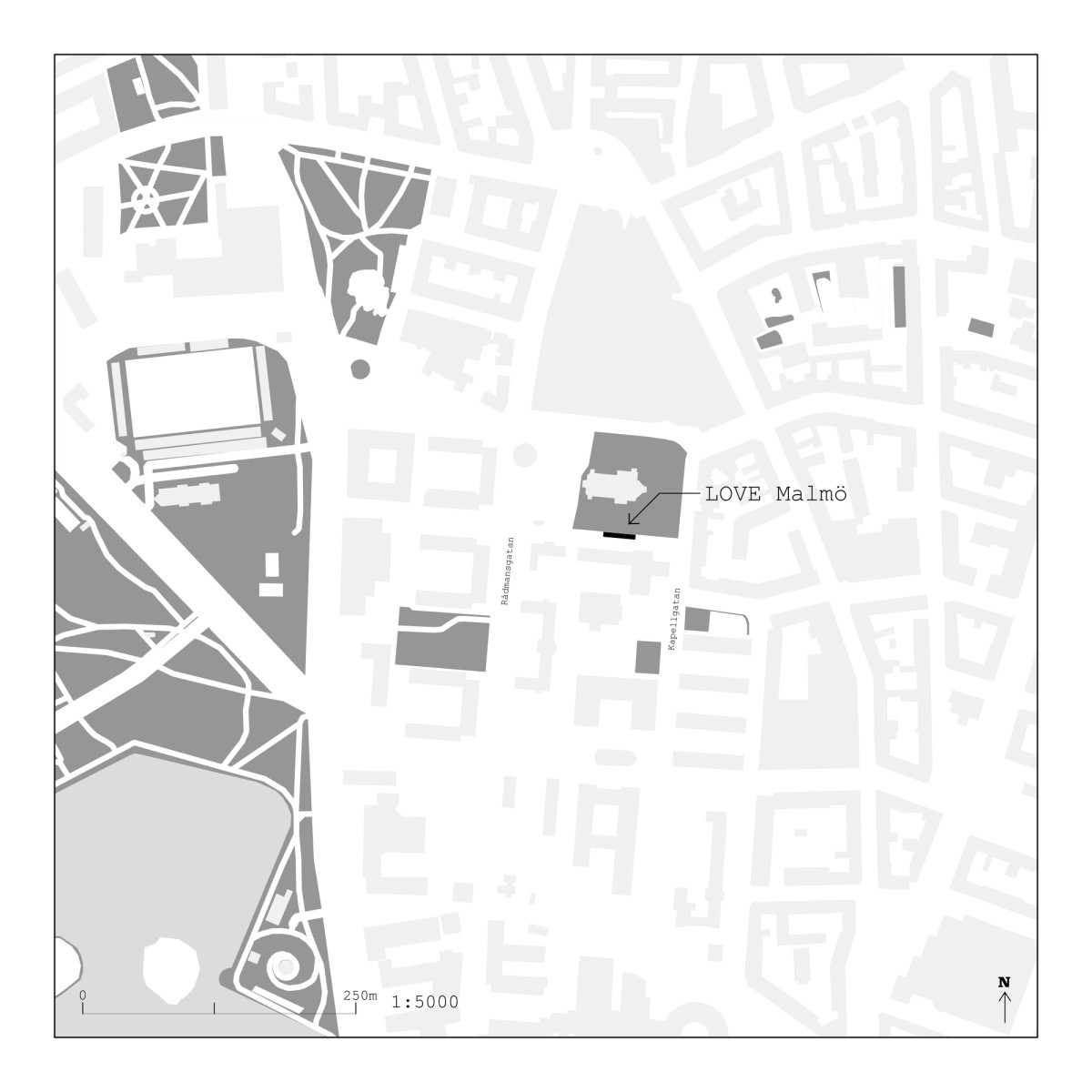
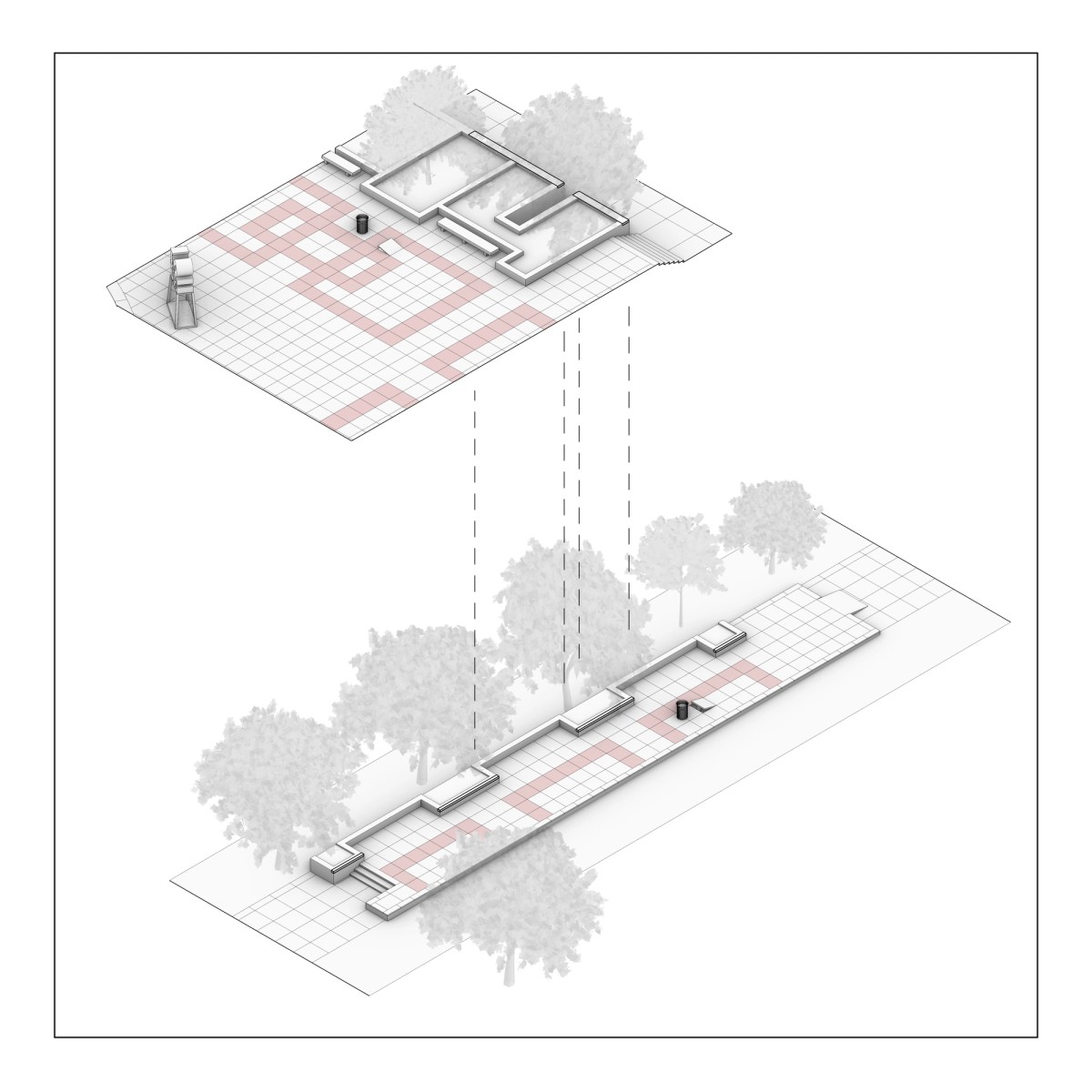
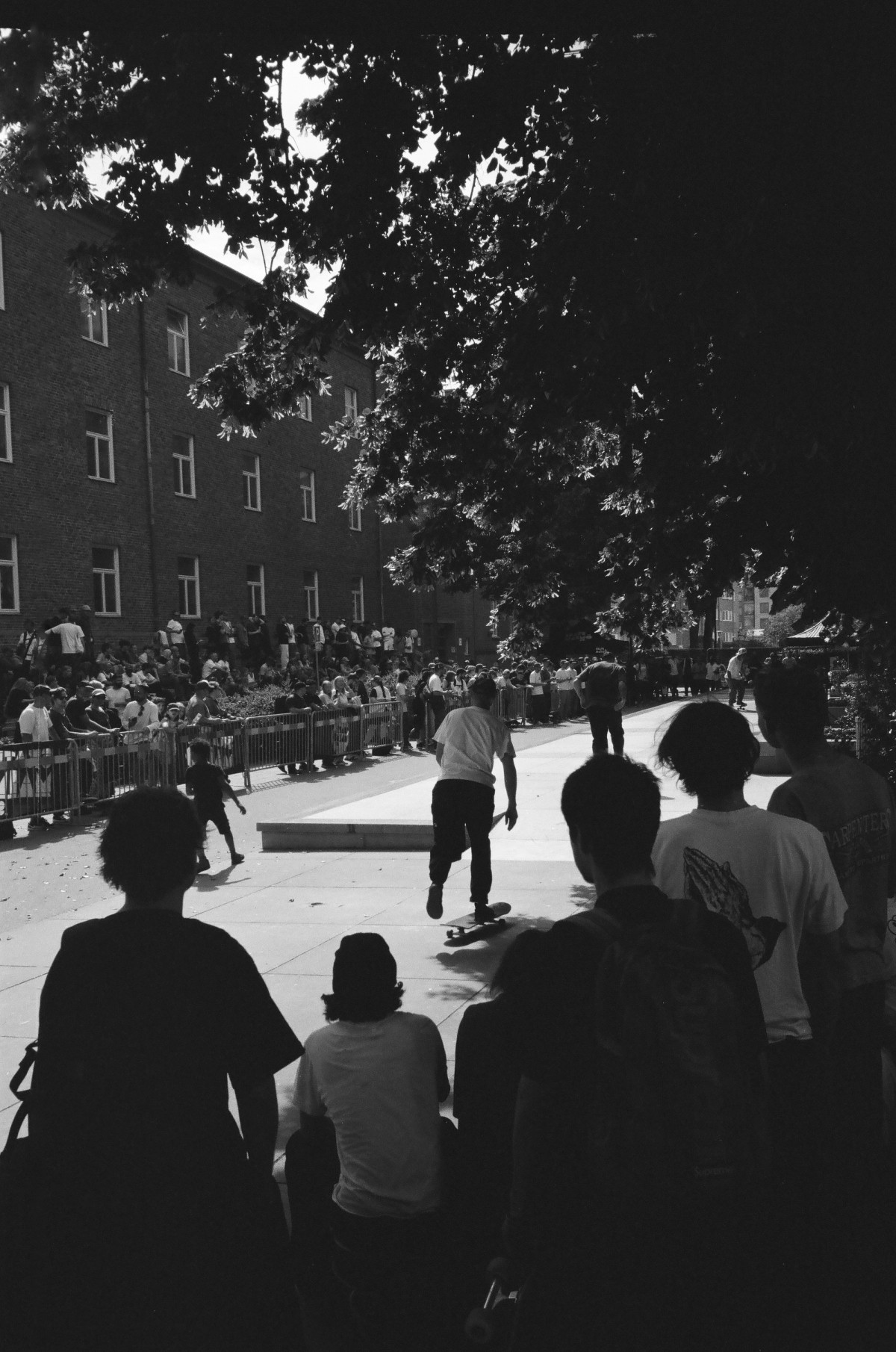
While Philadelphia skaters and politicians remained at odds, skateboarding was growing in popularity as well as political acceptance in Malmö. Since 2006, Gustav Edén’s efforts as project manager of Skate Malmö have repeatedly demonstrated the value skateboarding can contribute to a city by coordinating skate events and producing permanent skate features. When he heard LOVE was being demolished, Edén called the Philadelphia city switchboard and was put through to Bob Allen. Allen informed him that skaters had managed to salvage and store material from the plaza. “My friend Heather Shaffer set all that up,” Philadelphia skater and filmmaker Brian Panebianco recalled, “she even paid for the truck and forklift out of her own money.” According to Philadelphia skate advocate Pat Heid, Shaffer created a detailed catalogue of what was there. In the days leading up to the demolition of LOVE, Panebianco had spent long, cold hours measuring and recording the dimensions of the plaza. Shortly after, Edén visited Philly and met with Panebianco to tour the storage yard and inspect the material. While there, he drew up possible plans which he shared with Panebianco. Within the given constraints, they settled on material for two ledges and several paving stones. The material came from the street facing side of the planters rather than the plaza side, meaning the ledges had not been skated. Edén booked a container for the material to be shipped to Malmö and it arrived in 2017. However, the granite stayed in storage for several years. In the interim, Edén worked on several hundred iterations, trying to fit the fragment of LOVE into the city of Malmö. Year after year the project was delayed while other events took precedence and the city’s priorities shifted. Eventually, on the suggestion of landscape architect and fellow skater Tor Rasmussen, Edén revisited an area that had earlier been deemed unsuitable. Like LOVE Park, Triangeln is the site of a train station, parking garage, and well known skate-spot. Malmö skater Pontus Alv was featured skating the steps of nearby S:t Johannes kyrka in Mad Circle’s video 5ive Flavors (1998). In addition, Edén and his team had produced several features nearby. Furthermore, from a municipal perspective, a site on Klerkgatan had emerged as an unsafe area, according to police reports. Related to this concern, there were initiatives to pedestrianise a neighbouring street [ill. 8]. Therefore, Edén had an appropriate site and funding to realise it. However, the original material they had was not enough to facilitate a design that would achieve a skating experience similar to that of the original LOVE. That is, the possibility to combine tricks in lines. Edén pushed for more money to complement the original stone with new Mount Airy granite and Swedish granite. The rebuilt LOVE Park ledges are constructed of newly cut Mount Airy granite, and topped with the material shipped from Philadelphia, while the podium they sit on is built of Swedish granite [ill. 9]. In plan, a two-ledge section of LOVE Park’s southeastern-most ledge section has been mirrored along its length to accommodate the orientation of the site, and mirrored again along its width to extend to four ledges with a low ramp at the east end and two stairs at the west end.
When he designed it, Kling could not have known that the ledges, stairs, and benches he drew would be perfect for skateboarding. Edén didn’t look to the Classical for inspiration as Kling did. Nor did he look to Rome as Bacon and Holme did. There is however, a parallel to be found among the myriad ruins, churches, temples, and monuments there. Just as there is a history of adaptation and repurposing in skateboarding, there is a much longer history of reuse and rebuilding in Roman architecture. Renaissance art historian Giorgio Vasari wrote that The Temple of the Prince of the Apostles in the Vatican was not very exceptional, in his opinion, except for columns, capitals, bases, and other ornaments which had been taken from earlier, more magnificent buildings. “Since nearly all large buildings were made of spolia,” wrote Vasari of Early Christian architecture, “it was easy for architects in making new buildings to imitate in large part the old ones which they had always had before their eyes.” An older example of spolia is the Arch of Constantine (312-315) in Rome, purpose built to house sculptural decoration from earlier triumphal monuments. Painter Raphael wrote that while the architecture of the Arch was satisfactory, the contemporary ornaments were poorly executed. However, the sculptures that come from spoils of war were of excellent style and finely crafted. “There's an element of triumphal war booty at play here too.” says Barrow of LOVE Malmö. It is sadly ironic that while Philadelphia was closing in on demolishing the lively skate spot at the heart of its city, another city was cultivating an environment in which skaters were an accepted user group of the urban environment. Jeremy Nemeth asserts that the case of LOVE illustrates the tendency of public officials and decision makers to prioritise a particular vision of a public space, in this case at the expense of skaters. The relic-like rebuilding of a historic skate-spot is as much a tribute to the progressive attitudes of city officials and public as it is an indictment of the failure of US cities. Edén is not interested in gloating about how his city is more enlightened than any other. He has emphasised strongly since 2016 that he did not want to take any material that had been skated, and he was very cautious in his approach in order to avoid the perception that Swedish skaters were claiming the culture of LOVE or stealing cultural artefacts that belonged to Philadelphia. He describes LOVE Malmö as an “interactive monument” to Philly skate culture. Unlike the Arch of Constantine, that which LOVE Malmö commemorates is not honoured by gazing, but by skating. The physical attributes and provenance of the material is what is of value here, not what it is sculpted to represent. LOVE Malmö demonstrates to skaters that our heritage is valuable, worth cherishing, and that it should, and very much can be advocated for. Rebuilding in Malmö will not bring back LOVE Park nor the scene that it cultivated, but Panebianco thinks it could encourage Philadelphia skaters and city officials to cooperate and realise the potential of the material stashed away in the storage yard. After all, the indulgent application of granite is unlikely in public architecture today. Like medieval Christians salvaging Roman remnants, skaters are eager to rebuild with the stacked-up mid-century spolia of that more extravagant age. On the other hand, Barrow urges us not to be too precious about the artefacts of skate heritage. He says that the public spaces popular with skaters “communicate most poignantly to us, as skaters, when their ledges are chipped and covered with the patina of slide and grind marks.” As Edén says, we participate in the history of skateboarding by enacting the culture [ill. 10]. Despite the effort it took to save, transport, and assemble those granite ledges, the best way they will be honoured and cherished is by generations of skateboarders grinding them into dust.
–
Tom Buckland is an architect from Toronto, Canada, based in Copenhagen. With a long-standing passion for skateboarding, he is interested in the relationship between architecture and skateboarding in the city.