Parents or grandparents may have bought the home half a century ago, but when the neighborhood gets upzoned and families need to sell, developers may buy them out at a reduced price, convert the property to multi-family housing, and sell it for many times their purchase price. In that case, the former owners lose the value of the property’s appreciation to the developer, along with their home and their community.
Andre Perry and Stuart Yasgur
A wicked problem is a problem impossible to solve in a simple or final way. Giving more people access to affordable homeownership is such a problem, a wicked problem. [Ill. 1]
For decades, densification of single-family housing neighborhoods has been discussed as a strategy to add to the housing supply and give more people access to homeownership, combat the poor results of modernist suburban planning, and create more sustainable and livable communities. Denser communities will allow for more commercial activity and afford better public transportation. In addition, developing existing areas is more sustainable than laying out undeveloped greenfield land for new housing developments.
But not much has come of it. The obstacles are many: financial, legal, structural, zoning, existing ownership models, etc. Furthermore, single-family housing is the dominant housing typology in countries like Denmark and the U.S. and constitute a crucial financial asset for the owners. For many the home is an investment and a primary way to build wealth. Discussions about changes to the zoning of existing neighborhoods to allow for densification have often not been possible out of fear that any change might impact owners' wealth negatively.
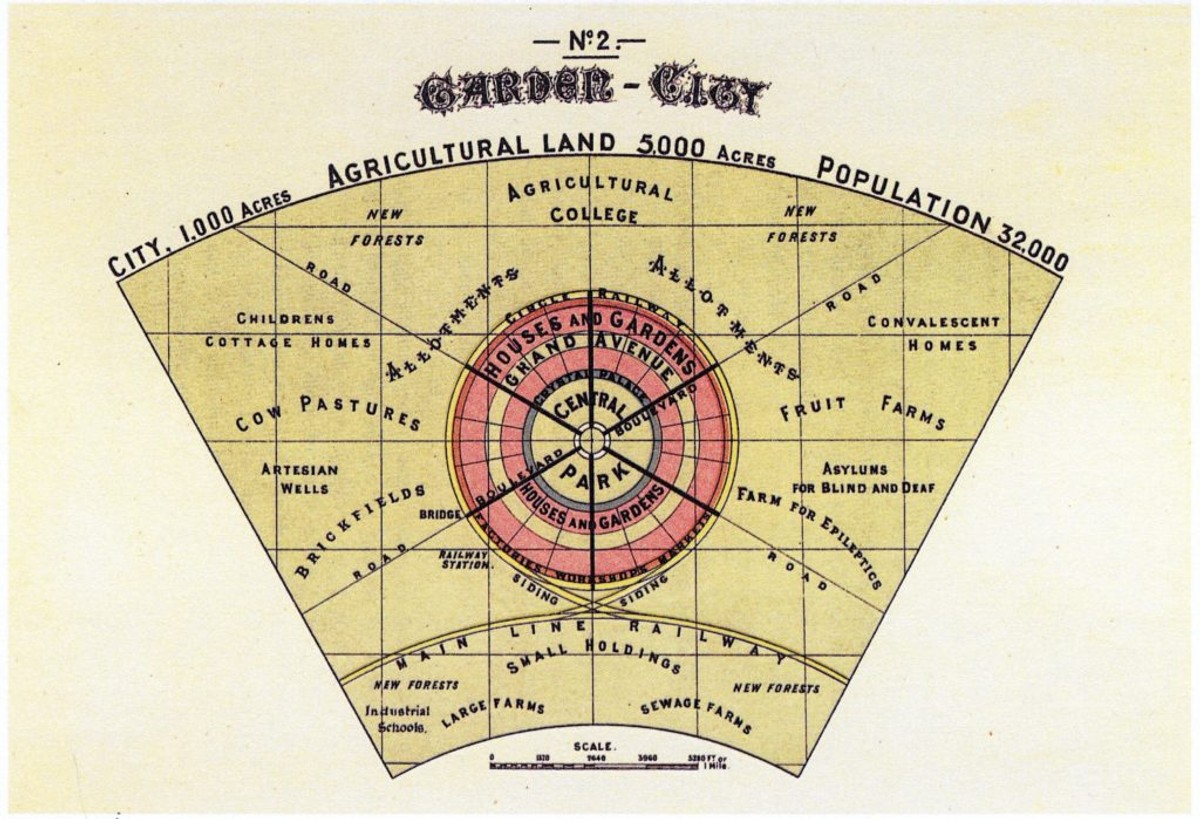
Zoning, the legislative method of controlling land use by regulating considerations, such as the type of buildings that may be erected and the population density, only came into use in Europe in the late nineteenth century. They were often inspired by architectural and urban design theories and used as a way of controlling the heights and concentrations of buildings as well as avoiding problems of congestion.[Ill. 2]
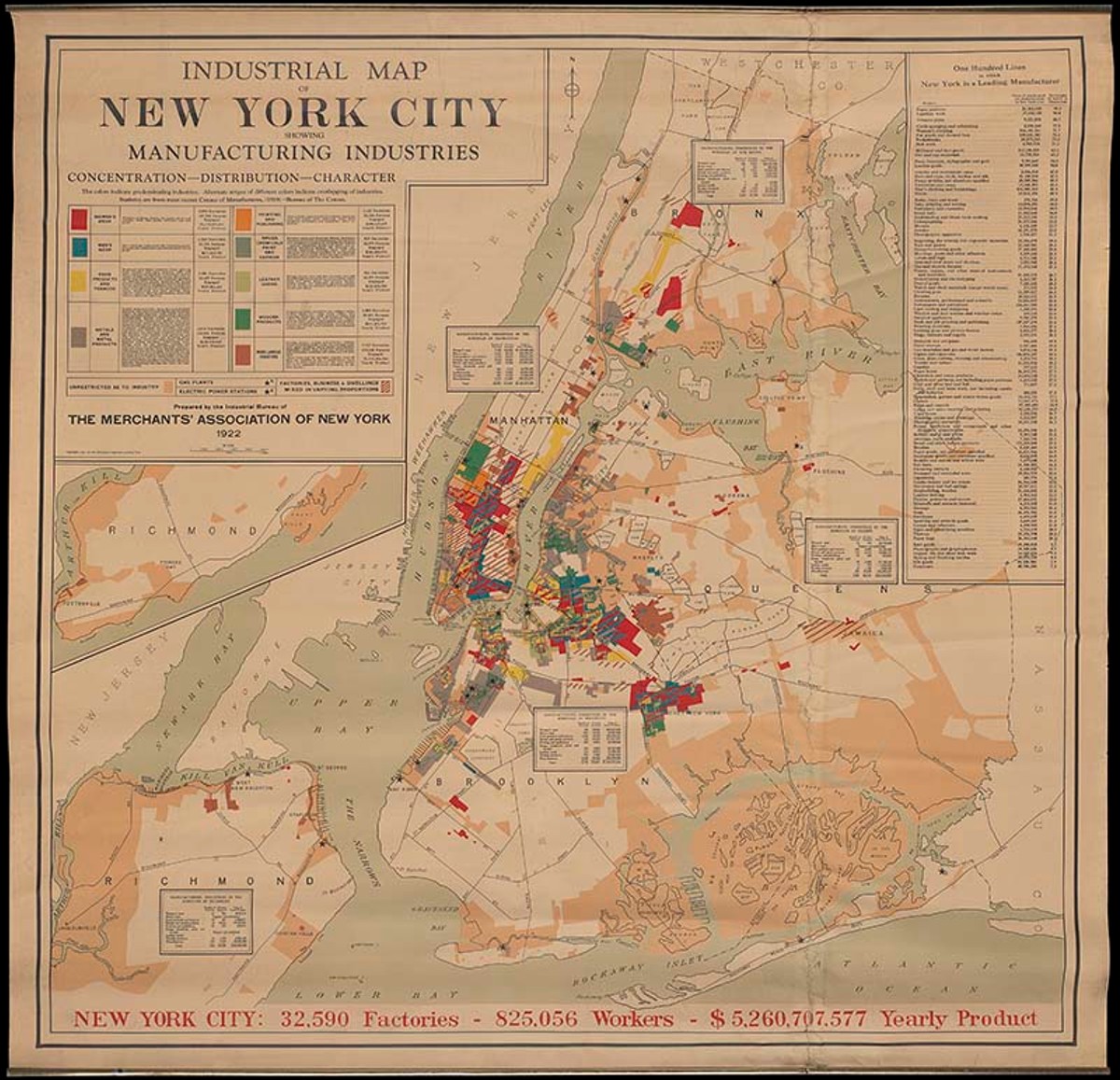
In the U.S. in contrast, the earliest zoning laws, that came into use in the early twentieth century, were often more concerned with the social and economic function for which land is used. The rapid urbanization at the time called for control mechanisms to prevent nuisances like factories from entering desirable neighborhoods.[Ill. 3]
Even well into the first half of the twentieth century it was common in the U.S. for neighborhoods to include a variety of housing types such as detached single-family houses, duplexes, apartments, bungalow courts and commercial buildings like corner stores. But as zoning took off, it established primary uses for neighborhoods, which sometimes segregated their populations, too.
The few experts who completed zoning in their cities were called upon to consult on codes elsewhere, and thus the patterns established in one city were repeated for better and for worse in other cities. Robert Whitten, co-author of the seminal New York City’s 1916 zoning ordinance and president of the American City Planning Institute, had an unmistakable view on the subject of zoning:
Bankers and leading businessmen should live in one part of town; storekeepers, clerks, and technicians in another; and working people in yet others where they would enjoy the association with neighbors more or less of their own kind.
Sonia A. Hirt
This statement of course is only a slightly concealed racist proposition. And the notion of race and who should be living where in American cities is a thread running through most of early U.S. zoning legislation. Initially overtly so, but after the Supreme Court declared racial zoning unconstitutional in 1917, racist and segregationist views continued to guide zoning but now in a more covert yet equally harmful way. To the enlightened planners and zoning specialists of the day it was even seen as a natural order that different races, classes, and ethnicities lived in different types of houses and thus should be accommodated in different parts of a city. The housing types could be surveyed scientifically and used as the basis of zoning legislation.
Thus, “zoning would legally cement the existing de facto partition and prevent mixing of housing types (and thus types of people) in the future.” In this thinking, the privately owned single-family detached home on a lot is primarily populated with white families, and zoning would deal with making sure to keep away things considered undesirable and that might lower property values, such as low-income families, renters, and non-white families.
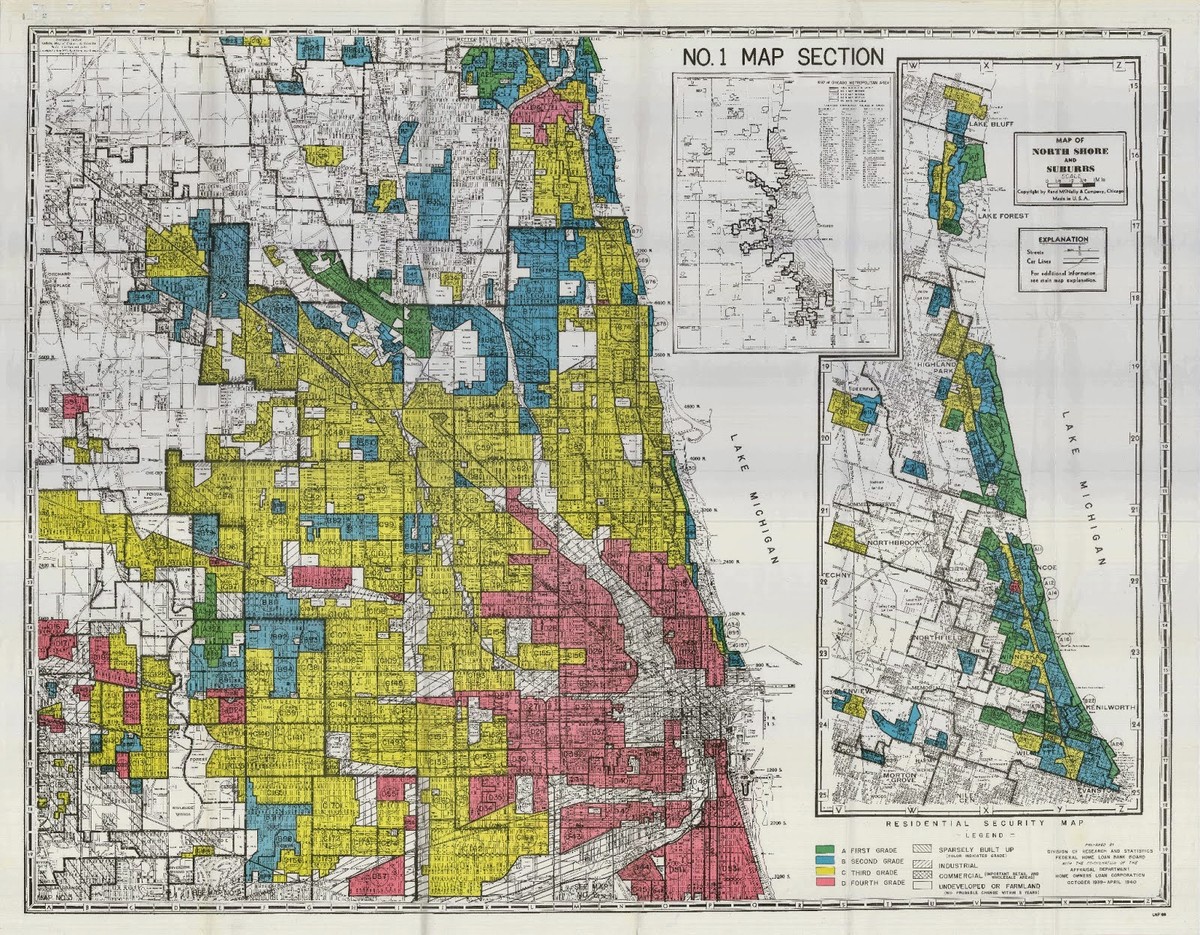
A thorough exploration of the racist foundations of American zoning legislation, including the infamous redlining used by the Federal Housing Administration during the one-family housing boom of the 1940s and 1950s to decide whether to back lending, falls outside the framework of this essay. [Ill. 4]
In summary it can be stated, in the eloquent words of Brookings Institute Senior Fellow, Jenny Schuetz, that:
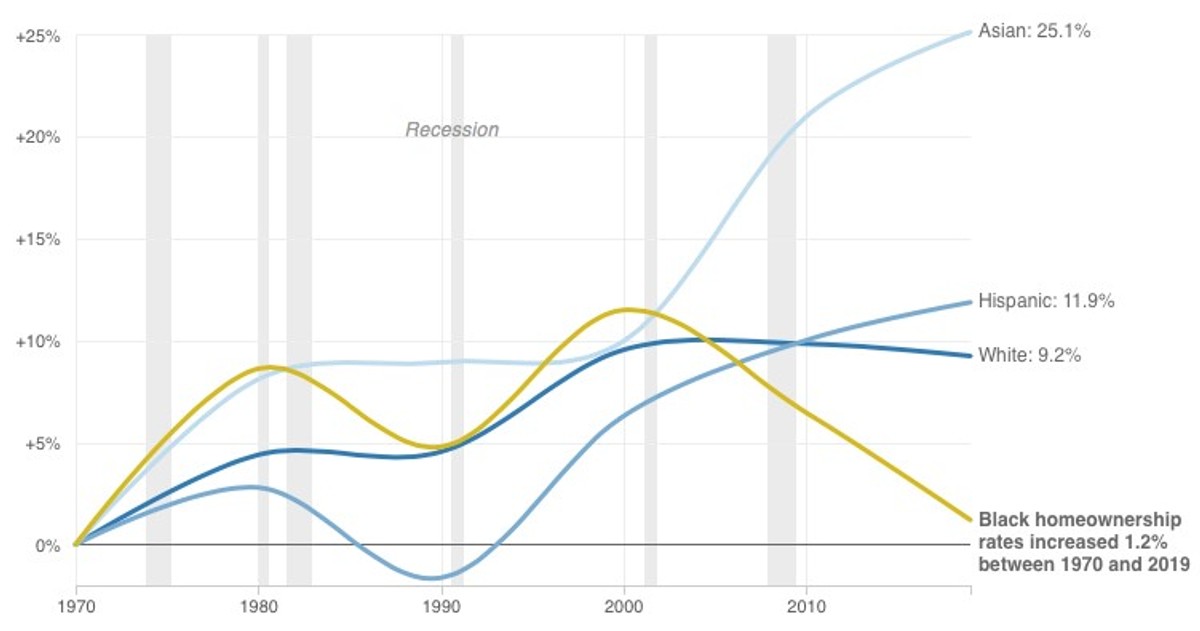
For most of U.S. history, Black families faced explicit barriers to where they could live, including restrictive covenants, racial discrimination in mortgage lending, and “steering” by real estate agents. Such forms of overt discrimination are illegal today (although not entirely gone), replaced with more subtle barriers: especially zoning laws that block construction of apartments and other moderately priced housing. Persistent disparities in income and wealth, combined with excessively strict zoning, limit Black households’ access to many high-opportunity communities. [Ill. 5]
Jenny Schuet
In the United States upzoning is a recent term used to describe changes to a zoning code made to increase the amount of development allowed in the future. It is a planning tool used to convert single-family zoning to multi-family zoning in order to increase density and housing supply in existing urban areas. In the last few years, upzoning legislation has become extremely popular among politicians and lawmakers, and new upzoning legislation has been passed in California, Oregon, Washington, Seattle, Minneapolis, Nebraska, Virginia, and Maryland. The federal government has also expressed interest in pressing local governments to relax zoning laws that prohibit multi-family housing. [Ill. 6]
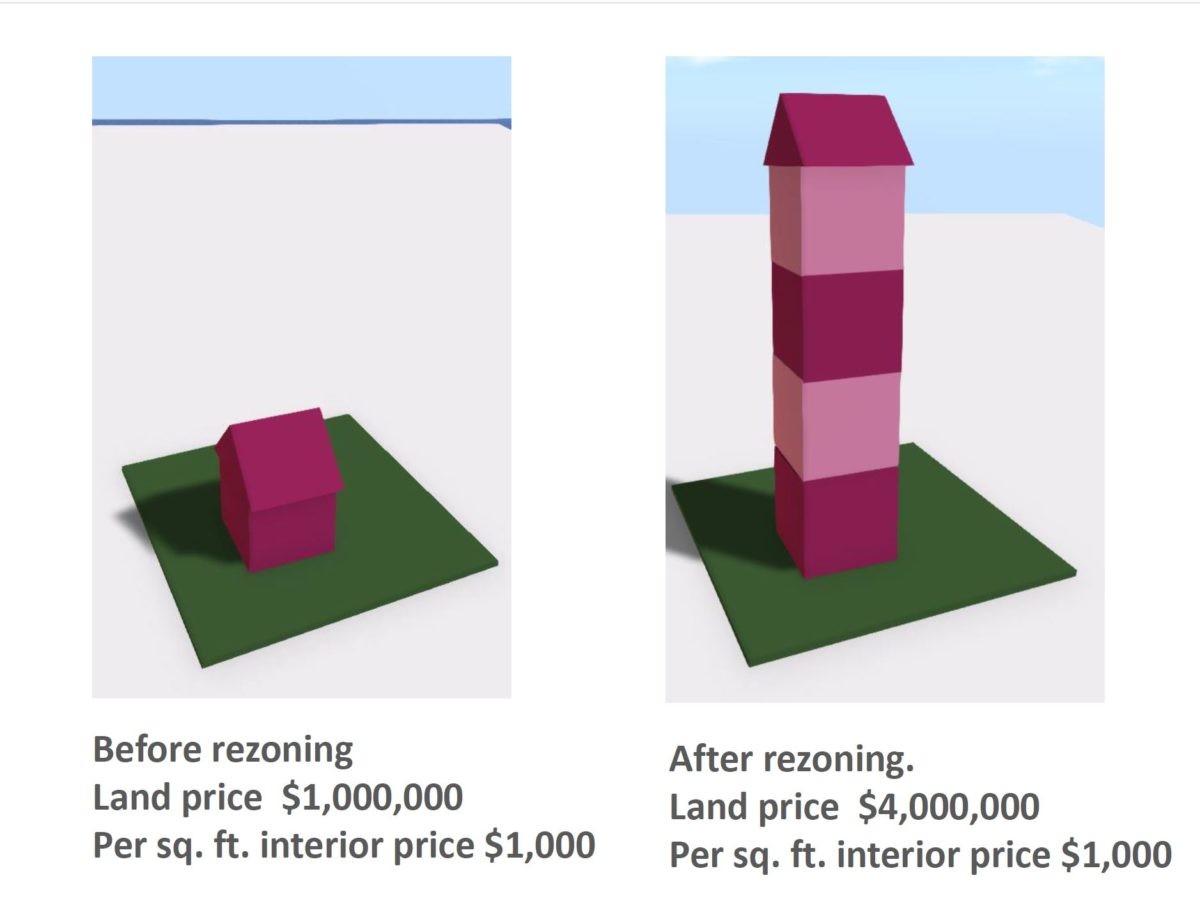
In theory, upzoning should create more housing in cities and more opportunities also for Black residents to become homeowners, including in neighborhoods where they have already put down roots. But in practice, it can fuel a new wave of gentrification and displacement, which often occurs in neighborhoods where Black families have lived for generations. Upzoning drives up the assessed property value and increases property taxes and thus often displaces existing residents, reinforcing gentrification.
When zoning changes, people who have lived in these neighborhoods for decades are suddenly faced with the dilemma of staying but paying higher property taxes, which they might not be able to afford, or selling to a developer for what could initially look like a small profit, but which by far and in most cases is not remotely close to the value they have helped create through their decade-long land ownership. That value is passed on to the new developer, who will manifest the value and turn it into a profit when selling the newly developed and up-zoned homes to new residents.
Thankfully there are initiatives happening that address this dilemma. The Terner Center for Housing Innovation at the University of California at Berkeley and its Housing Lab in 2022 graced a third cohort of innovators in housing development with seed funding, coaching, and technical support.
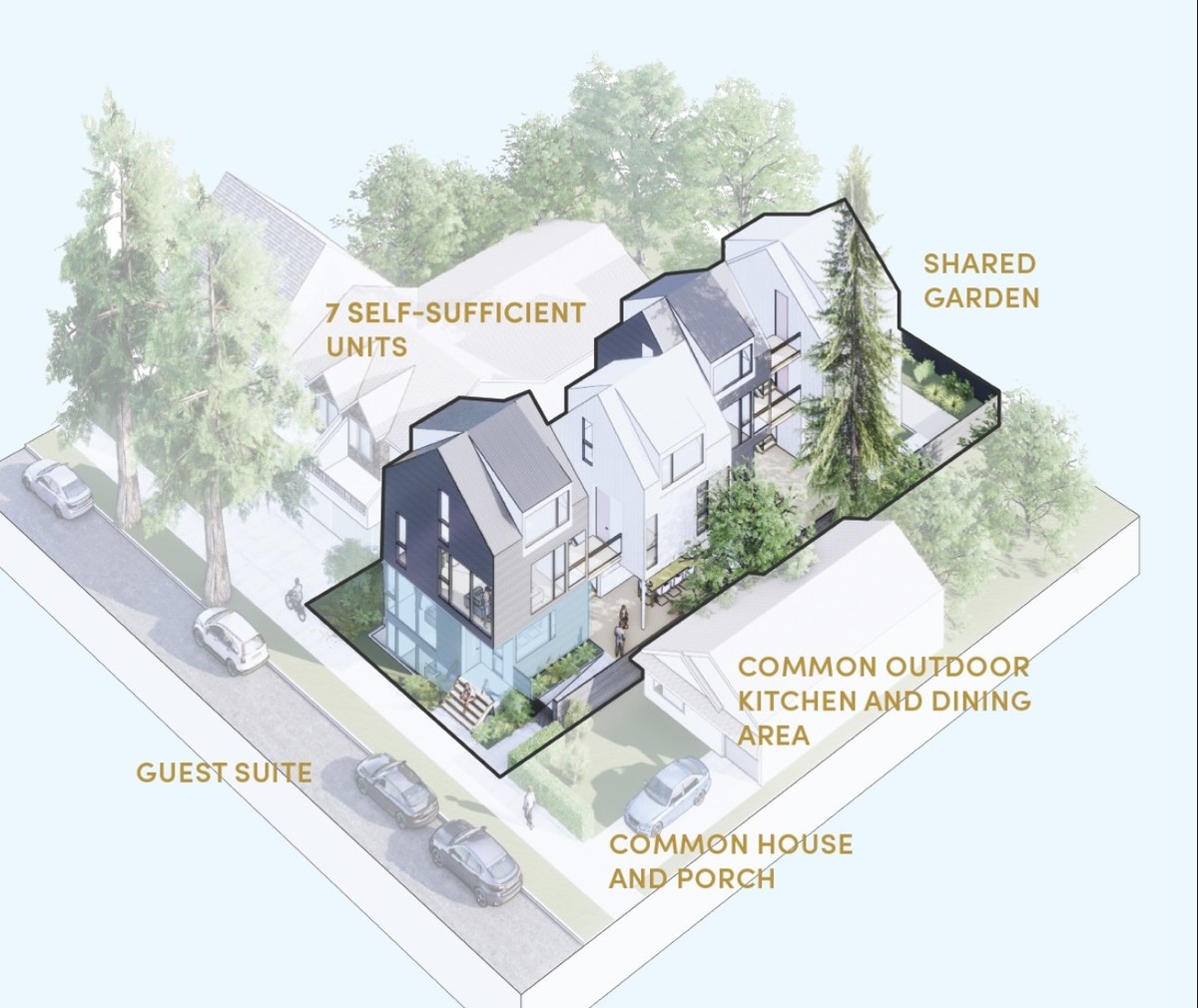
One recipient was Frolic, a Seattle-based company that was born out of research done at MIT School of Architecture and Planning and the MIT Center for Real Estate. It works with upzoned property owners, who are facing displacement, to develop their formerly single-family lots into multi-family cooperatives. The owners get to stay on their land, but instead of just a single housing unit on the property, they develop multiple units, building a community where there was previously just a house. [Ill. 7]
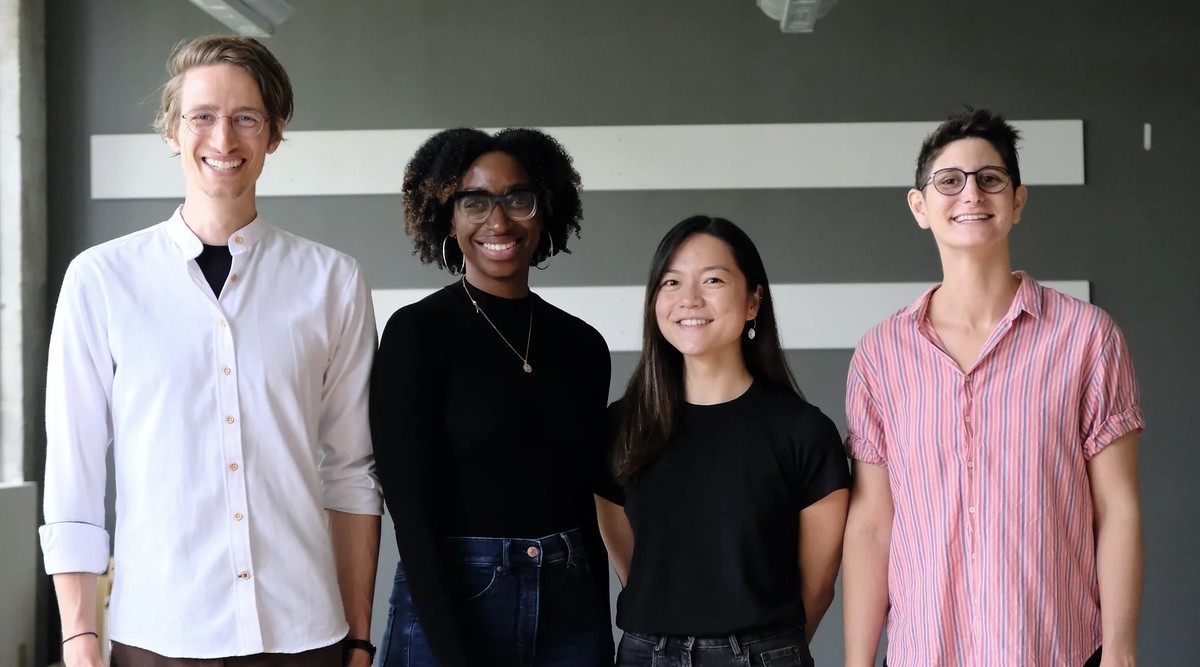
The model was conceived by former MIT students Tamara Knox, now Frolic’s CEO, and Josh Morrison, now Frolic’s CCO (Chief Creative Officer), and designed with help from over 180 experts in housing, policy, and finance. At MIT, they spent two years studying various design, finance, and ownership models across the U.S. and then in Germany, Denmark, and Sweden, adapting elements of them into a new model, whichthey launched in 2019.
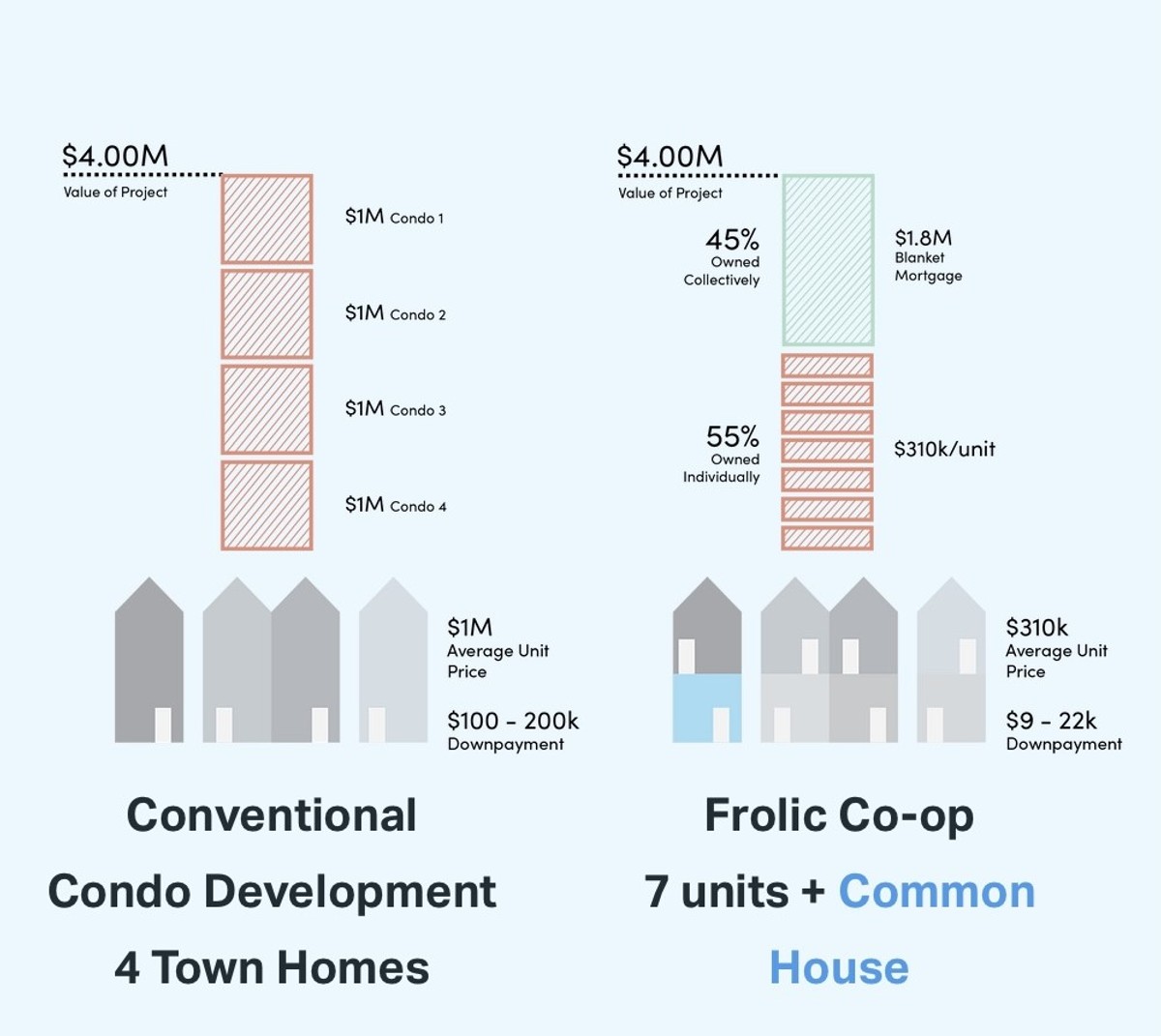
Frolic works with owners to design and permit the multi-family project for much less upfront capital than would be required otherwise, creating affordable homes and higher density in a gentle, community-oriented way. To keep down payments low, Frolic uses a cooperative model (andels-model) that draws on inspiration from primarily Denmark, where the co-op owns the project as a whole, with one share for each unit. A resident buys their share, which gives them ownership of a specific unit within the project. [Ill. 8]
The name frolic was borrowed from the Amish practice of barn-raising, where many families come together to build a large barn in just a week. The MIT Frolic model takes a similarly collective approach by helping a community take the assets it already has (land, capital, and interested homeowners) to build their future and reinforce their roots in their neighborhood instead of being forced out by the market economy.
We reached out to Frolic to learn more.
Below is an excerpt of the conversation between Henning Matin-Thomsen and Josh Morrison, Co-founder and Chief Creative Officer af Frolic.
Henning Martin-Thomsen (HM-T): Josh, thanks for talking with me. How did Frolic begin?
Josh Morrison (JM): Well, the story of Frolic intertwines a lot with Denmark. After I studied architecture and urban design at DIS Study Abroad in Scandinavia in Copenhagen (a Danish study abroad organization primarily hosting students from the U.S.) in 2008, I spent a month in the summer studying co-housing. Together with my brother we visited ten co-housing communities in Denmark and interviewed a bunch of residents. That experience left a deep impression on me. Co-housing seemed to me to be a more holistic way of living, and it looked like a very nurturing environment for people of different ages.
When I came to M.I.T., one of the questions that really interested me was, when we as architects and urban designers work to make cities or central business districts more walkable and livable, the transformations we initiate often end up becoming a displacing factor pushing the people who live in those neighborhoods out because of how the dynamics of real estate and capitalism intersect with our work. Working in the field I found this a deeply frustrating experience.
In addition, seeing what then actually gets built, how generic these projects often are, and how, mostly, it is an investment vehicle rather than aiming to create truly livable communities that caters for people of different ages, income-levels, etc., this dilemma and conflict between the different systems really was something I wanted to study further. Tamara Knox [co-founder and Chief Executive Officer of Frolic], who I met at M.I.T., came with similar questions but from the background of urban economics and real estate development.We instantly felt a kinship and started working together on what would become Frolic. We were fortunate to get financial support from M.I.T. through their business development funding and won some competitions at M.I.T. as well which made it possible to develop Frolic.
As part of this we studied urban development models in both the U.S. and Denmark.We hosted more than 80 workshops with people and organizations that had different approaches and models, all the while keeping our research open ended for a long time to better understand what we could be doing with Frolic and how the different models could be combined and make sense in a U.S. setting. We knew we wanted to work with community-driven development, but at this point we didn’t have a specific solution in mind yet.
HM-T: What is the key problem you are aiming to address with Frolic?
JM: It really has to do with access – who has access to the city – and with the racial wealth gap in the U.S. that has prevented Black people and people of color from access both formally and informally. What might not be so well-known in Denmark is how important homeownership is in the U.S. In a country with such a weak social welfare system, owning the house you live in becomes your financial and social safety-net. The privately owned home is a primary source of wealth. With the security of your home, you can re-finance or take further loans to help pay for things the state doesn’t cover well in the U.S., whether it be health care, education, or down payments on homes for your children.
Homeownership started booming in the 1940’s and 1950’s. Initially it was federally subsidized through a government program with guarantees that allowed banks to give 30-year mortgages. But a central stipulation of that program was that a home buyer could not be Black. The result of this is that Black families, and Hispanic and Brown families as well, have not had the same access to home ownership as white families. Instead they have had to rely mostly on renting. Today, this means that for many people growing up now, their parents cannot co-sign loans or help with the down payment for them to buy a house, because they don’t have the re-financing opportunity home ownership affords.
Here it is important to understand the distinction between income and wealth. In the U.S. affordable housing is focused on income and on rental. To qualify for government subsidized affordable housing, your income must be below a certain level. However, the system does not look at wealth, and thus you have young people with fine jobs and a decent income but not a lot of wealth, and this prevents them from making the switch from renting to owning. Based on our inspiration from particularly Denmark, where the andelsbolig sits somewhere between the homeowner market and the rental market, we could see a potential for a similar thinking in the U.S. That would allow people to get a foothold in homeownership and begin to build some security and wealth rather than be stuck in perpetual renting. The beginning of Frolic really was this confluence of the andelsbolig model, co-housing as a typology, and homeowner-led development as opposed to professional developers skimming the market. [Ill. 9]
HM-T: So, what is it Frolic does?
JM: What shaped Frolic was this understanding that systems were affecting what was built and that the built environment in some ways was a shadow of capital and capital sources, which we don’t talk a lot about in the design field. For us to do something different, from a design perspective we understood that we really needed to work with finance and the sources of capital and not be afraid of it. In the model we then put together, the thinking is that if we get the money from somewhere else, what does this allow us to do differently? In this case, we have a homeowner who has value in their land, but they cannot do anything with this asset unless they sell their home, and subsequently they cannot afford to buy any of the new buildings in their neighborhood.
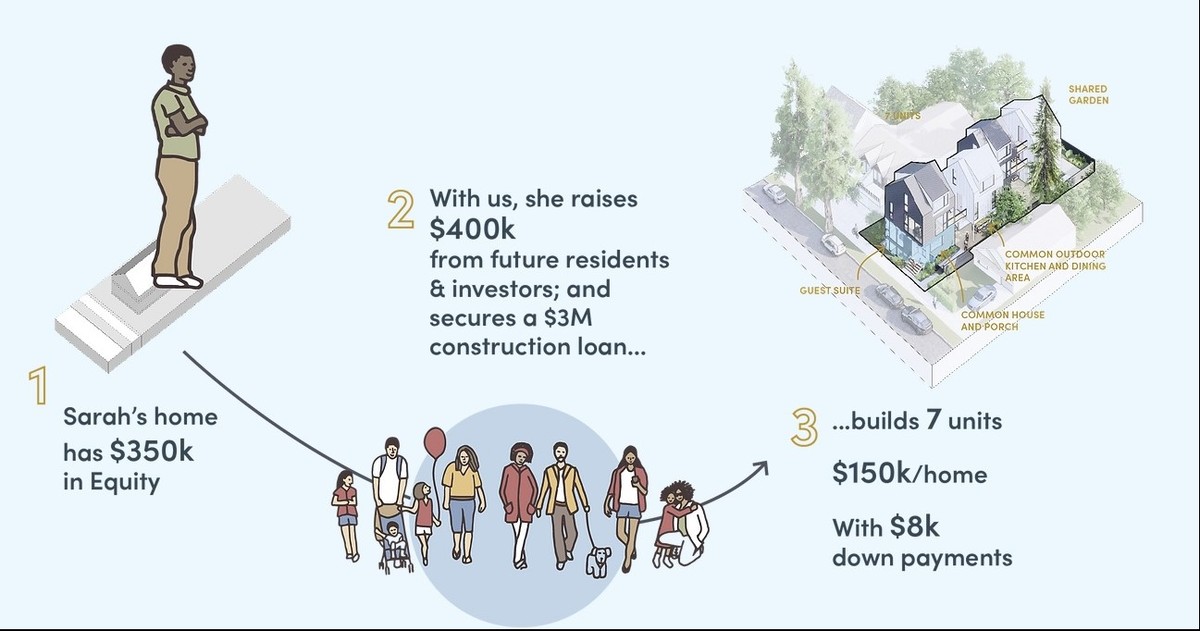
A developer, on the other hand, can go to a bank with the land they buy and bargain for a loan to build something new, which they can sell for a profit. If the homeowner became their own developer, they could do the same. Frolic facilitates this, and we see that a lot of the homeowners that approach us have a genuine desire for co-housing and for more communal living. Areas where you know your neighbors, with car-free out-door spaces for the kids to play in, and common and shared spaces for the community. This is a model that capital often doesn’t support and one there is a lack of and a demand for. Development is inherently a risky endeavor, and our work very much has to do with creating a safe space for the homeowner to become their own developer.
We think of design as much more than physical design.As something that has to do with identifying a system and de-constructing it and working with the system in a different way than we have traditionally been told to as designers. Complexity of design is one thing, but the complexity of development is something different and bigger, and this is what Frolic aims to engage with. We function in part as the facilitators that connect the many pieces that go into development – we engage with homeowners who want to develop, we have a waitlist of residents interested in living in these kinds of communities, we collaborate with lenders who are interested in engaging with the co-op market. We see our work as bringing to life demonstration projects that showcase the concept, and creating a system that other people can plug in to. This part is important for the concept to have widespread impact: others must be able to do it. Frolic is not about us building hundreds of projects every year, but rather that hundreds of other people are doing things they wouldn’t otherwise have done. [Ill. 10]
FINAL REMARKS
Frolic are attempting to come up with solutions to a wicked problem, to give more people access to affordable homeownership. And they are doing it in a wicked way, which may actually be the way to think about wicked problems. Frolic challenges all elements of the systems that make up the housing development market – the design system, financial system, ownership system, etc. This sounds like a lot, and for a private company, which Frolic also is, the obvious question is how to sustain themselves and make money off of it. Joshua told me that Frolic currently works with a licensing model as one approach to this dilemma but have relied on grants and sponsorships to develop the model so far.An approach we know well in Denmark where public funding and private philanthropy, like Realdania for example, play a crucial role in financing emerging solutions to issues in the built environment
Fundamentally, Frolic’s aim is to empower the players of the system themselves rather than attempt to break down the system, which is both cunning and a wicked way to adapt and deconstruct at the same time. The importance of empowerment of the existing homeowners in a community is the lesson we can gain from Frolic and others who are currently trying to come up with sustainable and socially just solutions in an otherwise unjust housing market in the U.S.
–
Henning Martin-Thomsen,Arkitekt MAA, Int’l Assoc. AIA, MMD (CBS), is the Director of Operations and a Senior Consultant at Martin-Thomsen Architecture, PLLC (Brooklyn - Copenhagen - Chicago). He has taught architecture and urban design for 25 years.
Professor T. Camille Martin-Thomsen, AIA, NCARB, NOMA, is the Dean of Faculty and Vice President of Academic Affairs at the School of the Art Institute of Chicago, and the founder and owner of Martin-Thomsen Architecture, PLLC (Brooklyn - Copenhagen - Chicago). She has taught architecture and interior design for 15 years. Camille is the 476th licensed Black female architect in the US.