The architecture industry has failed its female colleagues and students. It’s no longer a secret that architecture schools and many architecture firms suffer from a sexist and abusive culture (...) But the failure is not just about sexual boundlessness. It's also about all the unspoken. It's about all the opportunities that have not been given. It’s about qualifications that have not been recognized. And it's about being ignored and found insufficiently qualified based solely on one's gender.
Frants Nielsen & Dorte Mandrup, Sæt krav til social bæredygtighed og diversitet
White middle-class men have predominantly written the history of architecture. The same group that makes up the majority of faculty in architecture school, who own the majority of the architecture practices, and who constitute the majority of licensed architects. Adding to this imbalance, most of us go through architecture school studying architectural history where female, Black, and Brown architects – and even architects with too organic a manner – are missing. Ignored, and found insufficiently qualifiedto join the communal architectural canon.
It took 154 years from founding the Architecture School at the Royal Danish Academy until the first female architecture student, Agnete Henning Hansen, was enrolled in 1908 and another 16 years until access became equal for men and women in 1924. Another 77 years went by before the first female Dean, Bente Beedholm, took office, some 234 years after the first of the 51 men that came before her. The first female chairperson of the Danish Association of Architects (founded in 1879) was Rikke Krogh, elected in 2006. In other parts of the world, the picture has been the same.
If one waits long enough, it seems possible to become included. But while we wait, we miss out on “all the opportunities that have not been given (and the) qualifications that have not been recognized,” as Frants Nielsen and Dorte Mandrup so eloquently phrase it. The world cannot keep waiting! We will only further weaken the field of architecture if we fail to become more inclusive. We must act now.
As inspiration for the necessary work that awaits us all, we wish to share three examples of organized community building that actively has made our field more inclusive:
- The English Matrix Feminist Design Co-operative, in the late 1970s, began to formulate one of the earliest feminist critiques of the built environment. They proposed new ways to study and collaborate in architecture, which broke with the predominantly male and even misogynistic patterns of the past.
- Madame Architect, a contemporary online magazine and community established in 2018, aims to expand the knowledge about women in architecture and to provide inspiration and role models for young women entering the field of architecture.
- NOMA – The National Organization of Minority Architects, is an independent architecture association for US-based minority architects that began in 1971.
We hope we can inspire and contextualize the continued need for strong community building among architects if we are to overcome the current lack of diversity and inclusion in the field. We firmly believe that coming together and organizing matters, and we firmly believe that representation matters.
COMING TOGETHER TO DEVELOP NEW IDEAS
One reason to come together and to organize is to create and shape new ideas. Challenging the existing with new and different thinking often requires getting together in new constellations.
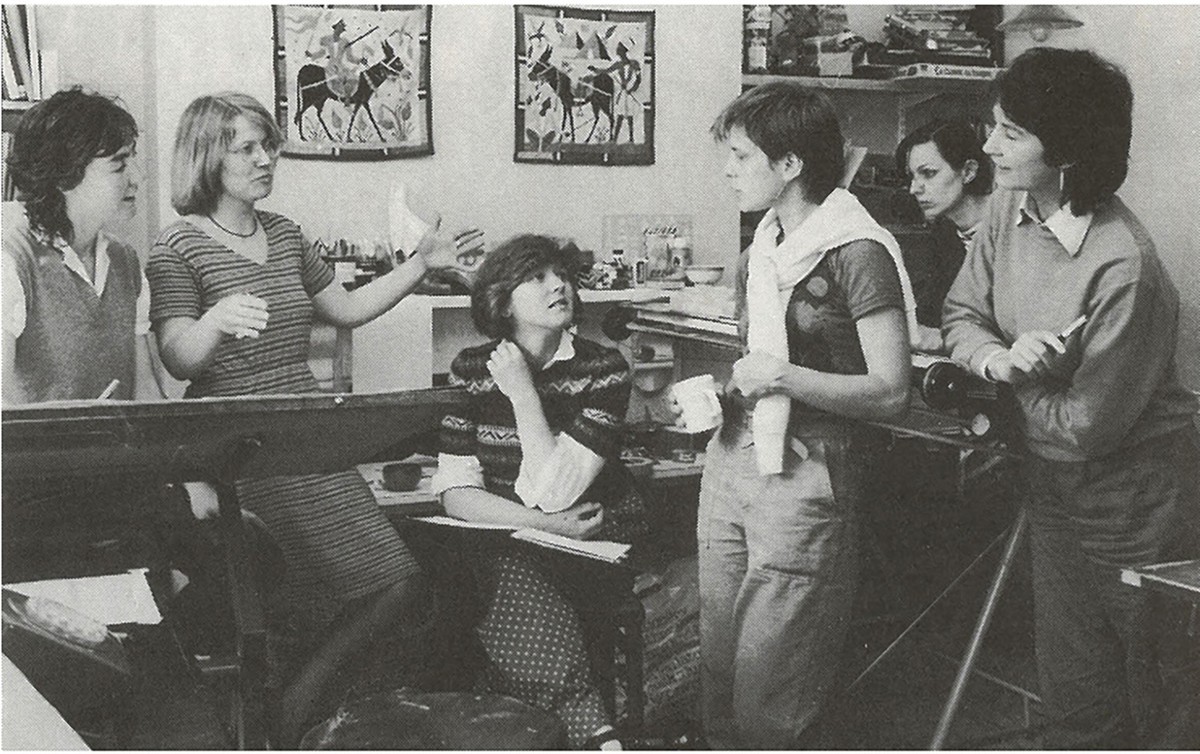
When a group of women got together in the late 1970s under the name Matrix Feminist Design Co-operative, they were already working individually as architects, educators, researchers, etc. But as they state in the preface to Making Space – Women and the Man-Made Environment, the 1984 book that presented their thinking to a wider audience, “Working together on this book was for most of us a first chance to develop ideas about buildings with other women: and we have learned a lot from each other.” [Ill. 1]
If one subscribes to the notion of waves of feminism, Matrix belongs to the second wave of feminism, which came about from the mid-1960s and onwards to the early 1980s. The 1960s, of course, is well-known for the many political strifes that took place, the development of a strong left wing in many western countries, the free-spirited social structures that developed among students, and the cultural elite in particular. Women began to take a more independent and prominent role in the workplace, academia, and society.
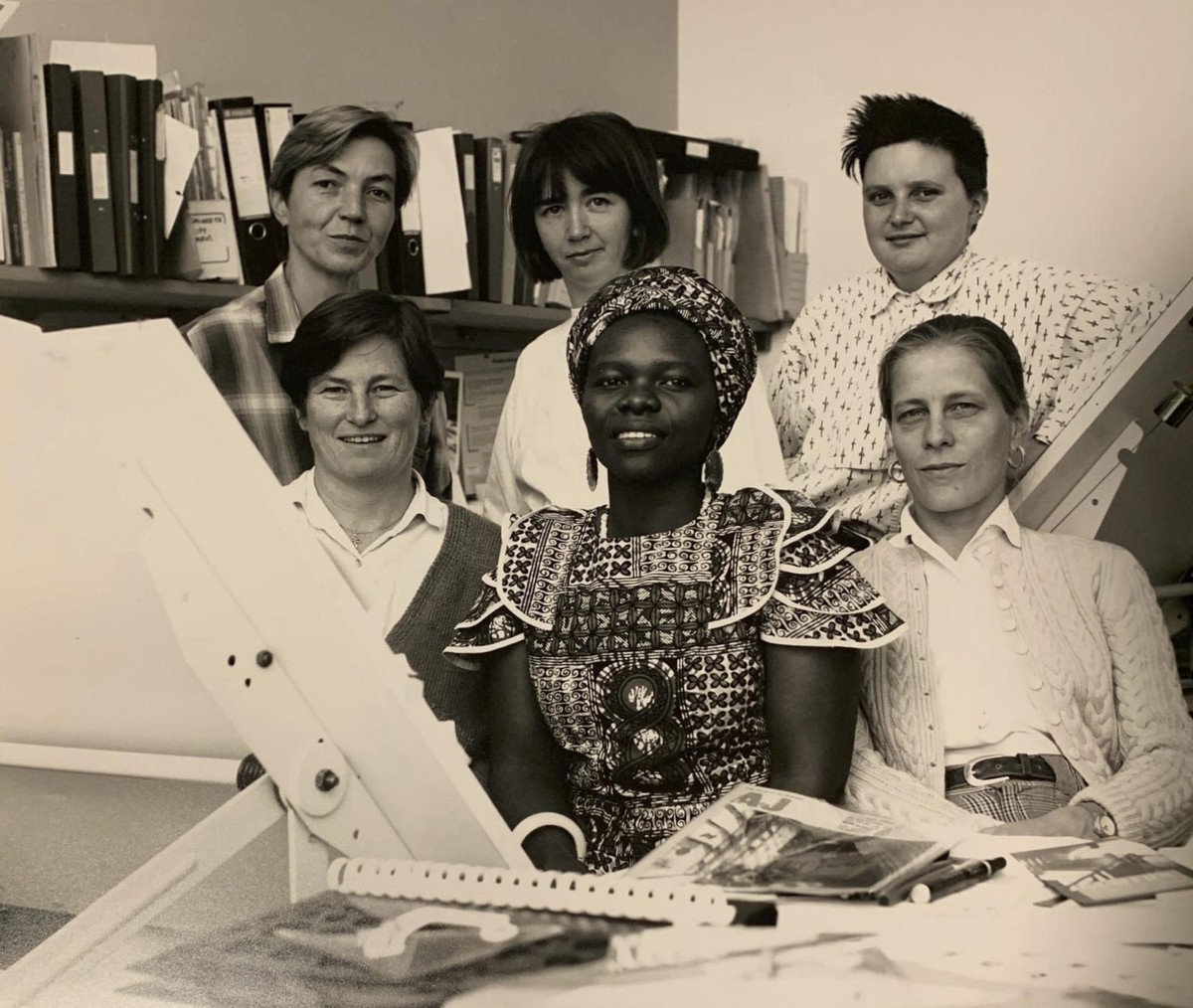
In the middle of this tumultuous period, Matrix began questioning the man-made environment and, not least, the role of architects in it. It is worth noting that Matrix was one of only a handful of architecture practices internationally to engage directly with feminism and architecture. Their pioneering contribution is only now being recognized for its historical significance and contemporary influence. As our interest here is to understand the relevance and value of getting together and organizing, we will focus on how Matrix went about this, more than a detailed exposition of their findings and ideas. [Ill. 2]
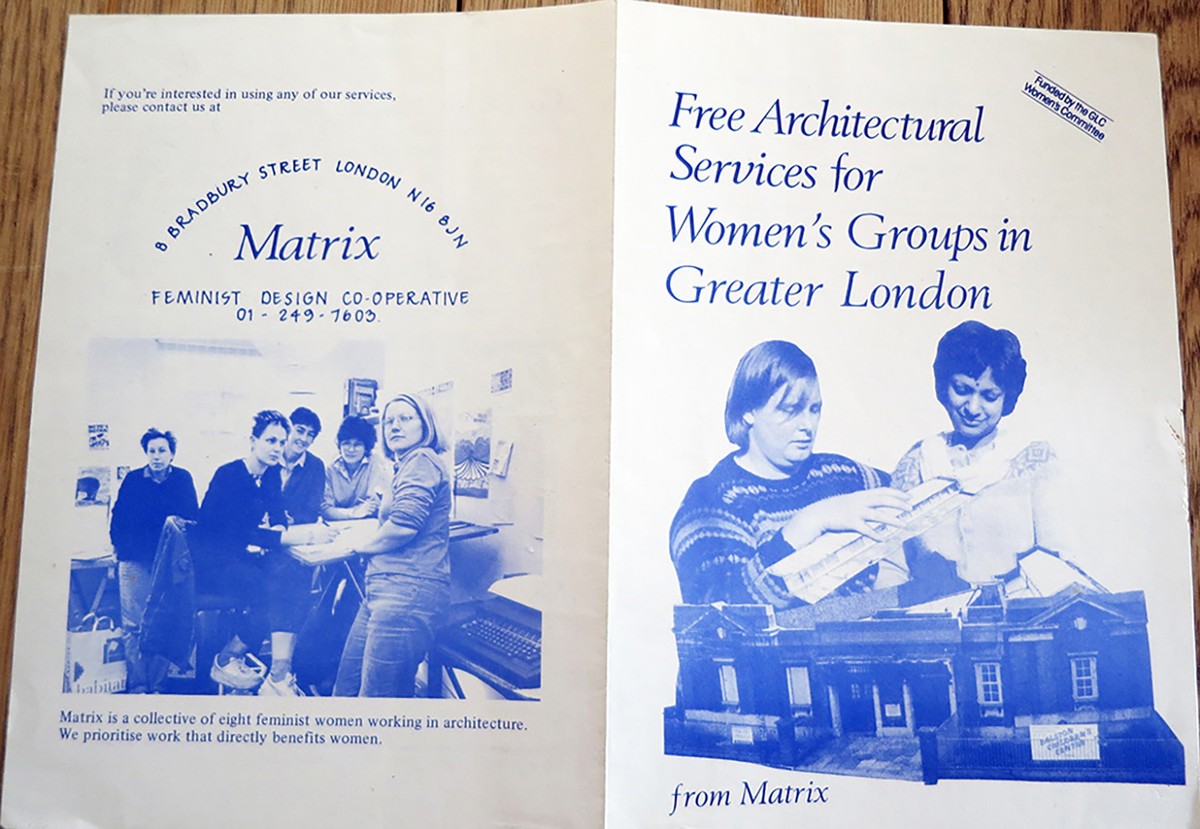
The key members of Matrix met and completed their undergraduate degrees in architecture at Newcastle University, UK, in 1975–79. Finding like-minded spirits led to meetings and eventually dedicated feminist workshops that constituted a safe space to question the nature of the built environment and the role of women architects within it. Matrix exposed sexism, misogyny, and discrimination in the field of architecture. [Ill. 3]
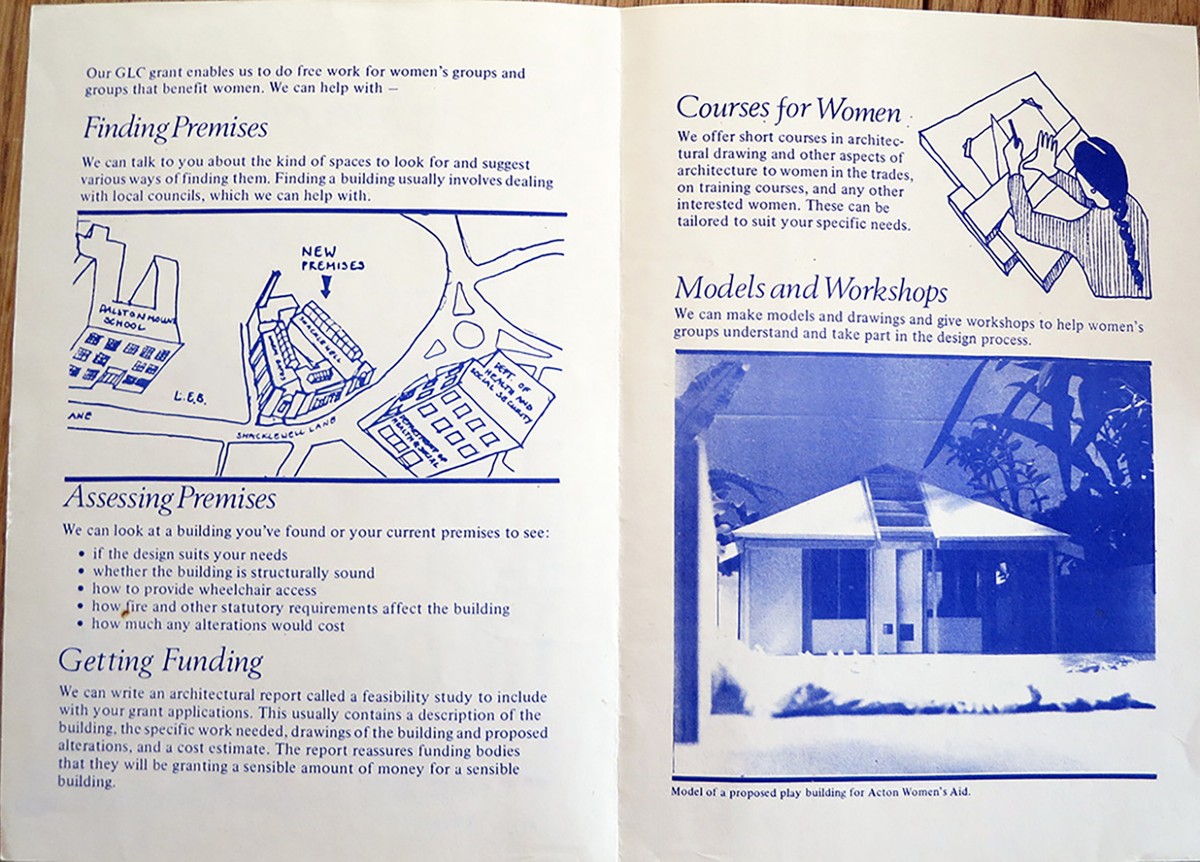
But they also produced productive alternative visions and new ways of collaborating that continue to inspire. Through their architectural practice, Matrix developed participatory design methods, recognizing that architects’ systems of operating need to be revised to make the design process more comprehensible and engaging for clients and users. They consciously chose to research and design the types of spaces that had been largely overlooked by a male-led profession, such as women’s centers and nurseries, developing tools that could involve women in the design process from an early stage. [Ill. 4, Ill.5]
“At the core of the work by Matrix was a recognition that building and urban design often fail to consider the richness of our multiple ways of being in the world or the various ways in which societies have devalued certain groups across different places and times…,” as Jos Boys, one of the founding members of Matrix, described it.
We are writing this essay some 40 years after the pioneering work of Matrix, and yet many of the issues raised in the 1980s remain unresolved. The need to study and understand the diversity inherent in society and among people has never been more critical. “What men and women do for most of their lives is a product of social structures and expectations, not biology. We believe, however, that because women are brought up differently in our society, we have different experiences and needs concerning the built environment which are rarely expressed,” as Matrix summarized the dilemma. (6)
In her 2020 book, Invisible women: Exposing data bias in a world designed for men, Caroline Criado Perez frames it similarly: “It’s the irony of being a woman: at once hyper-visible when it comes to being treated as the subservient sex class, and invisible when it counts – when it comes to being counted.”
IF YOU CAN SEE IT, YOU CAN BE IT
For centuries coming together and starting a new magazine has been a distinct approach to changing the dialogue and focus of a field. The Studio, published from 1893 to 1964, helped promote the Arts & Crafts movement in art, architecture, and design in England and abroad. Arts & Architecture, published from 1929 to 1967, helped shape a new platform for West Coast modernism in the US.
In Denmark, many of us still remember when Henning Larsen decided to use his name, money, and staff to create SKALA – Nordic, an architecture and art magazine published from 1985 to 1994. The associated gallery in central Copenhagen became an institution, and the about 30 issues of the magazine became a main frame of reference in the architectural debate in Scandinavia for almost a decade.
In 2018 Madame Architect was created. An online magazine and platform dedicated to highlighting talented women from the world of architecture and advocating for greater equality in the profession. The founder and editor-in-chief is Julia Gamolina. Before becoming a team of seven, Julia Gamolina ran Madame Architect on her own, producing and publishing hundreds of interviews with female architect colleagues. By sharing their thoughts and achievements, they showed young women entering the industry the myriad choices they have in crafting a dynamic, meaningful, and interesting career. [Ill. 6]
In several interviews, Gamolina has shared her own background and journey, and explained how much of what she felt was missing in the industry was formative to why she established Madame Architect. Born in Russia, she moved to Toronto when she was eight, later to Colorado Springs, and eventually to New York City, where she currently resides. She speaks about how frequently moving forced her to adapt quickly to new places and how her mom encouraged her to reach out to teachers in school for the needed advice that she felt unable to give being new to North America as her daughter.
Gamolina continued to seek out mentors when she entered college. Often, they were women mentors, which gave her the confidence and trust to discuss academic and private matters, something she describes as formative in how she views the mentor role. Entering the architecture industry, Gamolina saw fewer women in leadership roles and felt mentorships were not as readily available as in college. What started as her personal search for networks to join and mentors to be tutored by eventually became Madame Architect. The inspiring stories female architects and designers shared with Gamolina she wanted to make available to others. [Ill. 7]
Madame Architect might seem more like the result of an individual effort of Julia Gamolina than as a group of people organizing and getting together. But with more than 300 stories shared by female architects, designers, publicists, journalists, photographers, etc., working in the architecture and design industry, Madame Architect is truly an organizing effort. Madame Architect grew out of discontent with how women were portrayed in the industry and how invisible they often were. Many of the women interviewed have shared first-hand experiences of this. But more than that, the positive stories are about the fantastic impact women have on the industry, helping to make women and their impact more visible and being a communal platform showing role models to coming generations. If you can see it, you can be it, as the first Black female CEO of the AIA, Lakisha Ann Woods, has said. This is also what the final section of our essay describes.
BUILDING A PLATFORM FOR MINORITY ARCHITECTS
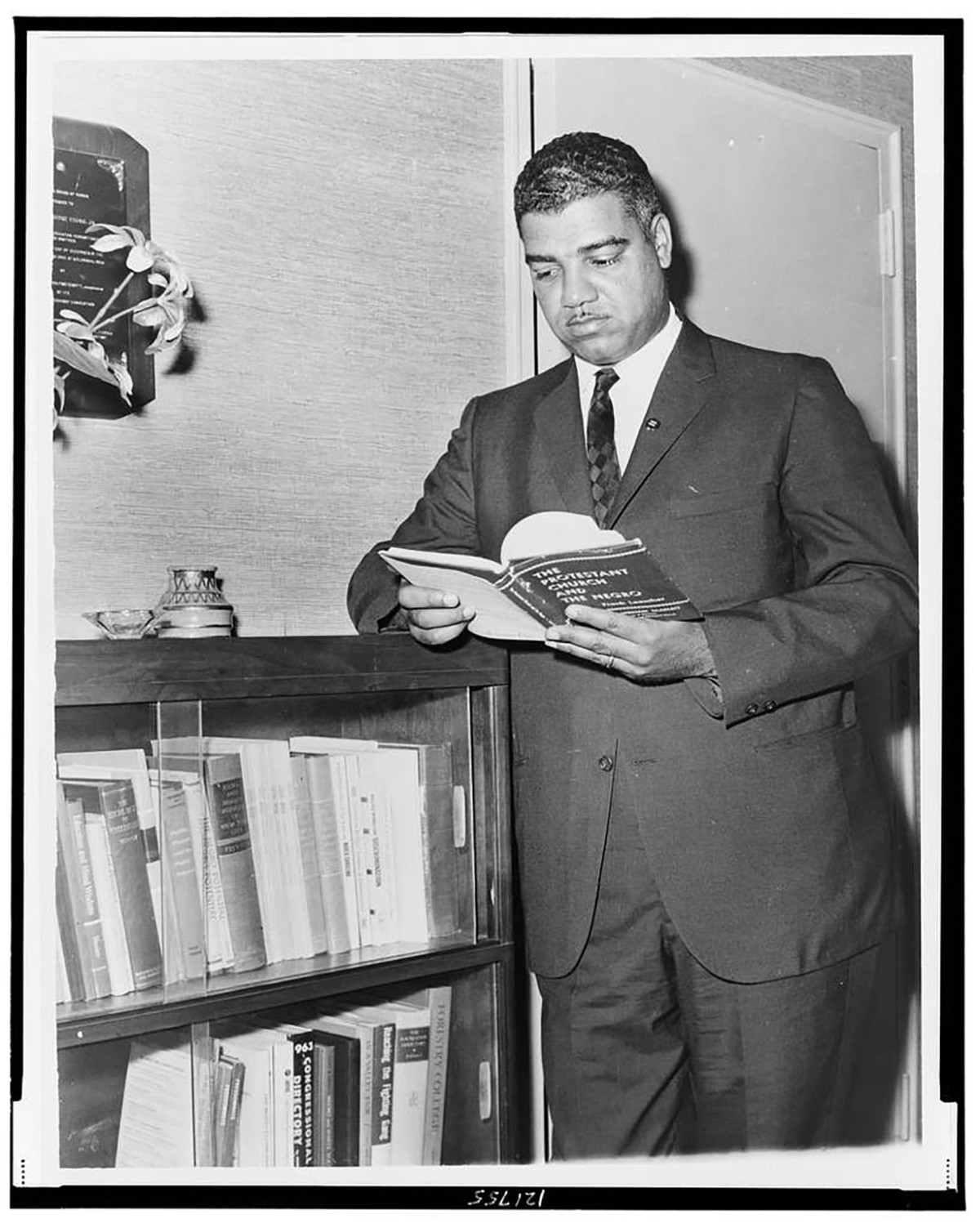
At the American Institute of Architects (AIA) National Conference in 1968, civil rights activist, Whitney M. Young Jr., delivered a full-blown rebuke of the architecture profession in the US: “You are not a profession that has distinguished itself by your social and civic contributions to the cause of civil rights … You are most distinguished by your thunderous silence and your complete irrelevance.” As Pascale Sablan explains in his brief history of the National Organization of Minority Architects (NOMA), the Black architects present had come from different parts of the US and did not know each other very well. But they all were struck by Young’s words. [Ill. 8]
Coming together to carve out a position for minority architects to be acknowledged and not least to fight discrimination in the field of architecture was the focus when 12 Black architects came together three years later during the AIA annual congress in 1971. Inspired by Young’s words and their shared experience, it was clear that the AIA was not enough of a platform for minority architects at that time. A new community dedicated to minority architects was needed, and NOMA was established.
NOMA is an example of a smaller community developing within an established larger community in the face of discontent with how the larger community goes about its business. It is not unheard of and has, in some cases, led to real ruptures in the larger community, and sometimes to the formation of competing, separate and hostile associations. But it can also lead to real change within the existing association. NOMA has championed issues it felt the AIA was not taking on or ignored. It has focused on fighting discriminatory policies that limited or even barred minority architects from participating in the architecture, engineering, and construction fields. It has been working to get AIA recognition for those most prominent among themselves and to create its own architecture awards.
In 1968 Black architects made up 0.05% of the AIA’s 20.000 members. Today, black architects account for about only 2% of the current 94.000 members of the AIA. Around 15% of the current AIA members state minority status, which includes Black, Asian, Latino / Hispanic, Native Hawaiian / Pacific Islander, and Indigenous Americans. As the only minorities, the Asian and the Hispanic / Latino minority have strong growth trends among architects. To put this in perspective with the overall US demographics, the Black population is around 13%, the Hispanic / Latino about 19%, and Asian about 6%.
The numbers clearly show that minority architects continue to be substantially underrepresented compared to the US demographics. NOMA, however, has only become more relevant. Regional chapters and student chapters work locally to promote awareness of the contribution minority architects deliver. The fight against discrimination and for justice continues and has remained a key issue around which to rally.
In the wake of the murder of George Floyd in 2020, NOMA, under the leadership of President Kimberly Dowdell, decided to revamp its mission statement to highlight the justice and equity aspect even more strongly: “NOMA’s mission, rooted in a rich legacy of activism, is to empower our local chapters and membership to foster justice and equity in communities of color through outreach, community advocacy, professional development, and design excellence.”
No doubt, the strong rebuke by civil rights activist Young back in 1968 that eventually led to the creation of NOMA has had a lasting impact on the organization and its mission. NOMA continues to situate the field of architecture within the broader political and social landscape of the US, and it would appear that, gradually, the AIA is catching up.
In 2022 the immediate past president of NOMA, Kimberly Dowdell, successfully campaigned for the presidency of the American Institute of Architects (AIA), the first black woman to rise to this position. In 1972 the AIA established the AIA Whitney M. Young Jr. Award, named after the very person who so strongly rebuked the organization only three years prior. In 2022 the award was given to RIDING THE VORTEX, a collaboration of African American women who have worked for more than a decade to increase the number of people of color licensed to practice architecture in the US. [Ill. 9, Ill. 10]
When VORTEX first came together at the AIA convention in 2007, there were 175 Black female architects in the US. In 2022 it has grown to more than 500. This number is still only a fraction of the 94.000 licensed architects. But even so, the story of NOMA is the story of the importance of coming together to improve not only the field of architecture but society as a whole, architect by architect.
TO THE PRIVILEGED, EQUALITY FEELS LIKE DISCRIMINATION
When one of the authors of this article was working as the CEO of the Danish Association of Architects in the mid-2000s, there was an interest among younger members to do more to promote those who were just entering the field and to find ways to help them establish themselves professionally more quickly. The idea for architectural competitions exclusively for younger architects came up.
The Association, of course, had members of all ages represented on the board. Generally, the willingness to support the newbies in the field was high. And yet, the discussion about moving forward with the younger architects’ competition was not smooth. Questions such as how young is young? were brought up. Many of us felt 40 was a reasonable cut-off age to be still deemed young in the field of architecture. But this was often questioned by well-established architects well over 40. Other obstacles were brought up: would young and therefore inexperienced architects even be able to produce the quality such competitions should be blessed with? Isn’t it essential to treat all members equally, to not discriminate, and hence give all members access to said competitions, no matter their age?
We will not mention any names, but looking back, it is surprising to think about the spread of well-known, prestigious 40+ (all male) architects who were against helping promote younger architects back then. Imagine the outcry if we would have had the audacity to suggest architectural competitions for women architects only.
Things have changed since then. Architecture is a competitive field, but more companies, associations, and individuals today acknowledge that it is for the greater benefit of architecture to ensure that younger generations get access to the industry. Mentoring is not as rare as Julia Gamolina experienced some 8–10 years ago. Some companies have put in a lot of effort to professionalize career paths within their own companies to help attract and retain younger architects.
And yet, much work still needs to be done. In Denmark, a group of women architects in 2020 took it upon themselves to investigate sexism in the architecture industry. More than 170 accounts of sexism and abuse from more than 70 different responders, primarily women, were gathered over a short period of time. The Union of Architects and Designers followed up with a survey, which indicated that around 28% of members had experienced sexist and abusive behavior at work or in architecture school.
These are the accounts, and the debate Dorte Mandrup and Frants Nielsen refer to in the op-ed cited at the beginning of this article. Similar to Mandrup and Nielsen, the authors of this article want to expand our understanding of the lack of inclusivity and respect in the community of architects to include not just women but other minorities and disregarded groups within our field.
Breaking down barriers and changing the perception of a minority in a field often originates from minorities getting together. Teaming up with peers is often the first step. The women of Matrix came together to change the narrative of architecture, as did the Black architects that established NOMA. Madame Architect helps show women that they are not on their own and that as simple an approach as sharing stories about life at work and home can empower others.
“Platforms dedicated to just women are necessary right now because we first need to catch up and start closing the gap in publicity,” (17) as Julia Gamolina has said. Special platforms can be pivotal to gaining momentum, but none of these communities preach staying special for the sake of just being special. “(Women) just want to be thought of as architects. That has probably been the most consistent feedback…,” according to Julia Gamolina.
But organizing and creating special platforms remains important and relevant to get to coming together. Supporting such initiatives is important. Even if you have been the majority for a long time, what you face when minority groups demand equality, is not discrimination. It is an opportunity for you, the field of architecture, and ultimately for those who use our architecture. Because the users remain as diverse as ever, why should we settle for less than that in our architecture?
–
Henning Martin-Thomsen is Arkitekt MAA, Int’l Assoc. AIA, MMD (CBS) is the Director of Operations of Martin-Thomsen Architecture, PLLC (Brooklyn – Copenhagen – Chicago). He has taught architecture and urban design for 25 years.
T. Camille Martin-Thomsen, AIA, NCARB, NOMA, is the Dean of Faculty and Vice President of Academic Affairs at the School of the Art Institute of Chicago, and the founder and owner of Martin-Thomsen Architecture, PLLC (Brooklyn – Copenhagen – Chicago). She has taught architecture and interior design for 15 years. Camille is the 476th licensed Black female architect in the US.