If in the world of fashion or contemporary art a certain style, trend or specific object becomes passé, it is often easily discarded to make way what’s new, fashionable or trendy. In some rare cases, these things ‘of the past’ get stored somewhere, to be suddenly remembered years later and revived as retro or vintage. While in most cultural fields, most notably music, similar patterns can be discerned, in architecture this works rather differently. Architectural objects are generally much larger, require large investments and are not easily removed. Also, there are often many years between the design of a building and its realisation. Not long after a building is finally put into use, it might already start to feel outdated.
Cities are, as a result, wonderful collages of buildings from many different eras in different shapes and stages of appreciation, which simply cannot all be replaced when they no longer feel contemporary. Many cities have fancy new buildings by the trendiest starchitect as well as all kinds of constructions with functionalities or aesthetics which are considered passé, but also buildings, especially older ones, which have entered a new cycle of appreciation. As time progresses, new ideas change people’s perspectives and what was until some point considered beautiful, ingenious or interesting becomes passé and what was perceived as ugly, awkward or dissonant becomes appreciated again by a new generation.
With the rise of the smooth city, this is now changing in cities around the world. Large parts of many cities are increasingly becoming optimised, sanitised and controlled in order to create the perfect city, and allow for the most efficient accumulation of capital. Any imperfection or inconsistency, or anything else that stands in the way simply needs to be eradicated. As a result, all buildings as well as all public spaces need to be either brand new and perfectly maintained, or otherwise carefully renovated and restored. In the smooth city, there is less and less tolerance for any non-normative presence, any deviating appearance, let alone any critical alternative, or anything considered passé.
Not all pasts are passé, however. Some historic buildings or neighbourhoods in certain historic styles are perceived as beautiful or authentic, or as a representation of a certain, often nationalist, symbolism. As long as they are not beyond repair or standing in the way of anything that might be slightly more profitable, attempts will be made to integrate these buildings or neighbourhoods into the smooth city. Property owners will often seek to restore and renovate them in detail, and especially also to optimise their internal organisation to make sure they can be deployed for current-day, money-generating uses such as high-end apartment living, co-working spaces or hotel accommodation.
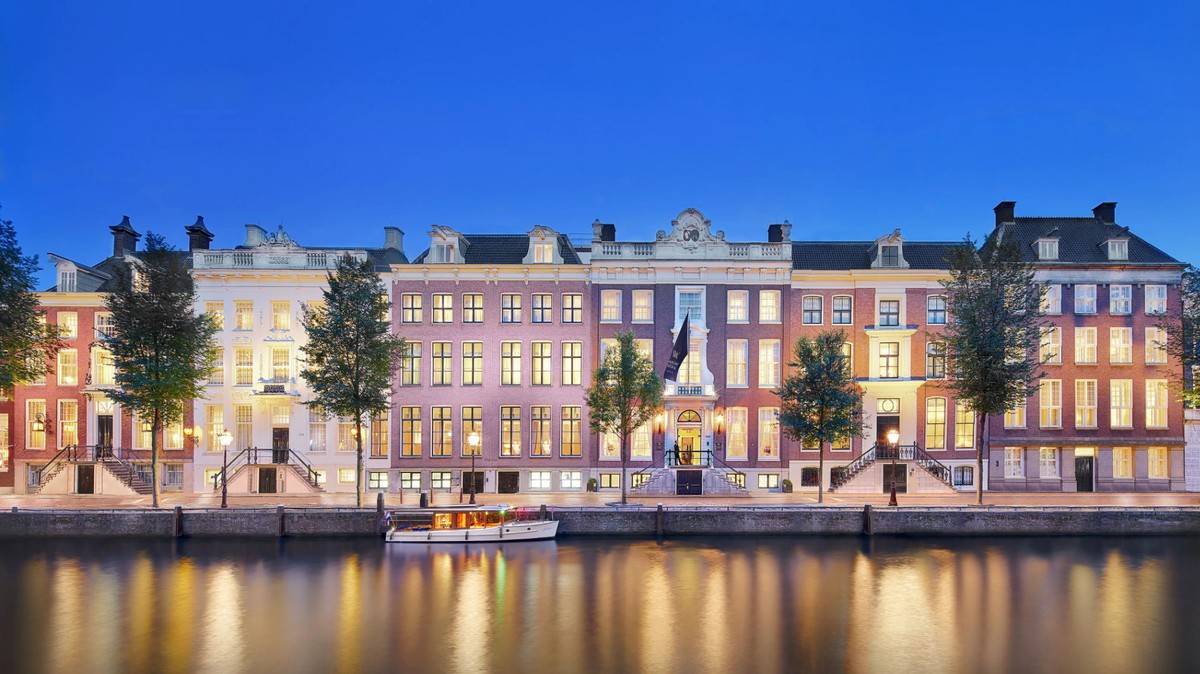
In Amsterdam, the famous Grachtengordel canal area used to be a remarkable collage of different buildings from different eras, with, until a few decades ago, some in a quite good but also many in a rather bad shape. In a relatively short period of time almost all buildings have been brought to near perfection, while in some cases even connecting the interiors of three, four, five or even more individual buildings to create large offices or luxury hotels. This has not only resulted in a large part of Amsterdam’s city centre feeling incredibly smooth today [ill. 1], but also in the flattening of time. As everything looks old but brand new in the same botox way, it is increasingly difficult to get a feeling of a building’s actual age.
In addition, valued architectural pasts are often not only restored and renovated but also replicated in the smooth city. In Amsterdam, buildings along the canals that had fallen in disrepair were in some cases demolished and rebuilt in an imagined, historicising but ahistorical fashion. Their aesthetics often roughly resembled a certain historical style but no attempts were made to precisely replicate a specific historical style. Similar forms of historicising architecture have appeared in other smooth cities around the world, such as The Venetian, the famous reincarnation of Venice in Las Vegas built in the late 1990s, or the Dom-Römer Viertel, the partial and simplified reconstruction of Frankfurt’s old city, completed in 2012.
However, many other pasts are considered decisively passé in the smooth city. Sometimes for aesthetic reasons, when an old building is deemed to never be able to fit the perfect picture. Or sometimes for economic reasons, when it has continuously failed to generate a predictable flow of money. In other cases, historical buildings symbolically represent certain ideas or ideologies, such as an experimental attitude, progressive ambitions, or the political dogmas of a former regime. It may even stand for a defiant order or alternative future. If any of these associations do not fit the dominant ideology of smoothness and the corresponding understanding of space as a commodity, it will be regarded as passé and in need of immediate replacement.
As the smooth city has decisively manifested itself in cities around the world over the last two decades, many different buildings have been stamped as passé and subsequently been erased.
In particular Modernist buildings have been regarded as such, and quickly been lined up for demolition. This particular architectural style, of which most buildings have been built in the 1950s and the 1960s of the previous century, seem to tick all three boxes in the eyes of the proponents of the smooth city. Its aesthetics were often seen as too grey, too bulky and featuring too much concrete, and its overall lack of popularity and high maintenance costs have prevented it from providing solid return on investments.
In addition, Modernism remains too closely associated with a specific political program centred around the emancipation of the working class, collective progress and the welfare state, which is clearly out of fashion in the smooth city’s era of individualist self-realisation and performative luxury. In particular many social housing projects built according to Modernist dogmas have not survived the ongoing smoothening of cities, such as large parts of the Bijlmer in Amsterdam, or the entire Heygate Estate as well as Robin Hood Gardens in London. Also many more experimental Modernist projects, such as the Nagakin Capsule Tower in Tokyo, built in 1972 and famously consisting of 140 self-contained housing pods, have been demolished in recent years.
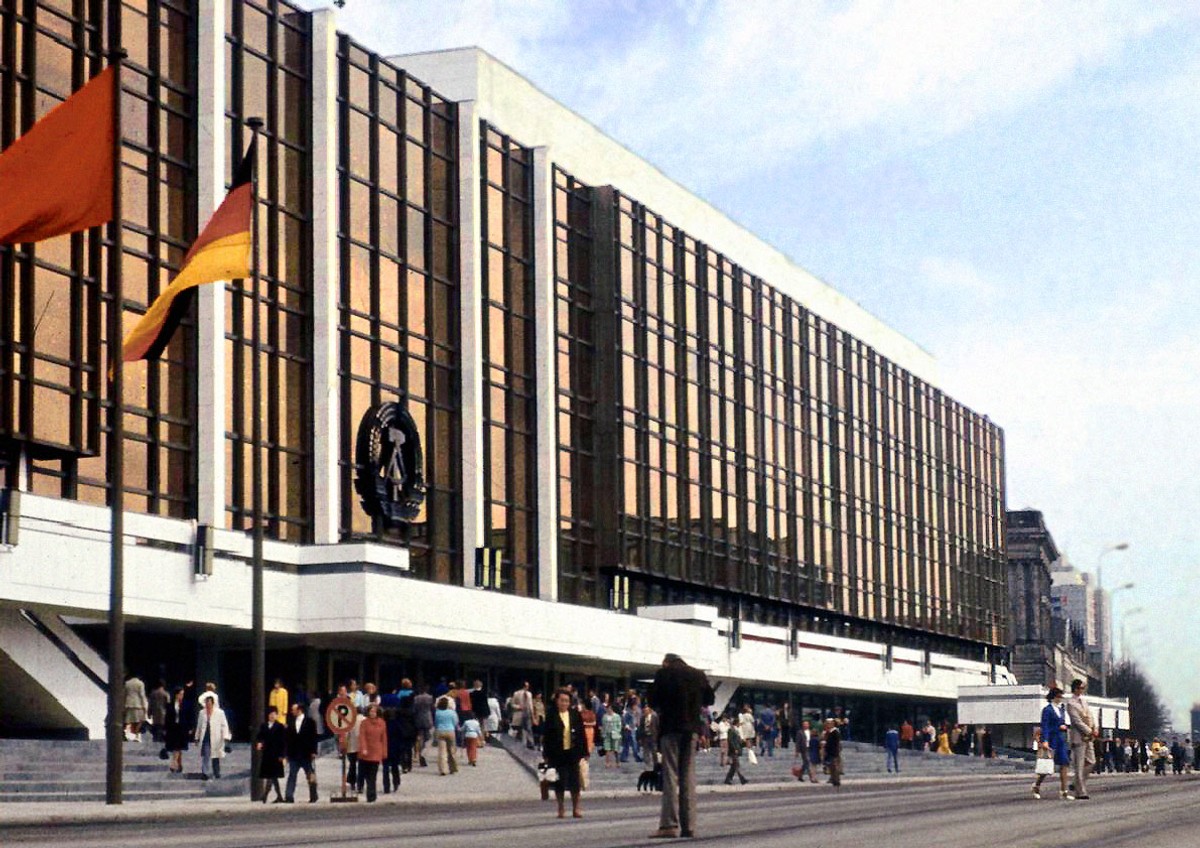
Many of these buildings have been replaced by new ones, which do fit the perfect picture of smoothness. The sites of the former social housing estates have often been used for the construction of for-profit, rather bland housing developments. Remarkable is the case of the raw and brutalist Birmingham Central Library, built in 1974, which has been torn down and replaced by the new and slick Library of Birmingham, completed in 2010 as a flagship project of the city centre redevelopment. Even more incredible is the story of the 15th Century Berliner Schloss, which has been replaced with the Palast der Republik [ill. 2] cultural center by the East-German authorities, only to be demolished again to make way for a reconstruction of the original castle in 2020.
In a relatively short time span a building on the same spot has been twice designated as passé and replaced at an enormous cost, and the end is not in sight. The enormous, contemporary Schloss, called the Humboldt Forum, is admittedly quite an awkward object in the middle of Berlin and criticised by many. A new generation is now calling for it to be demolished and to be replaced by a reconstruction of the Palast. While this campaign might not be entirely serious, it does sharply point out the absurdity of this story. Above all it serves as a clear reminder that, especially with the smooth city on the rise, it’s time to acknowledge that passé is okay and that the discomfort of being confronted with something passé might actually be productive.
If the smooth city’s obsession with newness can be contained, it becomes possible again for buildings to age, decay and become passé. This will make our cities more kaleidoscopic and remind us that there are different eras with different ideas, ideologies, preferences and aesthetics, which might inform, inspire and challenge our current times in different ways. It will also prevent our cities from becoming flattened and homogenised environments, and allow for buildings to harbour different kinds of non-optimised and non-normative uses. By being outdated, disregarded and dysfunctional the passé offers a critical contrast with contemporary smoothness, and critical food for thought for the cities we want to live in.
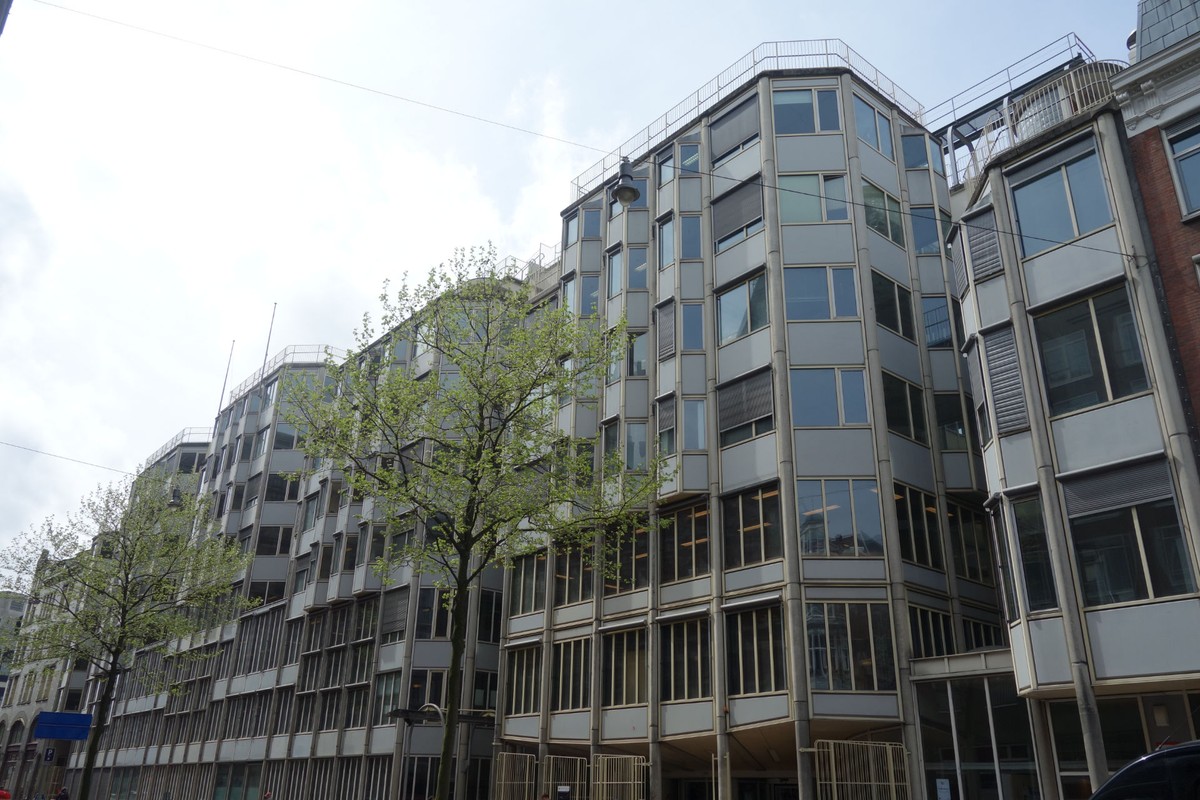
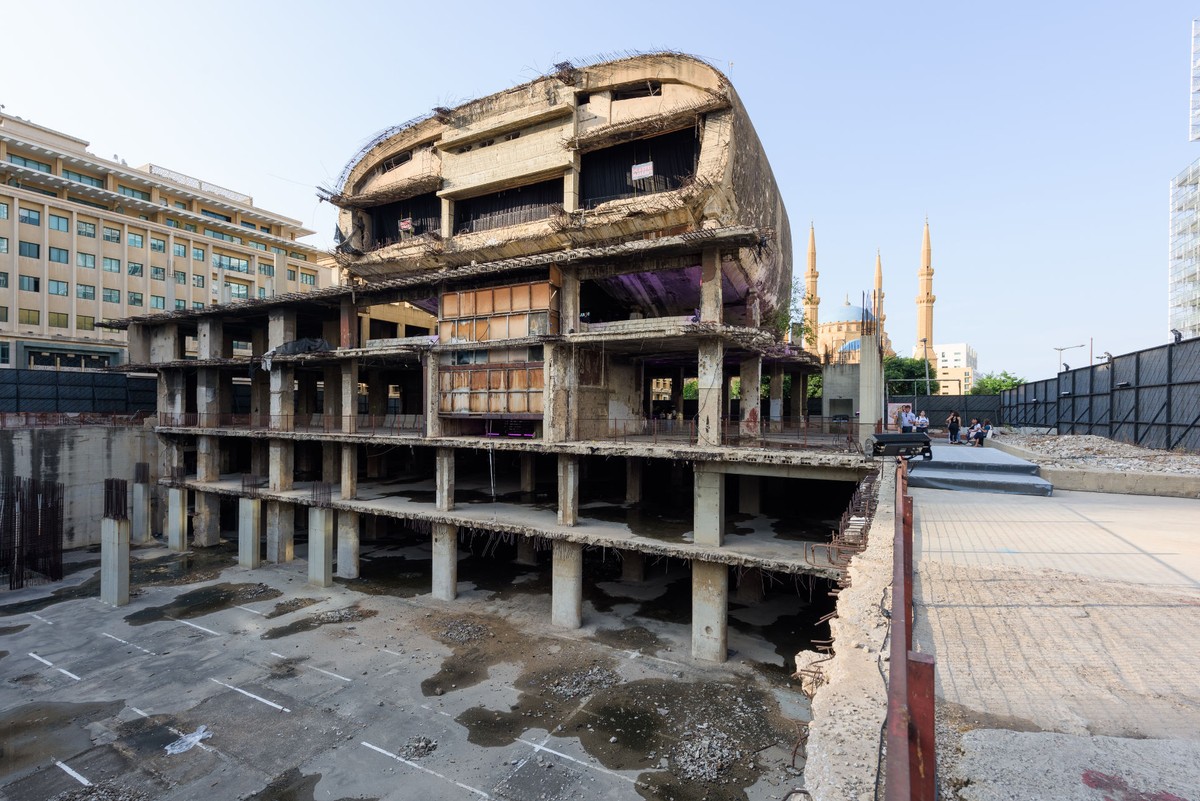
The inspiration is already there. The P.C. Hoofthuis [ill. 3] is a university building along one of the canals in Amsterdam, finished in 1984 in a structuralist style. Currently seen as an eyesore, its labyrinth-like interior is not very suitable for educational (or any other) purposes. Today, its striking presence first and foremost serves as a crucial reminder that not very long ago it was fine for radically new aesthetics to appear in the now strictly controlled canal area. The Egg in Beirut [ill. 4] was supposed to become a multiplex cinema but was never finished and is still a prominent ruin in the city centre. Despised by many, this concrete structure became the epicentre of the 2019 revolution, allowing for a new generation to collectively imagine the future of their city.
–
René Boer (1986) works as a critic, curator and organizer in and beyond the fields of architecture, design, heritage and the arts. In his practice he articulates new perspectives on spatial conditions and facilitates fertile ground for imagining and materialising alternatives. He is a founding partner of Loom-practice for cultural transformation, part of the transnational platform Failed Architecture and affiliated with various urban social movements as well as art, architecture and design schools in Amsterdam and beyond. In 2023, he published 'Smooth City' with Valiz Publishers.