For the first time in history, over half of the global population lives in cities, with 55% residing in urban areas (including both city centres and suburbs, based on national definitions of urbanisation). This figure is expected to rise to 68% by 2050, underscoring the global shift toward urban living. The trend presents both challenges and opportunities, particularly for children, who make up nearly a third of the world’s urban residents. Although cities are often viewed as unsuitable for raising children, this article demonstrates how thoughtful urban planning can create enriching, safe, and sustainable spaces for families.
URBAN VS RURAL DEBATE
Historically, rural and suburban settings were viewed as idyllic for raising children, rooted in eighteenth-century Romantic ideals of philosophers like Jean-Jacques Rousseau, who celebrated childhood as a time of innocence best nurtured in nature. These notions persisted into the twentieth century, when the post-World War II suburban boom in the United States and Europe, combined with the potential for improved living conditions outside city centres, accelerated shifts away from urban living.
Although these ideas originated from the eighteenth century, many parents today still voice concerns about urban living linked to safety, limited play areas, and pollution. This trend is echoed by The Guardian, which reported more than 150,000 households leaving London in 2022 to the outlying areas in search of “space, peace, and quiet.” The UN’s 2018 report, World Urbanization Prospects, also highlights how growing populations can exacerbate challenges for urban families, stating that “unplanned or inadequately managed urban expansion, in combination with unsustainable production and consumption patterns and a lack of capacity of public institutions to manage urbanization, can impair sustainability due to urban sprawl, pollution, and environmental degradation.”
Additionally, a 2018 World Health Organization (WHO) study notes that 93% of children globally live in areas where air pollution exceeds WHO guidelines. While this concern is most acute in parts of Asia and Africa, the 2022 European Environment Agency’s Air Quality in Europe report, confirms that many Western European cities also exceed safe thresholds, indicating that in 2020, 96% of the urban population in Europe were exposed to fine particulate matter levels exceeding WHO guidelines.
Despite these concerns, many cities are actively redefining this narrative. Projects such as Arup’s Cities Alive: Designing for Urban Childhoods illustrates how well-designed urban environments can offer unique opportunities for play, socialisation and learning. Likewise, the UN’s Child-Friendly Cities initiative highlights how urban spaces can become inclusive environments that prioritise children’s rights and well-being.
VAUBAN: BUILDING COMMUNITY THROUGH CHILD-CENTRIC DESIGN
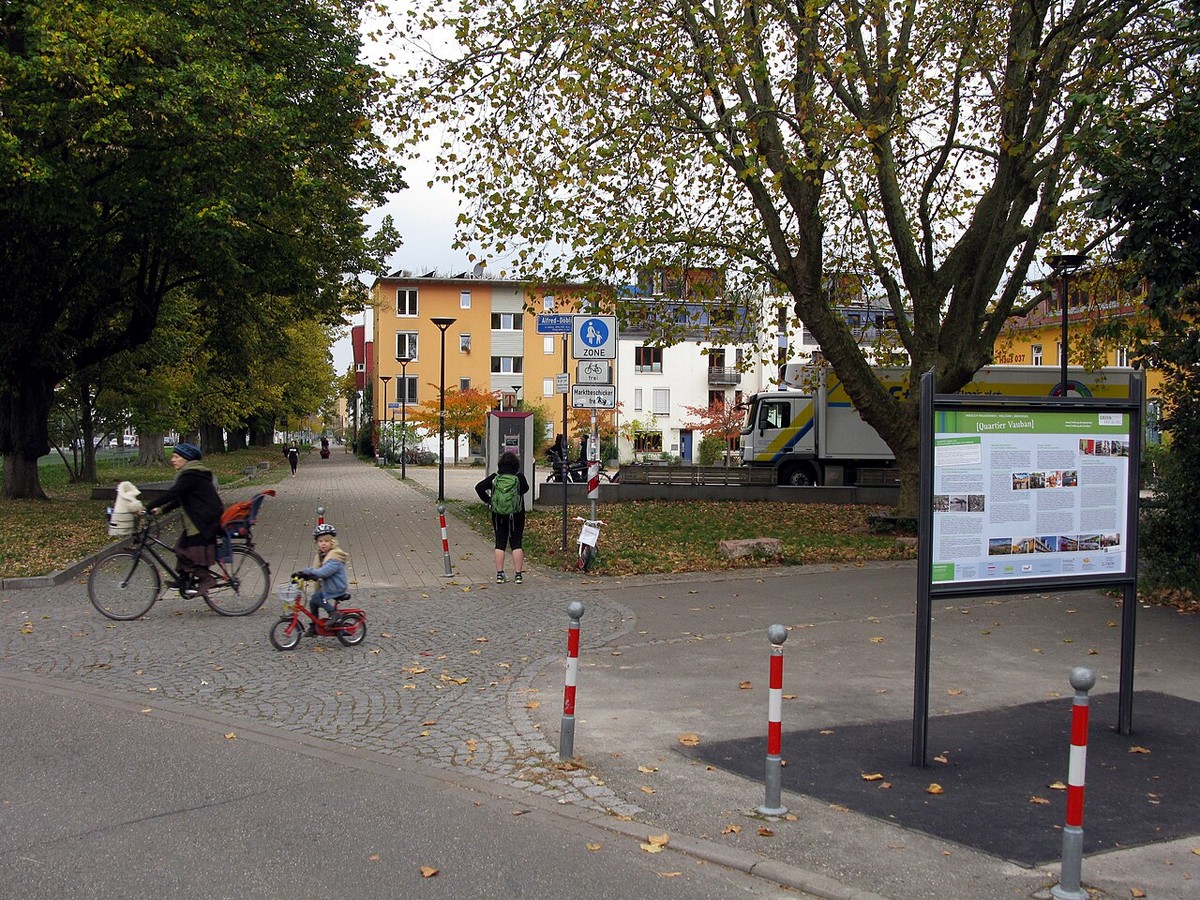
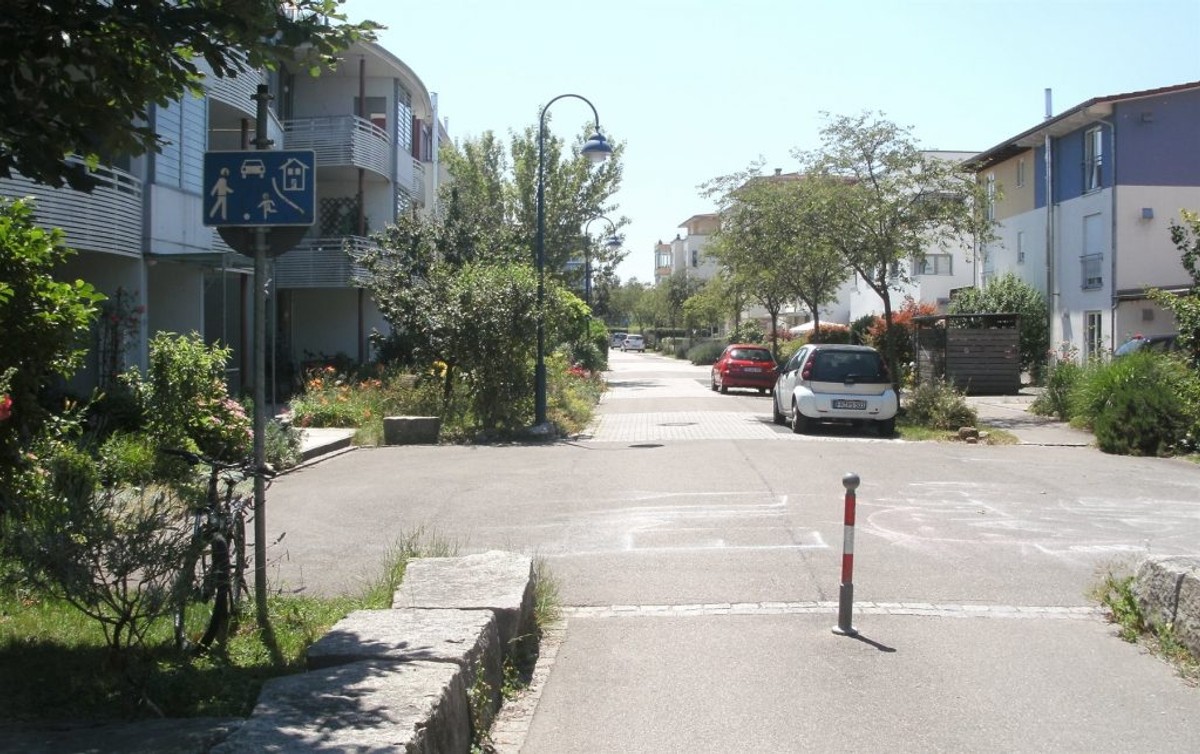
A notable example of a safe, inclusive urban environment is Vauban in Freiburg, Germany. Home to around 5,500 residents, this compact, mixed-use neighbourhood spans half a square kilometre at a density of around 4,500 inhabitants per square kilometre – far higher than Freiburg itself, a city of approximately 230,000 residents, with 1,500 inhabitants per square kilometre. Within Vauban, walking, cycling and public transport take precedence over cars; many streets are car-free zones, with vehicles parked on the district’s periphery. An efficient tram system also connects Vauban to Freiburg’s city centre. As a result, Vauban’s car ownership rate is approximately 72% lower than the German average [ill. 1].
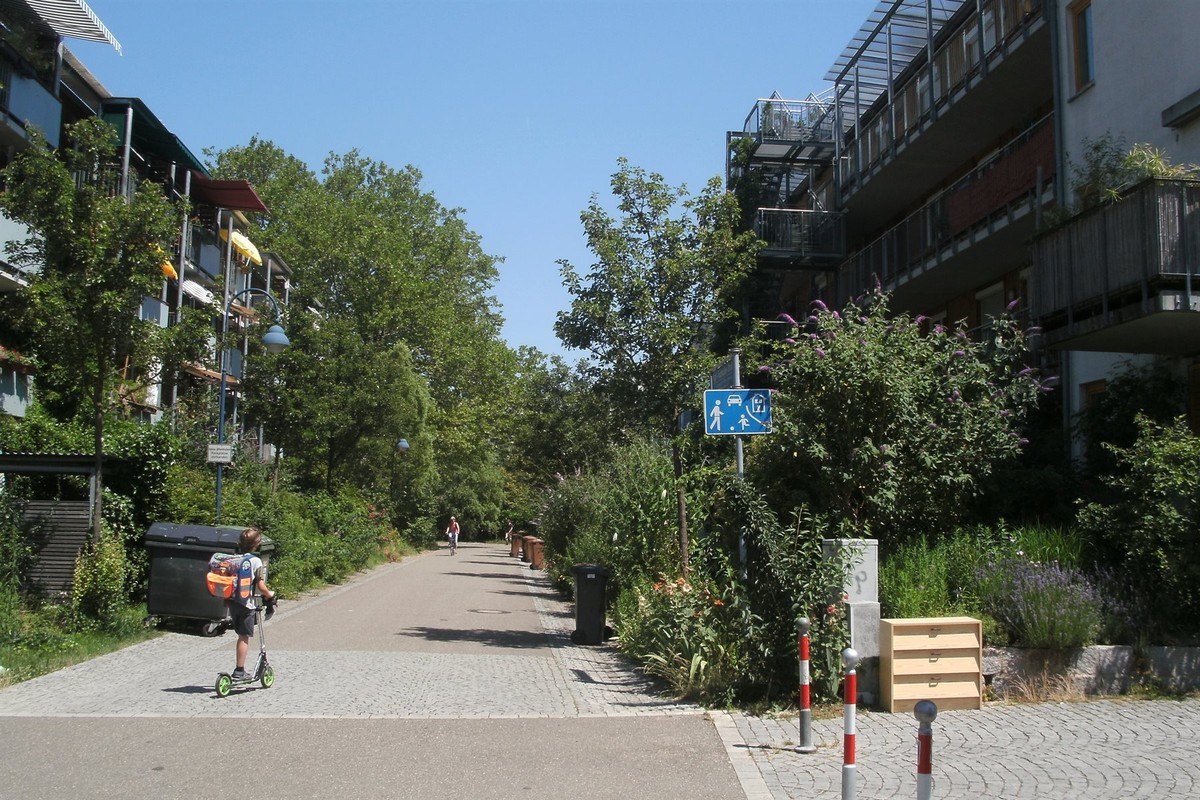
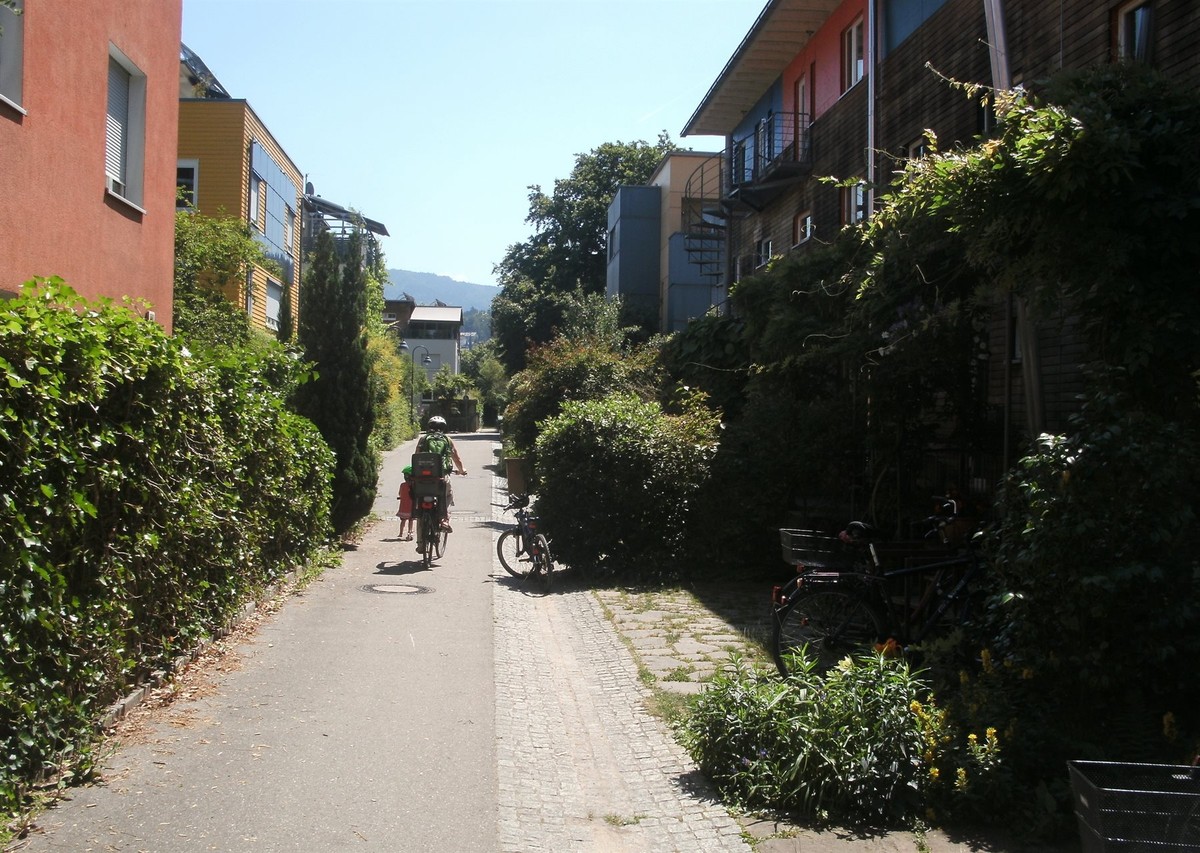
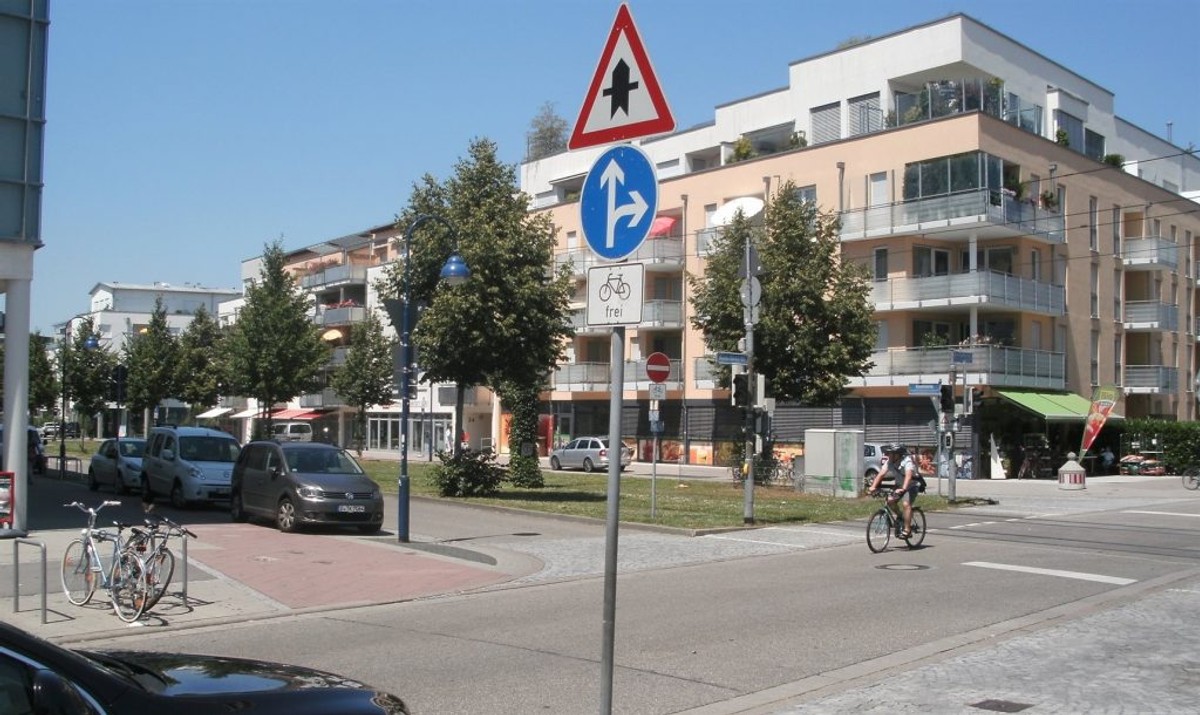
Vauban’s design emphasises sustainability and community-led development. Many homes meet passive house standards, reducing environmental impact and living costs for families. Its public spaces are designed to foster interaction and connection, with tree-lined streets, communal gardens, and shared courtyards enhancing the sense of belonging among residents. Although Vauban has traditional playgrounds, many streets serve as “home zones,” where children can safely play, meet friends, and interact with neighbours. These pedestrian-prioritised spaces treat drivers as guests, bringing vibrancy to public areas while allowing children the freedom to roam. This setup, combined with homes overlooking the streets, fosters lightly supervised play and encourages children to develop confidence and independence [ill. 2-5].
The development of Vauban as a pedestrian-focused neighbourhood was led by a community organisation, Form Vauban. Established in 1994, the activist group advocated for the community’s interests and played a crucial role in planning the area. Through public meetings, workshops, and forums, residents’ concerns and aspirations were prioritised. This participatory process empowered the local community and led to long-term engagement in the neighbourhood’s upkeep and evolution. Vauban stands as a model of co-creation, demonstrating how communities can drive innovative urban solutions that prioritise children, families, and sustainability. The development has also inspired planners worldwide, from Hammarby Sjöstad in Stockholm to BedZED in London, both of which have adopted similar principles of sustainability, energy efficiency, and community-focused design.
URBAN LIVING ADVANTAGES
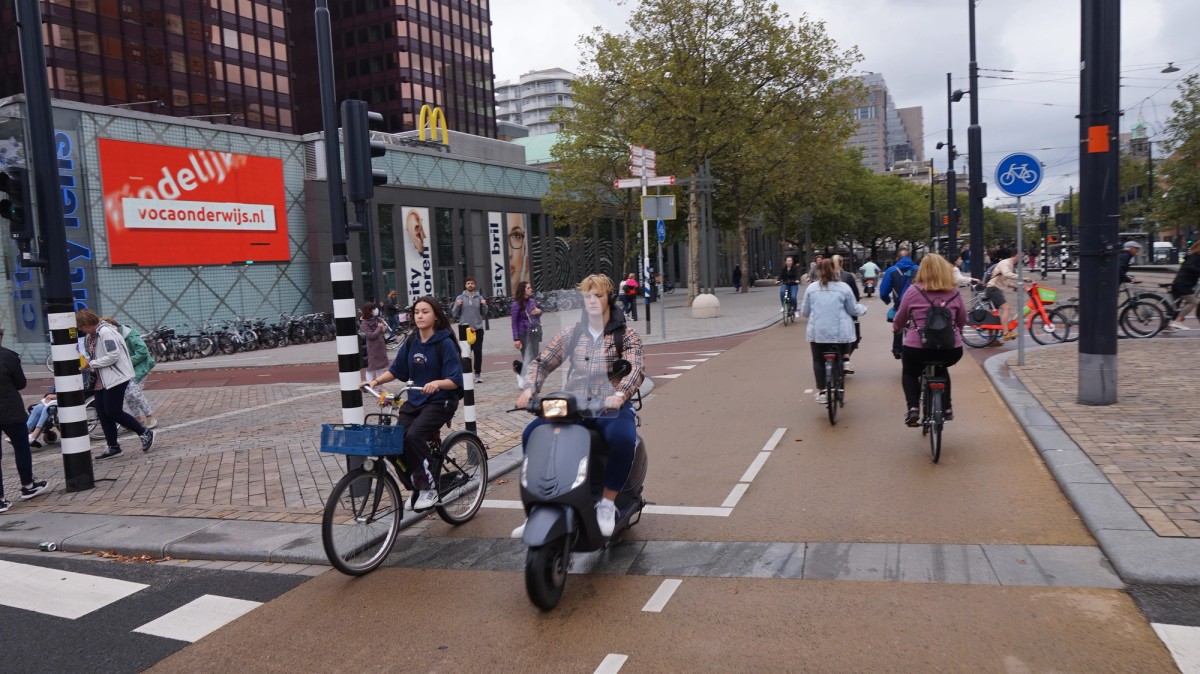
Well-designed cities like Vauban show how urban environments can prioritise children and families. Within Europe, other cities are making similar strides towards creating family-friendly environments, such as Rotterdam with its extensive cycling network and safe pedestrian zones, connecting schools, parks, and neighbourhoods, and facilitating safe, convenient travel choices [ill. 6].
Antwerp has also undertaken steps to become more family-friendly, celebrated for its creative child friendly public spaces, the city has merged play and community engagement into courtyards and streets, fostering intergenerational interaction and cultural exchange. It is the density and diversity unique to cities that can spur these community connections and interactions that otherwise may not happen in a rural environment. Another advantage of compact urban living is the immediate access to cultural, educational, and recreational facilities. When supported by an affordable public transport or robust cycle infrastructure, cities reduce car reliance and encourage children’s independence – all while contributing to a more sustainable lifestyle.
CHALLENGES IN SUBURBAN LIVING
Low-density suburbs, while offering space, greenery, and lower traffic volumes, also present challenges including urban sprawl, dependency on cars, and social isolation. The lack of density within suburban environments paired with limited or non-existent public transport, can restrict a family’s access to resources such as museums, libraries, and swimming pools. Young people, in particular, are affected by these circumstances, often needing to depend on parental transportation, which limits their autonomy and self-exploration.
Many suburban neighbourhoods are also often valued for having private gardens; however, this view of perceived “green space” can often lead to a lack of shared public spaces. While private gardens are valued, they may fail to meet the needs of older children and teenagers seeking privacy, freedom, and opportunities for unsupervised exploration outside the structured setting of school. In contrast, urban environments like Vauban and Antwerp demonstrate how thoughtfully designed public spaces can encourage social connections, and support young people’s desire for freedom in safe, unsupervised surroundings.
CREATING CHILD-CENTRIC SPACES
Debates over rural, suburban, and urban living continue to shape our ideas about where children can flourish. While low-density areas offer certain benefits, they also present challenges such as car dependency, social isolation, and limited opportunities for independence. Conversely, neighbourhoods like Vauban, Rotterdam, and Antwerp prove that cities, with careful planning, can be safe, accessible, and supportive environments for child development.
Designing child-centric environments means integrating children’s needs and voices into both urban and rural planning, rather than segregating them in isolated play zones. Concepts like “play streets,” where traffic is minimised or banned, transforms roads into vibrant communal spaces that foster creativity and connection. By prioritising people over cars, incorporating play into everyday places, and building well-connected, sustainable neighbourhoods, cities can support independence, social connections, and sustainability.
Notably, contemporary discussions highlight that many parents still see cities as overcrowded or dangerous. Such perceptions underscore the need for continued efforts to plan cities that truly cater to children’s well-being, counteracting assumptions that only suburbs or rural areas can provide a wholesome upbringing.
As global urbanization continues, reconsidering how we design cities for children has never been more relevant. Children are not merely passive residents; they are key contributors to the vitality and future of our urban spaces. By focusing on their well-being, we create environments that are family-friendly, inclusive, and resilient. Policymakers, planners, and communities must collaborate to champion these principles, prioritising child-centric urban design. Ultimately, a city designed for children benefits everyone, building stronger communities for generations to come.
_
Rebecca Halstead is an RIBA Chartered architect based in Copenhagen and the founder of Echo Architects. A member of the RIBA Europe Chapter, she specializes in inclusive, child-friendly urban design, and advocated for more accessible public spaces. Her work focuses on bridging research and practice, sharing best practices across Europe to share more liveable cities.