12 min
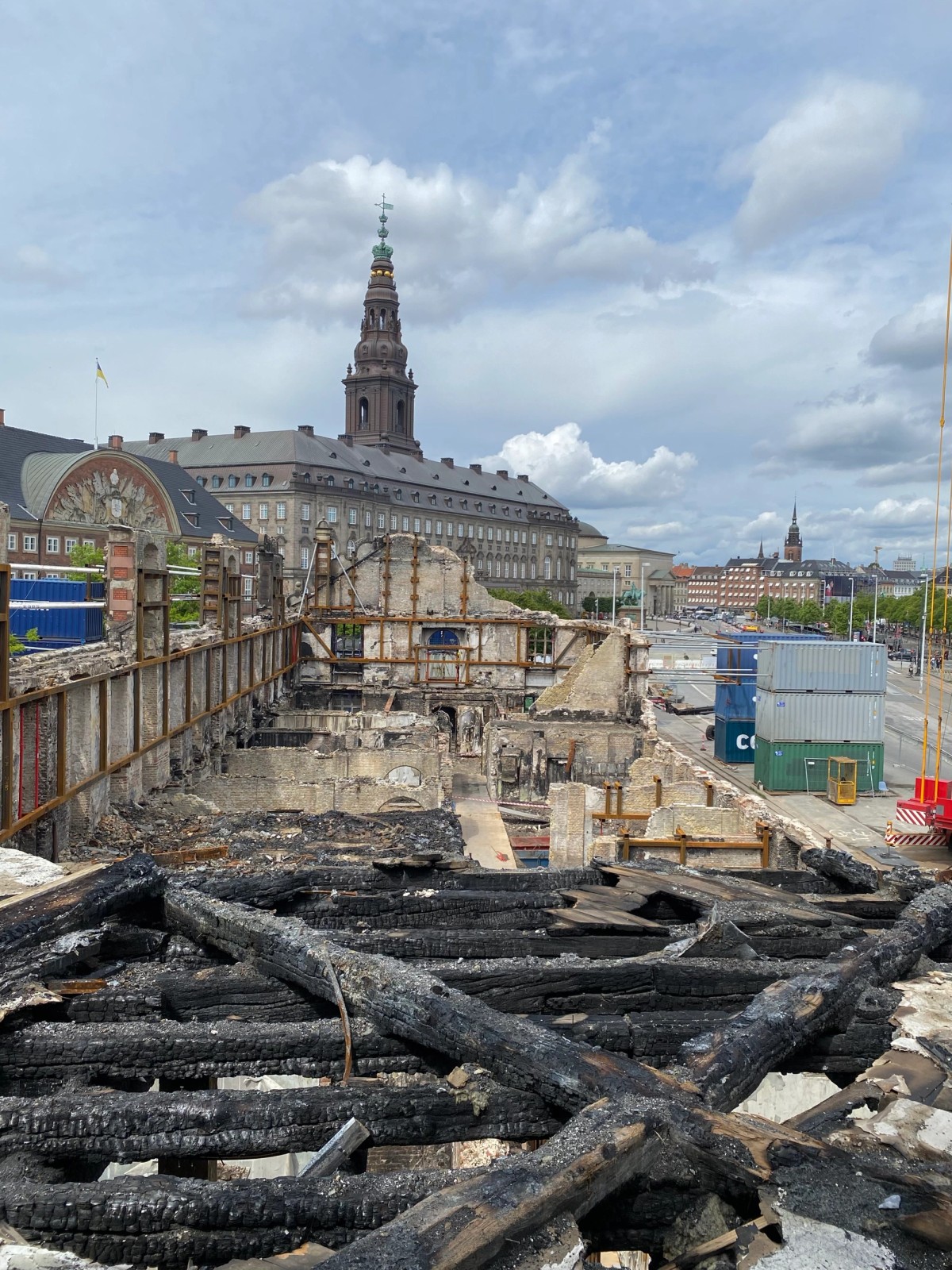
Early in the morning on April 16, 2024, Børsen caught fire and within a few hours a building that had been part of Copenhagen's history for 400 years was destroyed [ill. 1].
The extensive reconstruction work that Børsen is now facing has initiated several processes, including investigations by insurance companies regarding the costs of restoring other comparable buildings. As a result, the relevant question to be examined is this: To what extent do the necessary craftsmanship skills required to restore such a building exist in Denmark today?
In this article, I argue that our collective building culture similarly requires reconstruction, and I will focus on the challenges currently facing the masonry craft. Over a remarkably short period, the rapid industrialization and centralization of the construction industry have eroded the deeply rooted material understanding of craftsmanship that once formed the foundation of our built environment. We must take care in rebuilding our building culture and reclaim ownership of the materials and methods that once defined it. Otherwise, we risk losing a far greater part of our cultural identity.
BACKGROUND
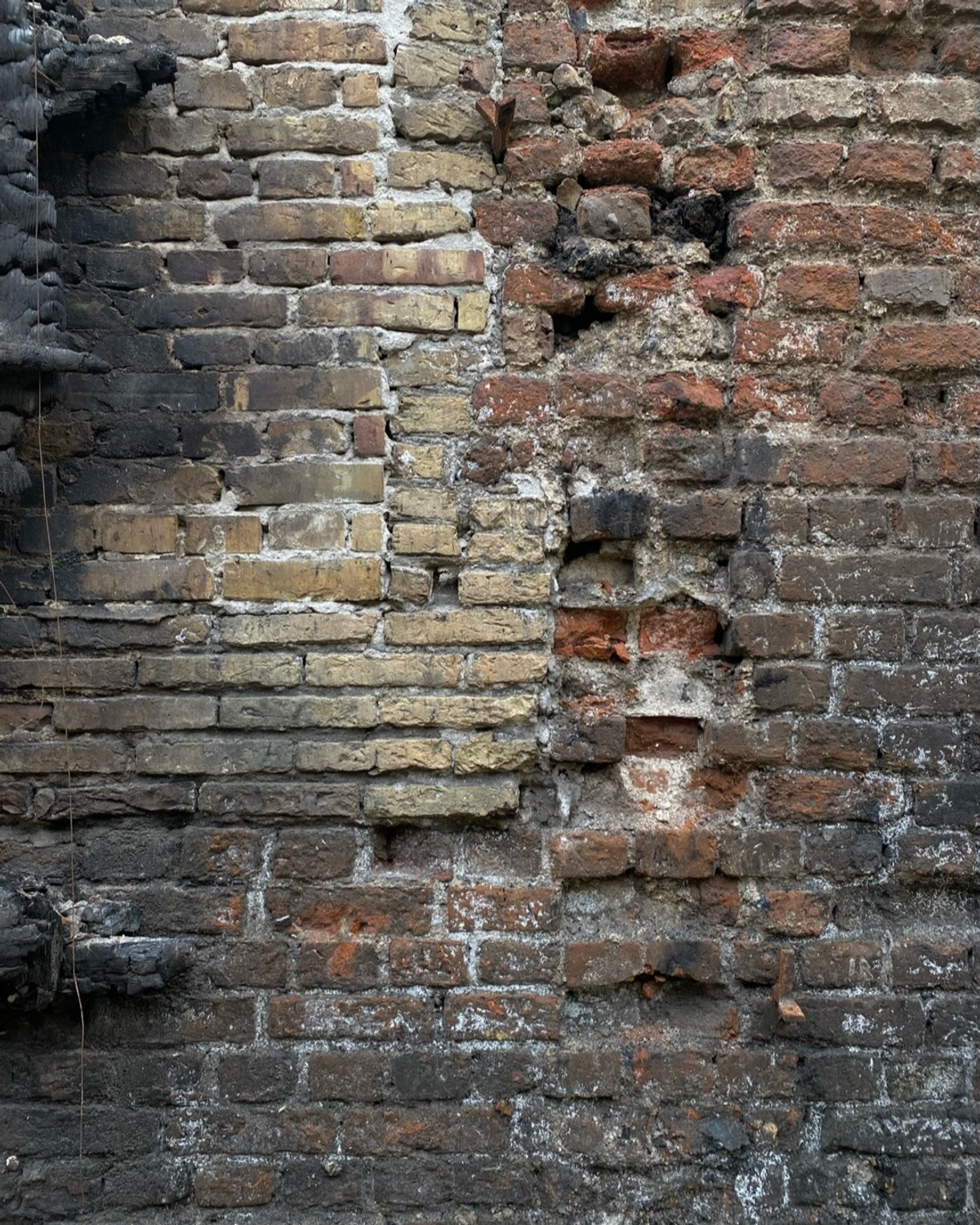
By utilizing locally available resources, the art of construction has historically been a far more sustainable practice than it is today. This has resulted in buildings that are not only durable but also easy to maintain and repair with materials naturally found in the surroundings. Denmark has a long and rich tradition of using clay and brick, with masonry craftsmanship being a cornerstone of Danish building culture [ill. 2].
This began to change after World War II, as the construction industry underwent rapid industrialization, driven by the need to build housing quickly and cost-effectively for a growing middle class. “Parcel houses” began to dominate the Danish housing market, and in the 13 years between 1960 and 1973, many prefabricated house companies formed, producing an impressive 22,500 prefabricated houses and single-family homes per year, or 75 houses per day. This revolutionized housing in Denmark, giving many Danes the opportunity to own their homes for the first time. It made housing far more accessible and affordable, significantly improving living standards for the country as a whole.
However, industrialization and standardization of the building industry initiated a shift from traditional building methods and materials to an overreliance on new mass-produced, industrialized processes not tested in the real world. This created an increasing disconnect between craftsmanship and the building materials used. Cost-efficiency and mass production became first priority, sidelining the experience-based knowledge of craftsmen that had been developed over centuries. Where a mason once mixed mortar based on local conditions, structural needs, and hands-on experience, the new materials were guided by technical calculations and laboratory tests—useful tools, but unable to account for the full range of real-world conditions and variables over a long period of time.
Many of the new materials introduced during this industrial shift, while promising at the time, have proven in many cases to be less flexible and more harmful to the people who work with them than the regionally sourced materials they replaced. These materials were often harder or impossible to repair and came with a higher environmental cost. A telling example is the widespread replacement of lime mortar with cement mortar.
Lime mortar, which has a lower carbon footprint and is able to reabsorb CO2 over time, was used in all brick buildings before the 1940s. Though weaker than cement, it was used to construct churches, multi-story apartment buildings and other massive structures that worked well for centuries.
Despite widespread historical usage, the task of ensuring structural integrity fell increasingly on the calculations of engineers. With little choice but to compensate for unknown variables or remote risks, engineers have had to increase safety margins, sometimes excessively, to ensure legal and professional security. This has further accelerated the shift away from the craftsmen’s experienced-based material understanding.
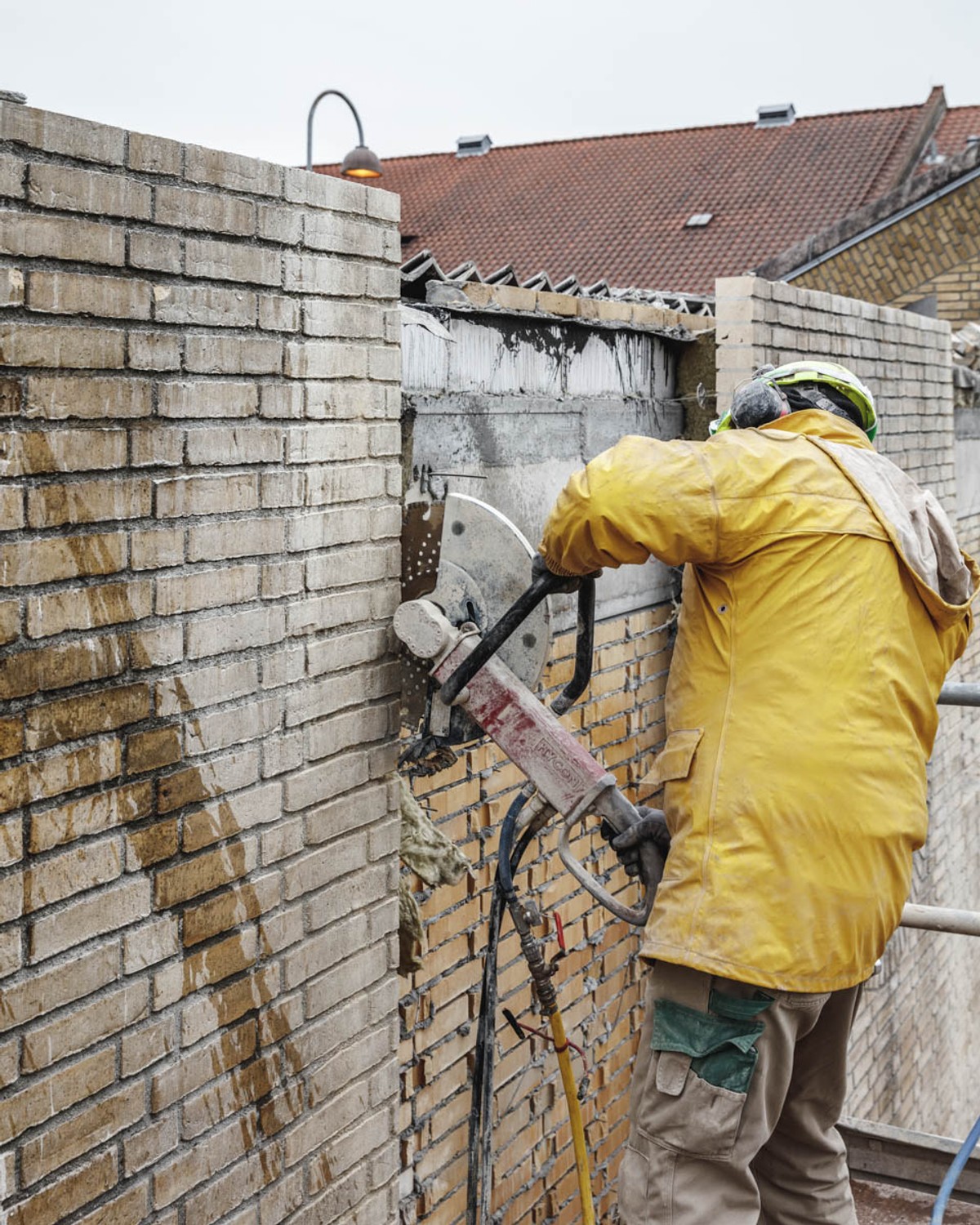
The approach has led to the belief that lime mortar is "not strong enough.” Today, even curtain walls, which are designed to bear only their own weight, are routinely constructed with cement mortar. Modern cement mortar is a material so strong it surpasses the durability of the bricks, leading to several new issues. For example, the once-common practice of recycling bricks and other building materials is no longer a viable option. Previously, repairs to facades could be made by simply adding more mortar between the bricks, but now cracks often form within the bricks themselves, making repairs far more expensive and challenging [ill. 3].
FROM THE INSIDE
Kristian Danborg from Byggeselskabet Maj has worked as a mason his entire career and expresses deep concern about the fading material understanding within the profession. According to him, the traditional knowledge of how to build something meant to last for hundreds of years is slipping away as the profession increasingly shifts toward an "assembly trade," a more mechanical approach without the craftsmanship knowledge that once defined it. "How do you mix mortar? It says on the bag.”
As building practices have become more bureaucratized and standardized, craftsmen have lost a lot of their authority, with their roles increasingly limited to following pre-set rules and guidelines rather than engaging in skilled work. Kristian estimates that while there are around 10,000 masons in Denmark today, only a small minority—perhaps 1,000 to 1,500—would know how to approach the restoration of a protected building or timber-framed house.
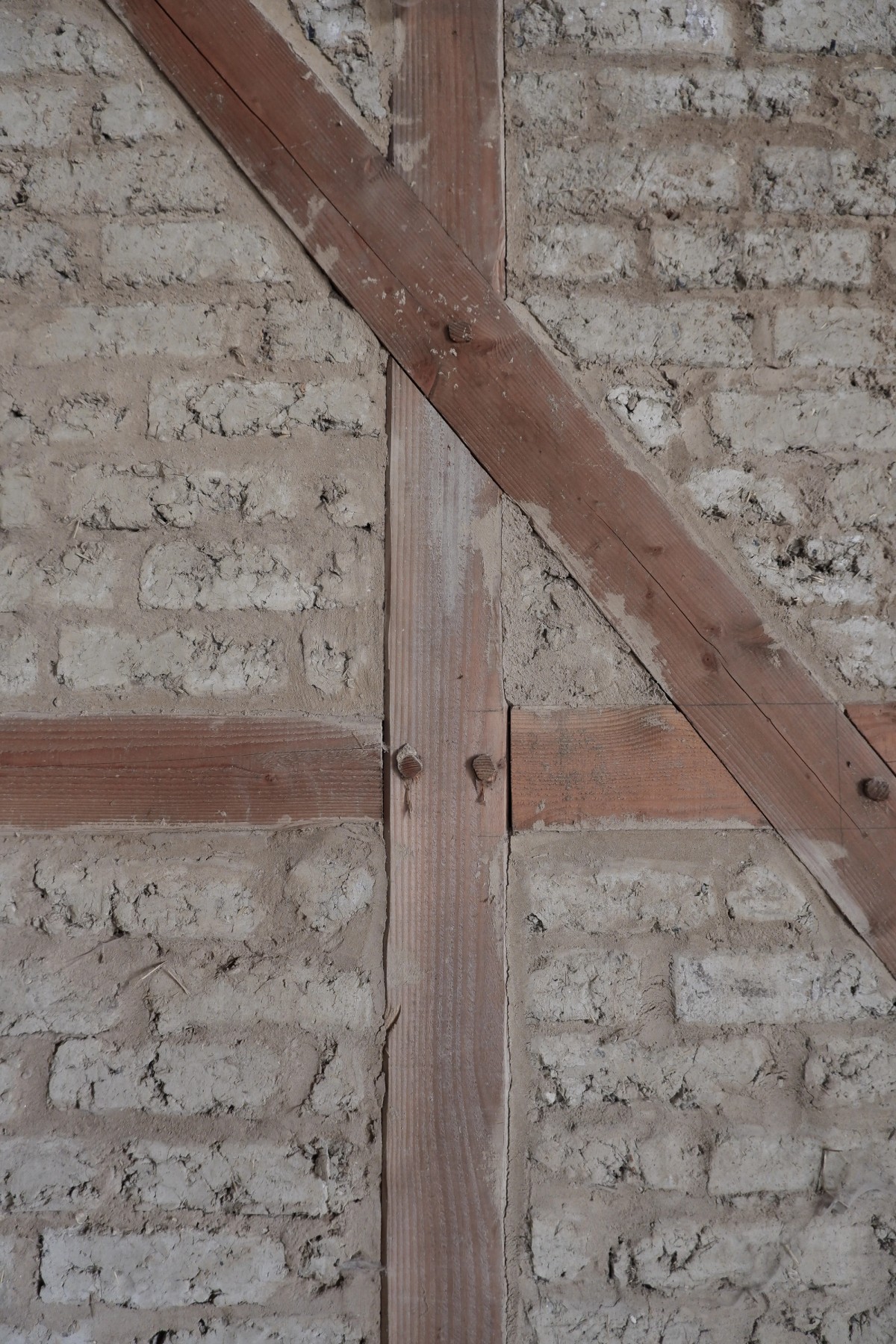
"When I was younger, terrazzo and marmorino became very popular; today, materials like hempcrete and clay bricks are similarly becoming more common. Learning and adapting to new methods, as well as working with new, more sustainable materials require a fundamental understanding of the craft. This understanding is not present in the profession in the same way it was before, and it continues to slip away," he says [ill. 4].
The knowledge and professional pride that make masonry a craft today rely almost exclusively on older skilled individuals and their passion and willingness to pass that knowledge on to younger employees and train them in how to "do it right." But as their firms decrease in number, so does the availability of that knowledge, which is becoming increasingly unavailable.
Pia Skjøtt-Larsen is an educational consultant for masonry and related trades at the Building Education Centre. She is one of the people responsible for masonry education in Denmark and recognizes this as a problem. She has been working to reintroduce sustainable materials into the curriculum, but progress is slow. Starting in the spring of 2024, the Danish masonry education will now dedicate one week to the use of sustainable and traditional materials like lime mortar and clay.
Thea Vind Haugsted, a newly trained mason, shared with me her views on the challenges she encountered entering the industry. She expressed frustration over the fact that the knowledge required to develop the craftsmanship skills to do the job correctly is not easily accessible, especially for those newly trained. She noted that it is difficult to learn these skills in Denmark today, as no formal education focuses on restoration and traditional craftsmanship and materials. When she wanted to deepen her knowledge in these areas, she had to move to Sweden to study.
In Sweden, she learned the importance of scaling up work with sustainable, locally available materials by integrating modern techniques and machinery. "We can't have horses trampling around on a construction site,” she says. "There must be machines that make it possible to mix and spray lime plaster efficiently."
THE CHALLENGE OF SUSTAINABLE CRAFTSMANSHIP
The challenge extends beyond the skills and knowledge of individual craftsmen. We need an industry that not only develops and provides these tools and machinery but also sustainable, locally sourced materials. Yet, as the Danish construction industry increasingly relies on large, bureaucratically entrenched systems, the building materials market has been dominated by a few large companies. These companies limit the availability of sustainable materials by implementing steep requirements for tests, documentation, and expensive certifications, nearly impossible for smaller firms to afford, especially those that want to enhance, rather than replace, already proven materials and traditional craftsmanship. This bureaucratization is being used as a tool to consolidate power among a few large players who benefit from maintaining the status quo.
An example is the upcoming CO2 tax called “The green tax reform.” Starting in 2030, Denmark will introduce a CO2 tax of 375 DKK per ton of emitted CO2 for companies, with special exceptions for "mineralogical processes," including the production of cement, glass, mineral wool (insulation), bricks, and steel. For these exempted processes, the tax will be only 125 DKK per ton.
Karl Nørgaard Pedersen is a carpenter who co-founded Havnens Hænder, a building material company that exclusively provides sustainable building materials. “There are alternative building materials that are better to live with, better to build with, and made from natural materials that don't cost more, yet the vast majority of the materials we sell are are only available in very few places in Denmark today,” he says.
In Denmark, large companies have not only consolidated control over building materials but have also indirectly dictated what materials can be used in construction. Previously, there were many different suppliers of varying orientations and sizes, but today they have either been bought out or outcompeted, leaving almost everything controlled by just a handful of largeer players. "Our nearest competitor has an annual turnover of over billions of kroner," Karl says.
He adds: "The big players have very skilfully transformed the industry into a matter of who can hire the most ‘counting nerds,’ finding more and more creative ways to appear more sustainable on paper while lobbying to make regulations align with the same product or building method they've always used.”
REBUILDING
Well-meaning intentions can cause as much harm as bad ones if they are not informed. But we are drowning in research and data. We can’t keep building new structures over and over again; we need to build them to last better than they do now. There are still people who are afraid to say it outright, tiptoeing around the proven truth: the so-called progress we find ourselves in is just an illusion of advancement, yet we continue pretending that things are always moving forward, that we can never lose what we’ve previously gained.
We have limited ourselves to the conveniences offered by the technology of our time. The figurative gold which has been passed on through generations has in the blink of an eye transformed into fragile glass that will shatter as we drop it.
It is as if a vast majority still cannot see that large, monopoly-like organizations control the building industry and, like yeast fungus, consume and consume until nothing is left, even if it means their own demise, all while concealing how their influence continues to suppress what actually works. It’s really about time to finally cut this PCB-riddled, Neanderthal branch that has been growing unchecked for far too long.
Reality is not something fixed and unchangeable that we must helplessly witness – it is something we create, and which we might just as well create better.
While the recent reintroduction of sustainable materials into the Danish masonry curriculum is a great step in the right direction, it is far from enough. We need to be far more ambitious in our goals. Instead of mandated internships at architecture offices, perhaps one of the few semesters of architecture education should be replaced with apprenticeships with skilled craftsmen.
While educational reforms are crucial, we cannot keep handing over the problem to the next generation. We must introduce regulations that make it harder for us to destroy our environment and building culture, rather than giving the worst offenders exemptions. Tax breaks should be applied to materials and processes that offer environmentally responsible alternatives, rather than to those who can afford the most engineers and lobbyists. Our goal for 2030 can no longer be to make it cheaper to pollute a lot than to pollute a little. This cannot be acceptable.
We cannot predict the near-infinite variables that make up reality and how they will affect us. However, what we can learn from is what has already worked—not in a sentimental or nostalgic way, but as a foundation. When the future is as uncertain and rapidly changing as it is today, it’s natural to cling to the past. But I am not arguing that we should stick to traditional craftsmanship as a niche reconstruction of old monuments. To the contrary, it should be a rock-solid foundation to continue evolving and reinventing from. The construction industry plays a crucial role in driving this innovation. Using modern tools and technologies to strengthen what has proven effective over time, it should contribute to our shared building culture and keep advancing it.
Our predecessors did not yet know the full consequences of their actions. We do not have the same excuse. I think we all know, in our heart of hearts, the rain will come. And the simple question we must ask ourselves is whether we will be remembered as a generation that continued to build profitable sandcastles or one that took collective responsibility to ensure that what we have built can endure.
–
Filip Ivarsson is an architect MAA combining hands-on craftsmanship with research-driven practices. Filip Ivarsson specializes in historical building materials and techniques, particularly focusing on Danish earth houses. Through both his academic and practical pursuits, Filip Ivarsson advocates for a construction ethos that honors tradition while innovating for a more sustainable future.