




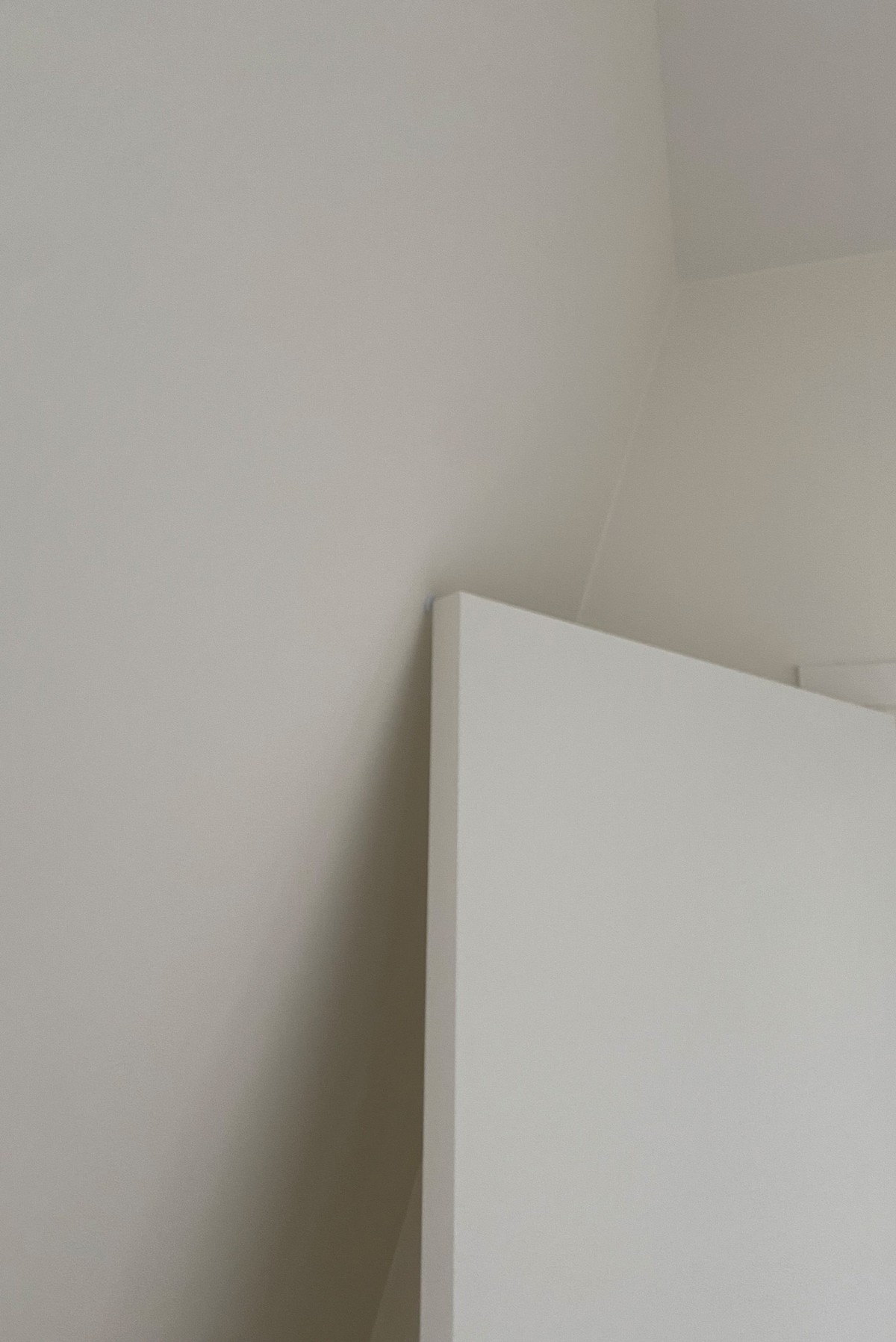
[Ill.1] Door stop, Apartment: C1, Kongeporttårnet, second floor. Photo by Filip Ivarsson.
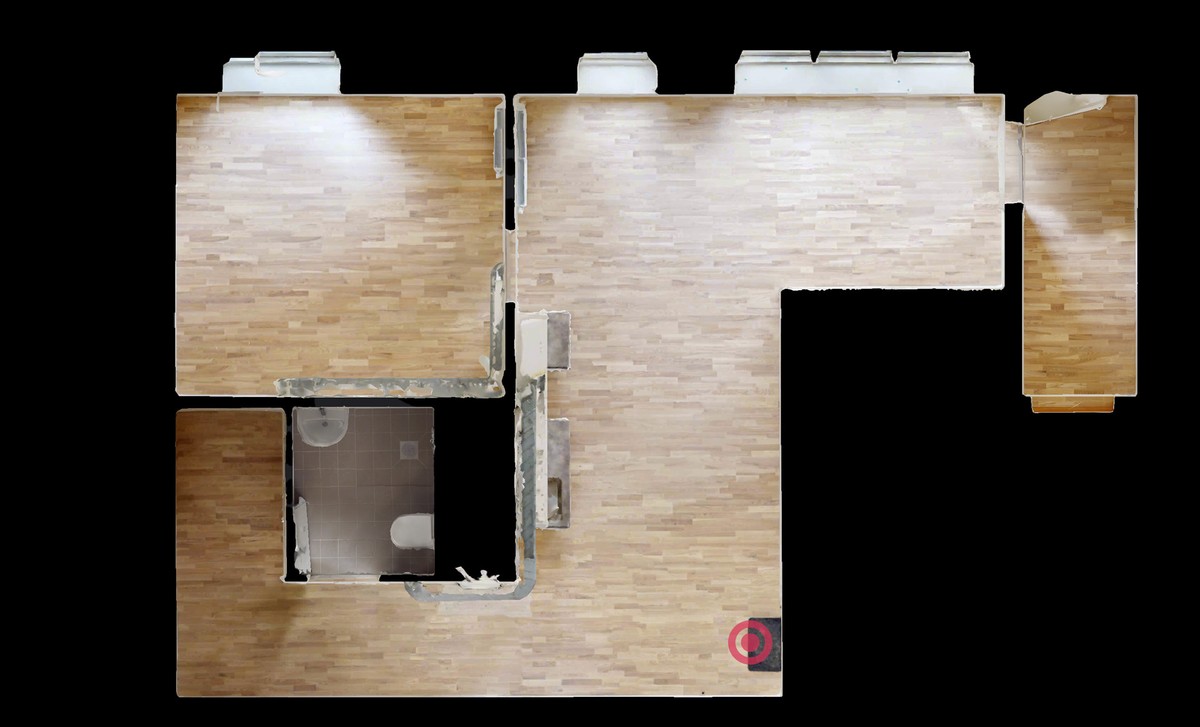
Ill.2.: Screenshots from digital toure of a 2-room public-housing “family apartment” Available on:https://tours.360company.dk/tour/provebolig-papiroen-2v
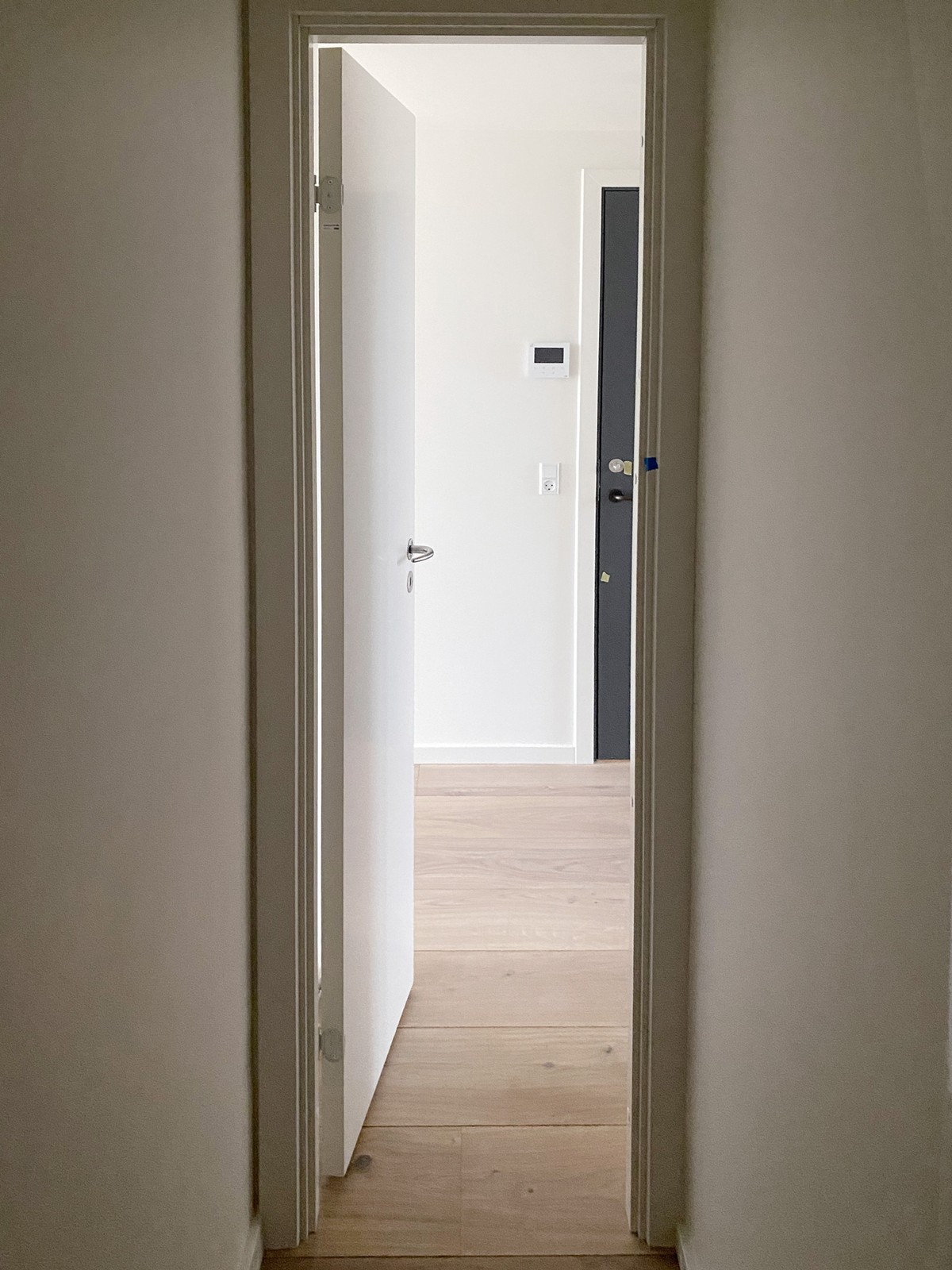
Ill.3. :Available space - 655mm x 1935mm. Apartment: B1, Operatårnet first floor. Photos and illustrations by Filip Ivarsson.
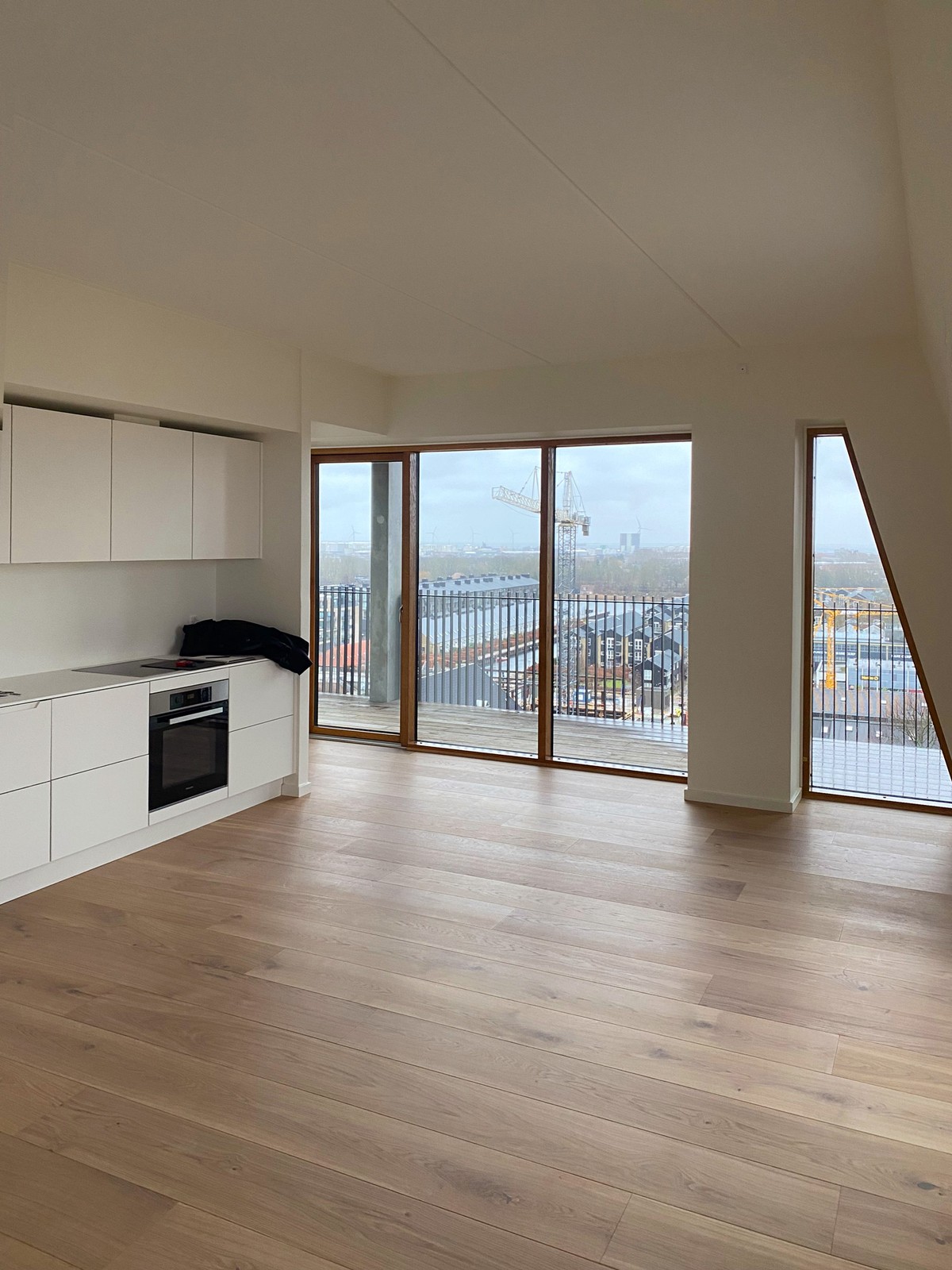
Ill.4.: Kitchen/living room. Apartment: C1, Kongeporttårnet, first floor. Photos and illustrations by Filip Ivarsson.
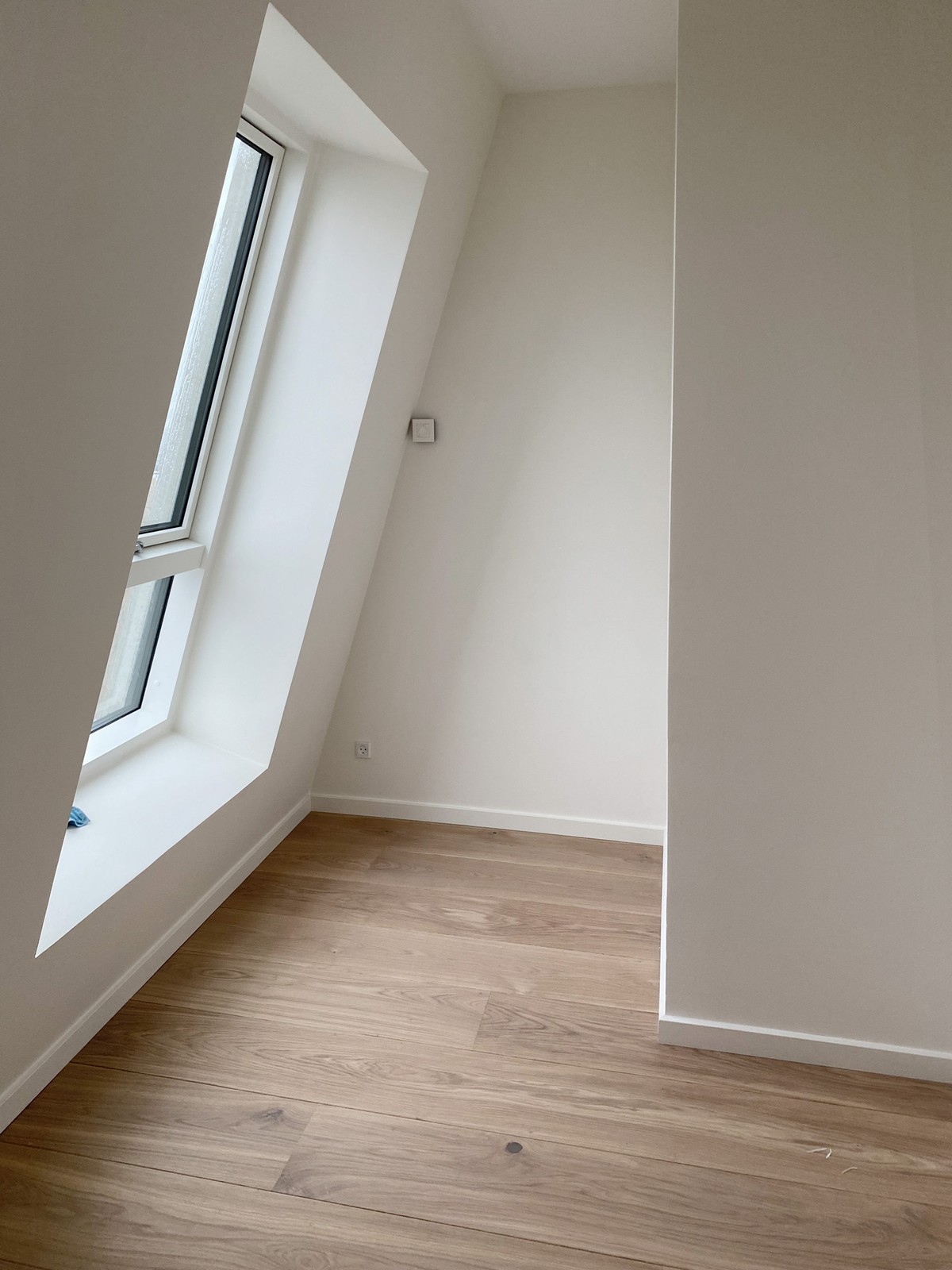
Ill.5.: Available space. Apartment: C1, Kongeporttårnet, first floor. Photos and illustrations by Filip Ivarsson.
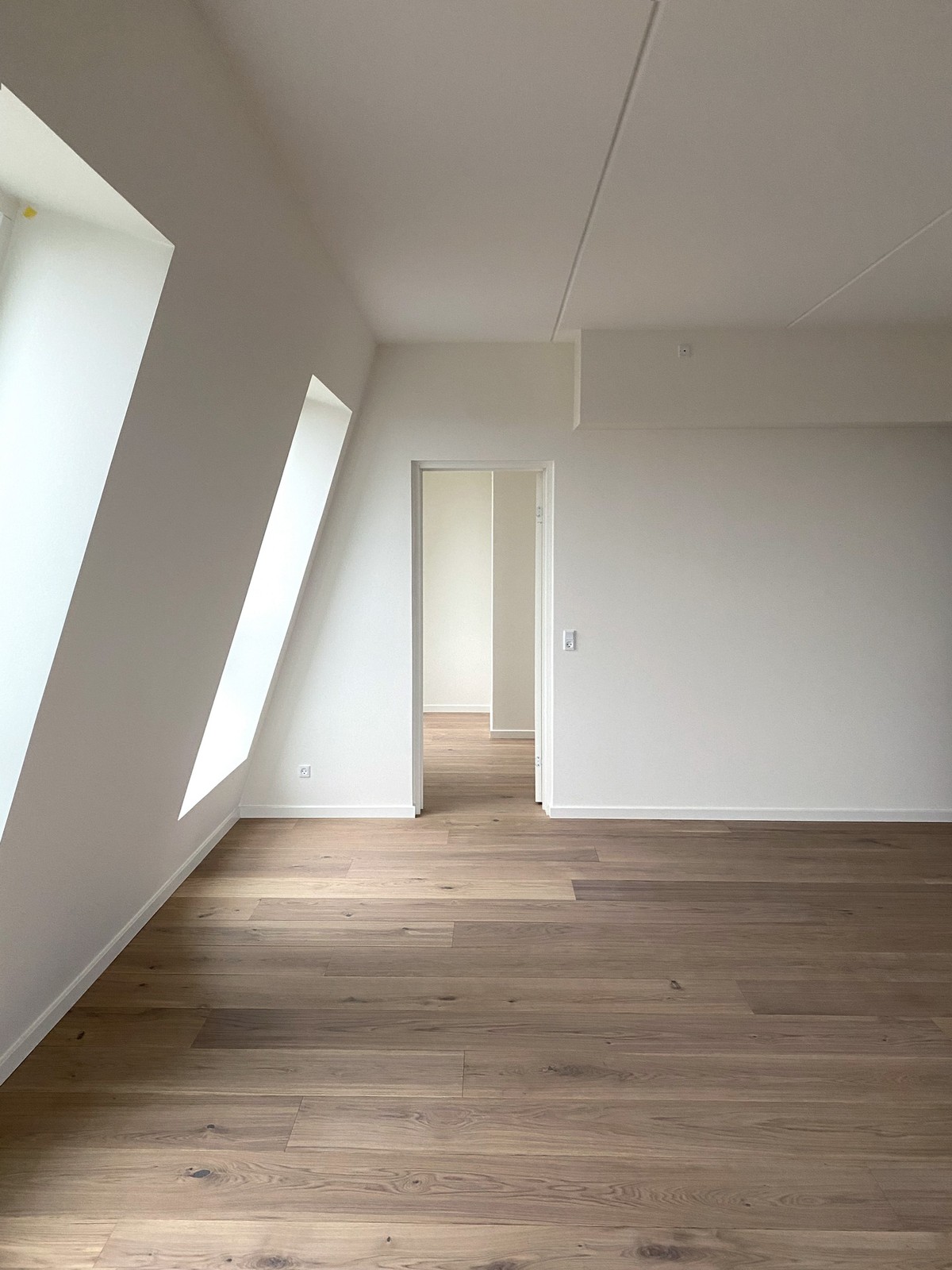
Ill.6.: Living room wall angle of 72°. Apartment: C1, Kongeporttårnet, second floor. Photos and illustrations by Filip Ivarsson.
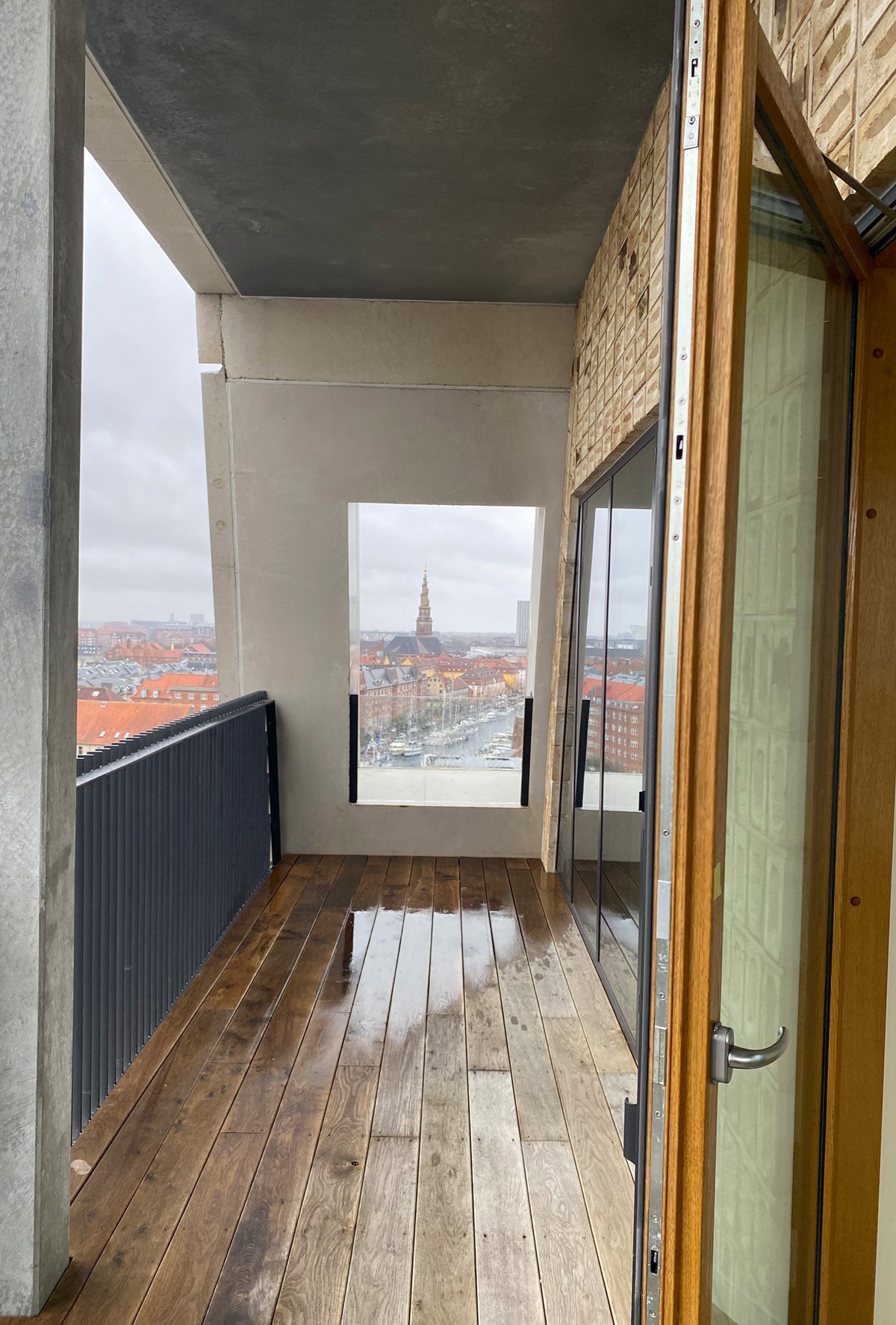
Ill.7.: Balcony. Apartment: C1, Kongeporttårnet, second floor. Photos and illustrations by Filip Ivarsson.
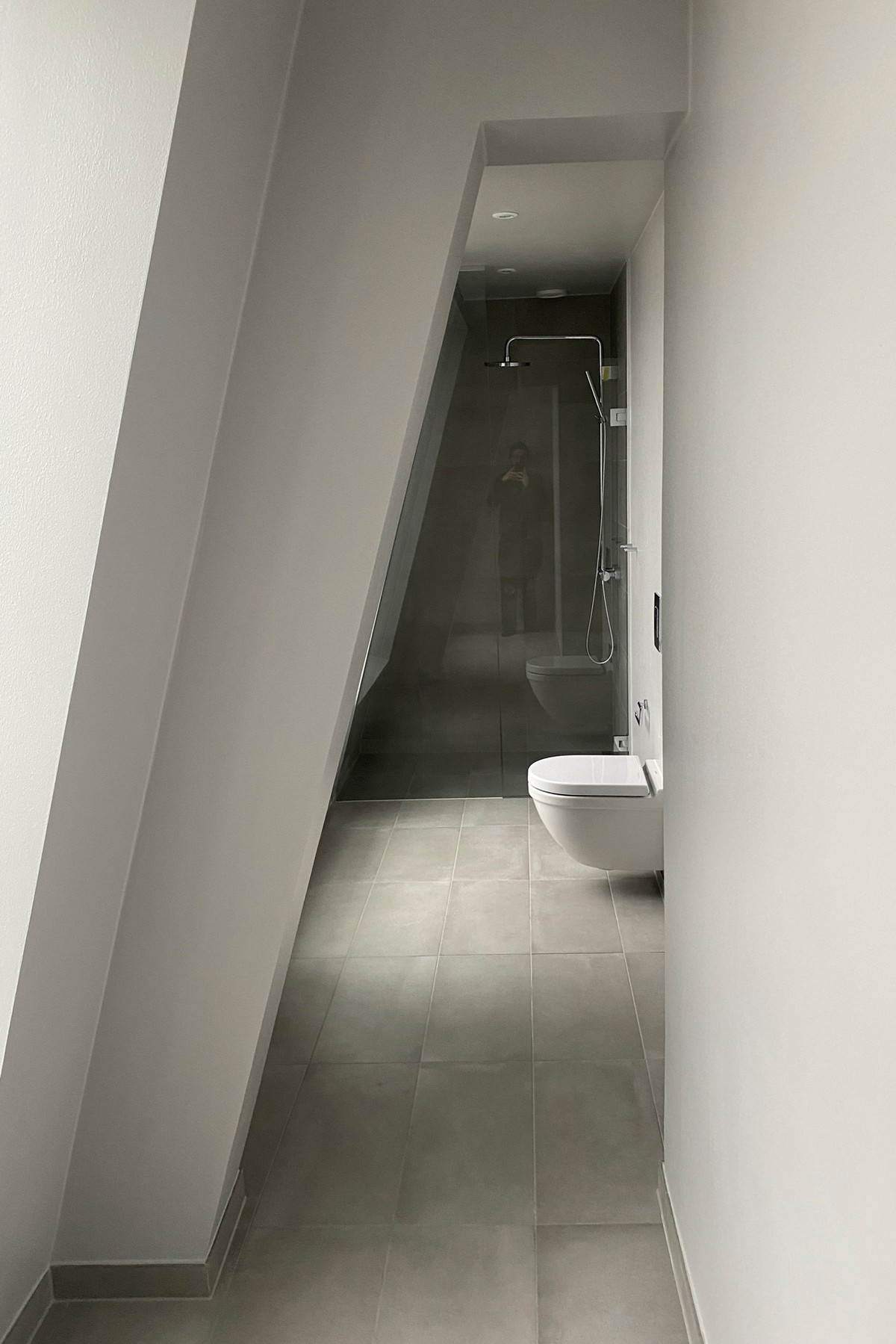
Ill.8.: Bathroom. Apartment: C1, Kongeporttårnet, second floor. Photos and illustrations by Filip Ivarsson.
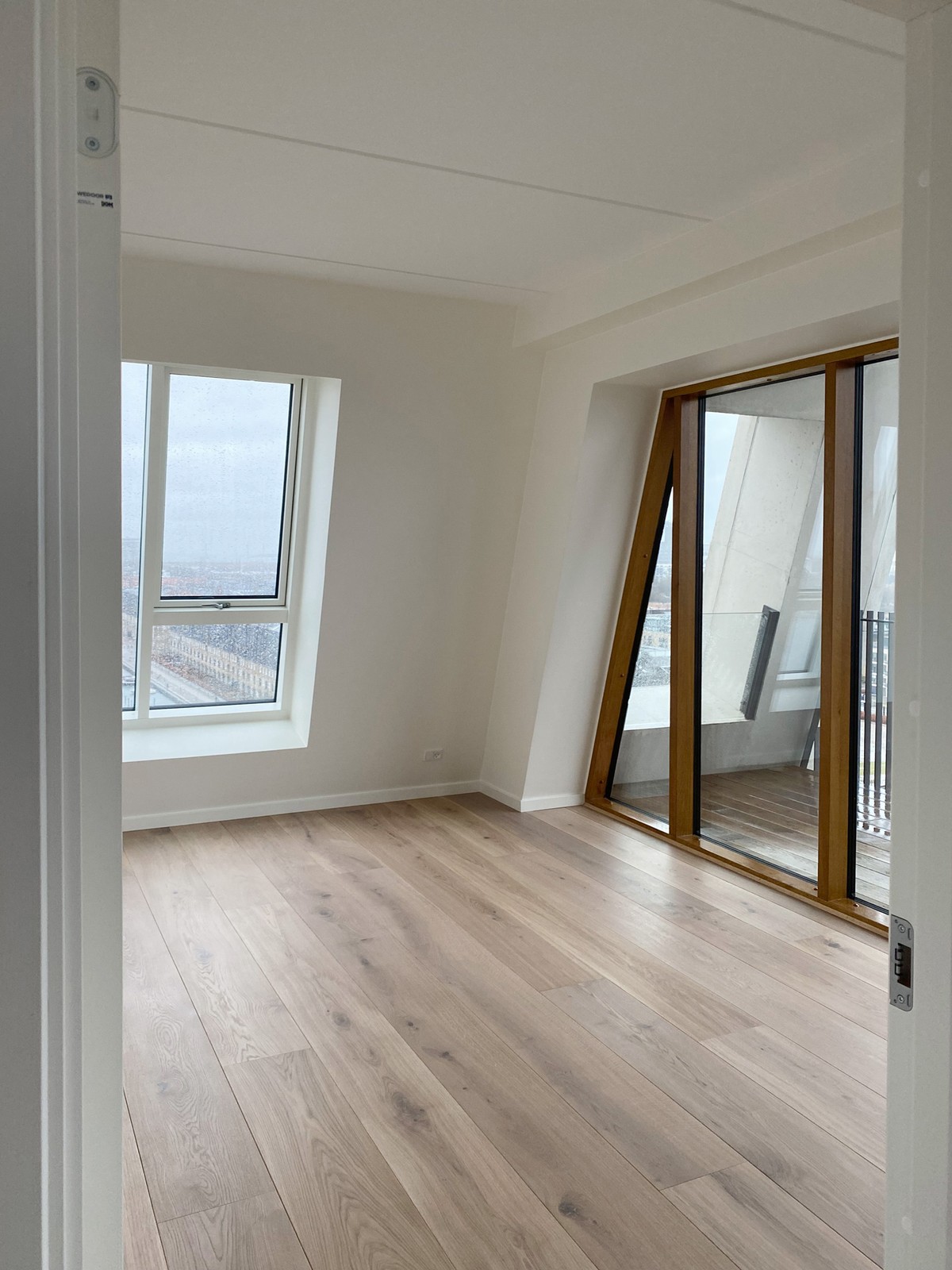
Ill.9.: Bedroom. Apartment: C1, Kongeporttårnet, second floor. Photos and illustrations by Filip Ivarsson.
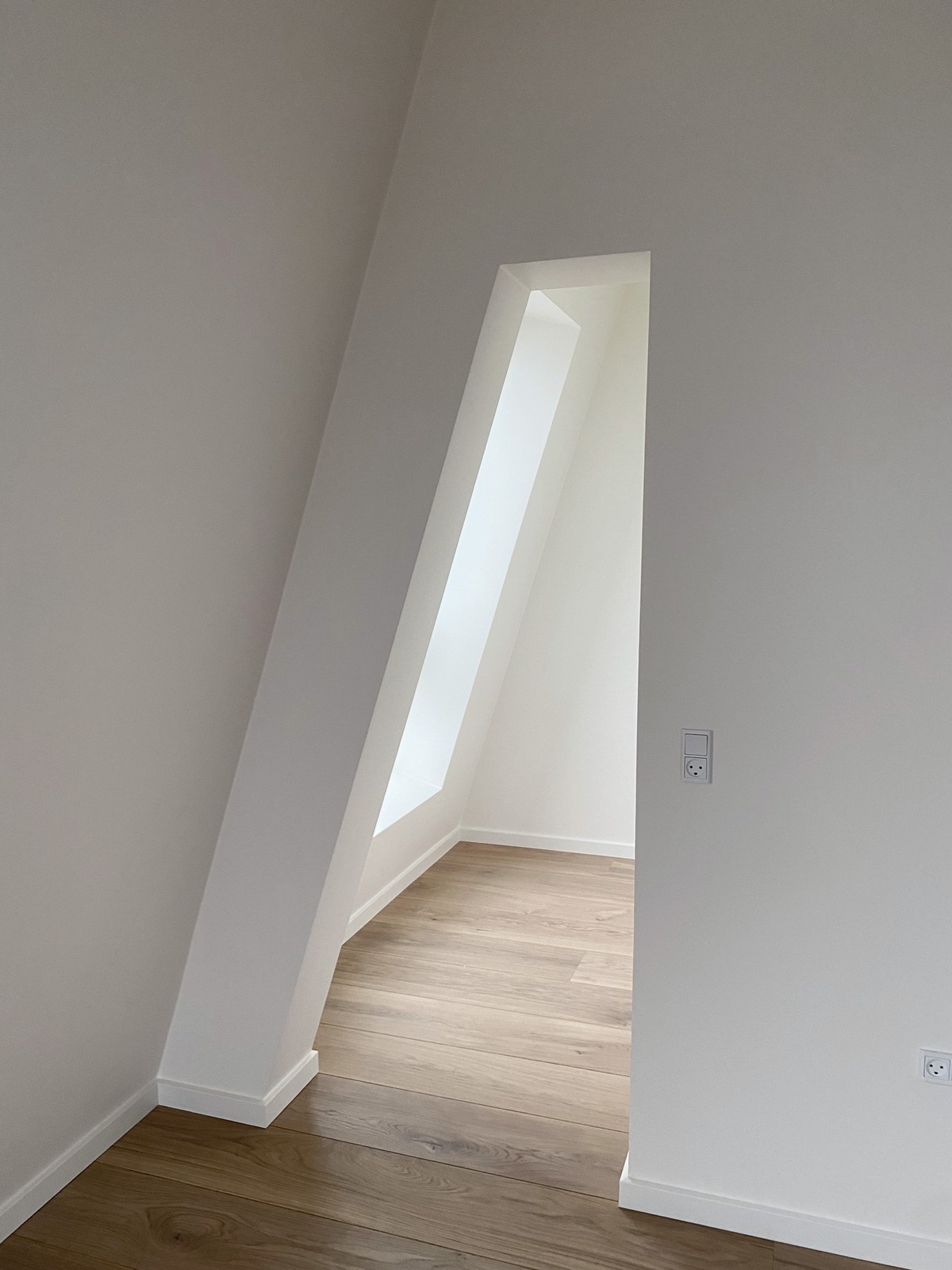
Ill.10.: Available spacet: C1, Kongeporttårnet, second floor. Photos by Filip Ivarsson.
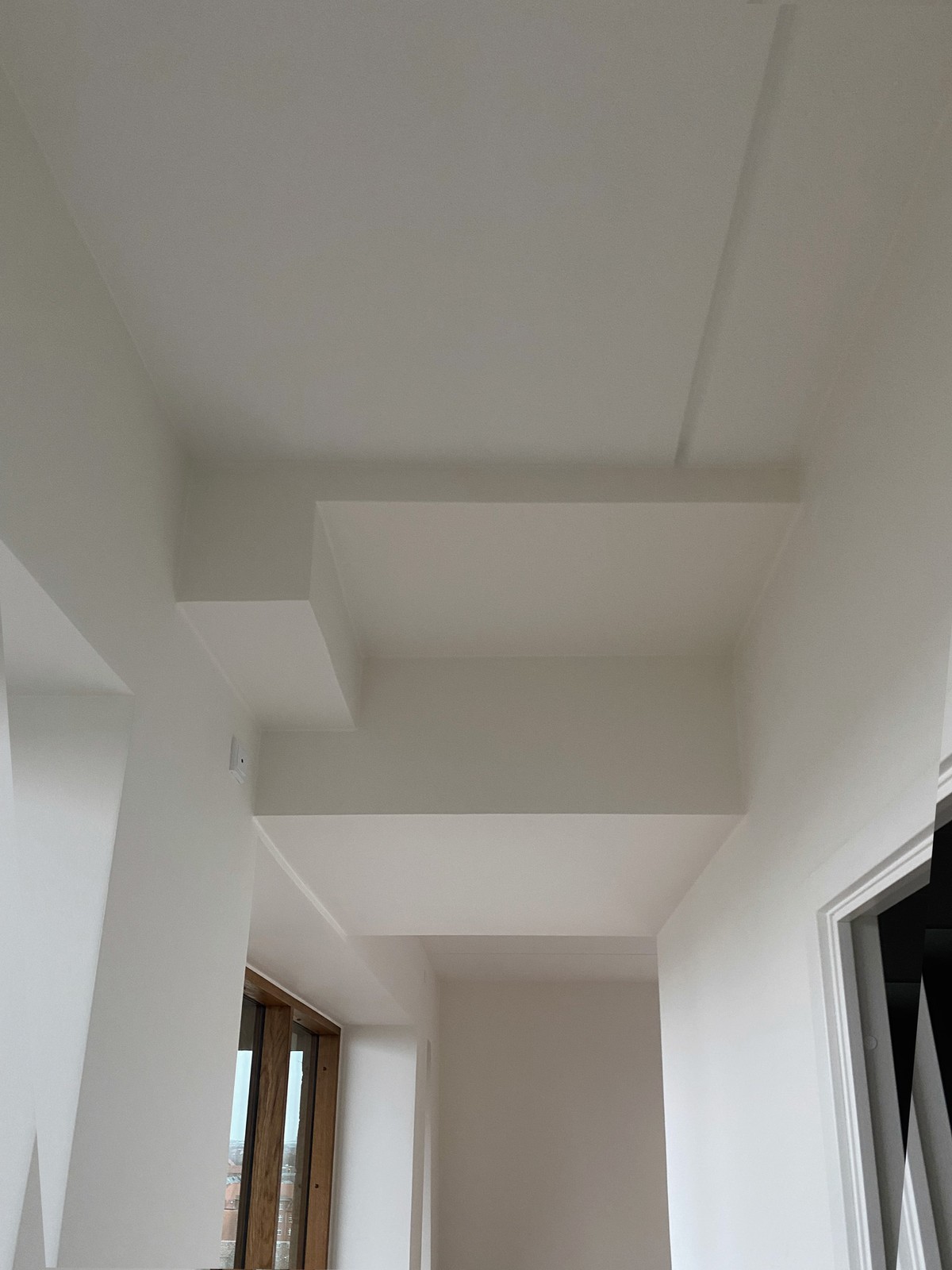
Ill.11.: Ceiling shapes. Apartment: C1, Kongeporttårnet first & second floor. Photos by Filip Ivarsson.
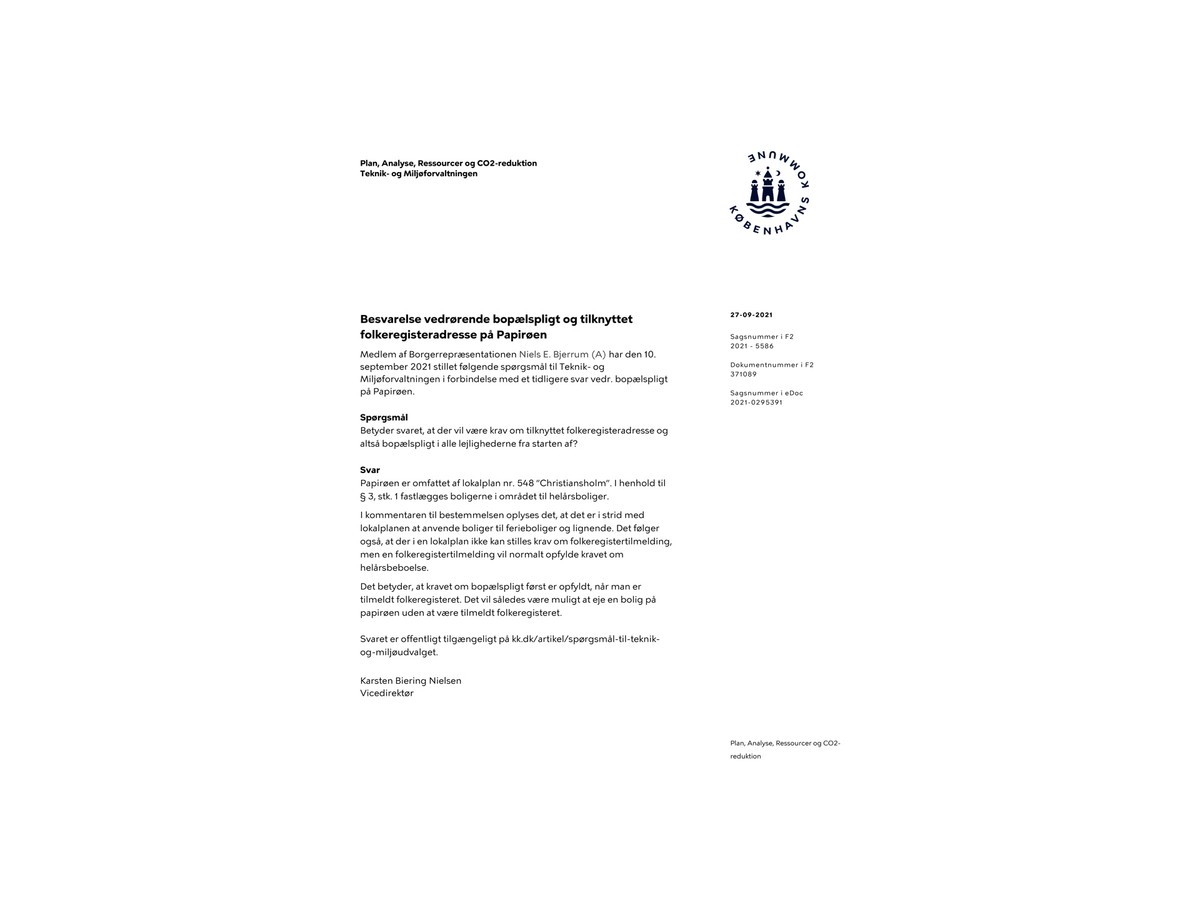
Ill.12. Besvarelse vedr. Bopælspligt og tilknyttet folkeregisteradresse på Papirøen
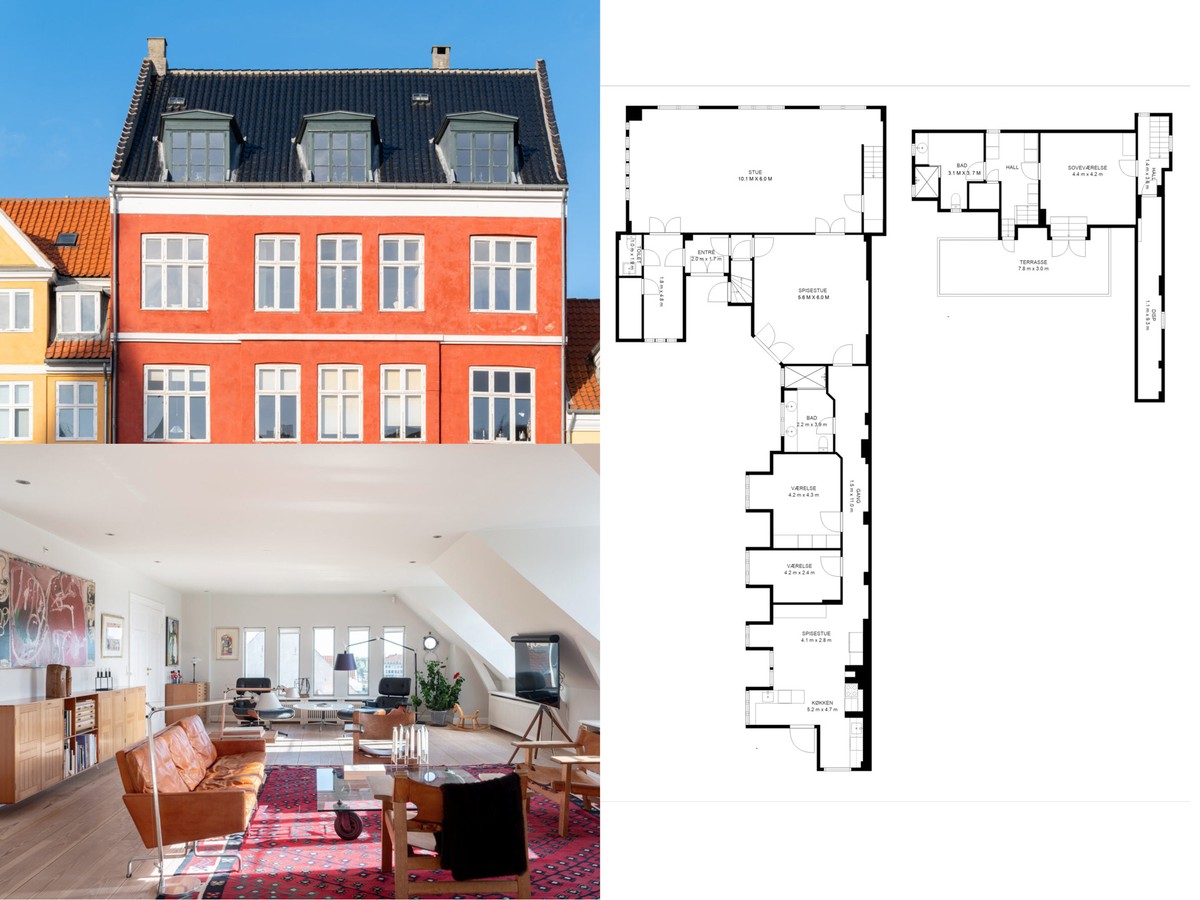
Ill.13. Nyhavn 53, 4. Original Photos and illustrations by Lutzau.
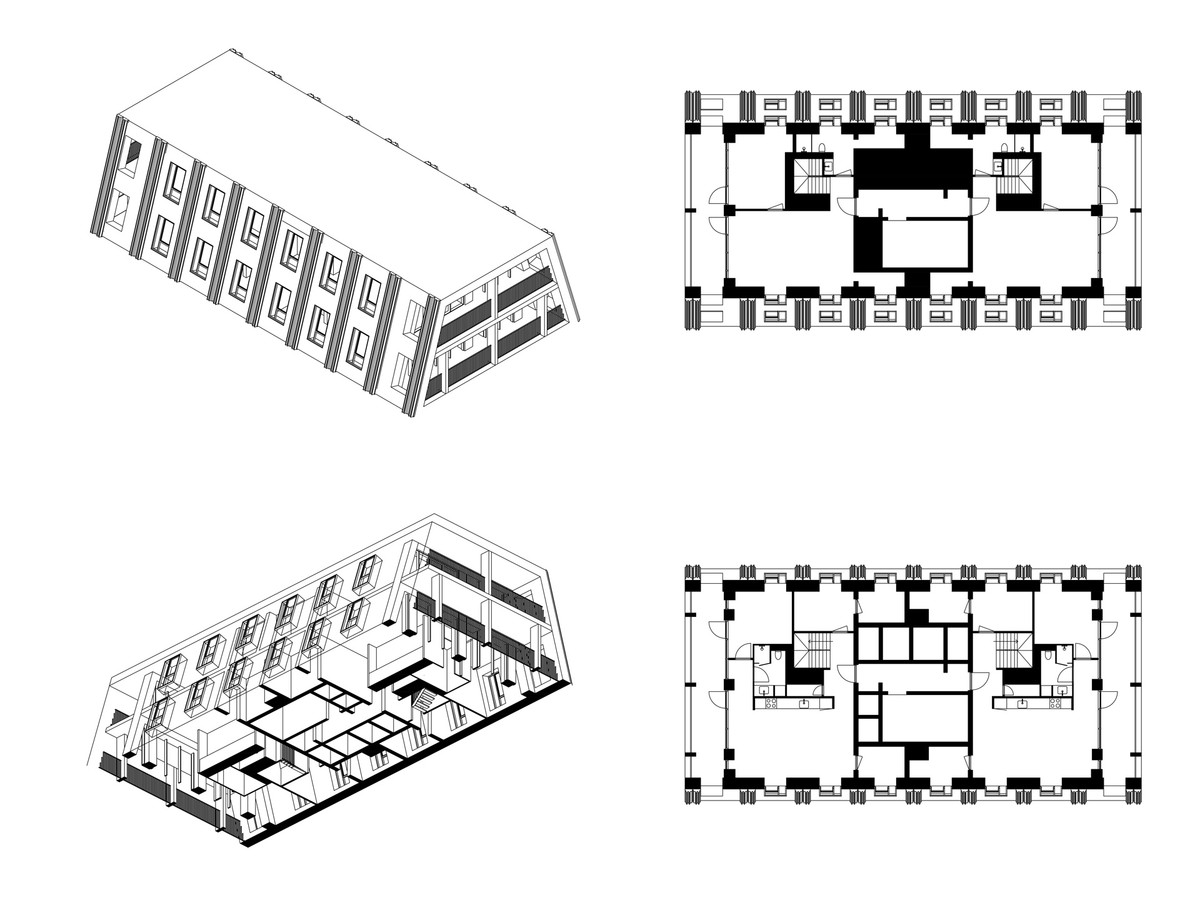
Ill.14. 438 bbr Square meter Vacation home. illustrations by Filip Ivarsson.
It is easy to feel an intuitive aversion towards the ongoing urban development, yet difficult to fully understand and explain all the aspects that contribute to this frustrating feeling [Ill.1]. It seems almost impossible to imagine how everything that is bad would even start to change for the better. This aversion might be rooted in a discrepancy between the washed-out Sustainability catchphrases that authorities in the construction industry are forced to use to continue as they always have.
It might also be connected to the fact that today's construction practices fail not only to address the real housing needs, but also actively contribute to a shift towards viewing housing as a commercial product rather than a home. This is reflected in the declining quality of newly produced housing while prices continue to rise, a phenomenon that was questioned as early as the 2016 Venice Architecture Biennale and has since continued to set new records year after year.
This transformation is not just a reflection of market forces, but also a result of decision-making that fails to prioritize the long-term welfare of citizens and the climate over short-term economic gains. In a time where the climate crisis and economic inequality demand immediate and thoughtful actions, the current pace and direction of development appear both unsustainable and immoral. In my text, I want to explore how overconsumption in housing plays into the housing crisis and how a stop for new constructions could be necessary in order to shine a light on, and even solve, many of the problems that contemporary building culture struggles with.
THE NEED FOR MORE HOUSING
Every element in modern buildings, from the smallest screws to the massive concrete elements, is part of a chain of resource extraction and processing that has profound effects on our environment. This process extends far beyond construction sites and impacts the global climate, water sources, biodiversity, and more. There are many examples, from large-scale mining projects to deforestation for timber production, all contributing to a polycrisis. In addition, a survey of 1,008 Copenhagen residents aged 18-80, conducted by A&B Analyze, revealed growing concern among the city’s residents about their own and their children’s future ability to continue living in the city: 70% of the participants are worried they could not afford a new home if they had to move from their current one. This increasing concern clearly points to a rising need for affordable housing, crucial for maintaining Copenhagen’s character as an open and inclusive city.
And even though urban development is a very complex landscape, requiring collaboration across many disciplines and sectors, balancing many objectives, sometimes contradicts each other. The feasibility of halting all construction remains in question, but the need for a critical examination of the necessity of any future project is, at this point, no longer up for discussion. It is, therefore, long overdue that we critically question and reevaluate whether exclusive, speculative luxury housing projects serve a meaningful purpose or have become obsolete and should be considered relics of the past.
PAPIRØEN
To hopefully better understand these high-end projects, their role, and how it reflects the broader society's needs, I want to examine Papirøen. One of the latest major luxury housing projects in Copenhagen, officially known as Christiansholm. This artificial island used to store paper for one of Denmark's largest newspapers until the early 2000s. After the paper storage closed, Papirøen opened to the public in the early 2010s, quickly becoming a popular destination, thanks in part to Copenhagen Street Food, Copenhagen Contemporary, and the opportunity to sit along the canal, breathing new life into the former industrial area.
Around 2012, the transformation of Papirøen began when By & Havn sold the area to the consortium CØ P/S, consisting of Danica Ejendomsselskab ApS, Unionkul Ejendomme, and Nordkranen A/S Ejendomsudviklingsselskab. These actors took on the responsibility of the overall development of the project. In October 2015 the project took a more defined shape when By & Havn invited seven architectural firms, including names like OMA, COBE, MVRDV, and Henning Larsen Architects, to a closed competition aiming to design a new vision for Papirøen. This vision included a mix of private and public housing construction, as well as spaces intended for culture, leisure, and commercial activities. COBE was chosen as the winner, and a new detailed plan was adopted in 2017, which included between 270 to 340 housing units, with 25% of these designated as public housing, a hotel, and a range of public spaces and facilities. In 2018, the demolition of the old industrial buildings began. The following year, 2019, NCC won a contract worth 1.2 billion Danish kroner and entered into a joint venture with CØ P/S, where NCC served as the main contractor and CØ P/S acted as the developer. Construction started in 2020, and after four years of intensive building, the project is finally complete. ”Paper Island, the Cultural Crown Jewel of Copenhagen” according to Jens Kramer Mikkelsen, the then CEO at By & Havn.
THE RESIDENCES
I arranged a viewing with a salesperson affiliated with the project to take the last opportunity to personally experience the last building opportunity in Inderhavnen. The layout of some of the apartments I visited can only be described as very poorly executed, and even worse thought out. In this case, it's not about any aesthetic literacy developed through studies to discern that these homes are very poorly designed. Upon entering the most expensive apartment, the first thing you encounter is a very odd 600 mm wide door leading into a 1895 mm x 645 mm, what I would describe as disposable space, too narrow for someone slightly broader than myself to enter, and about 1300 mm too deep to function as a closet. This is not the most astonishingly thoughtless aspect of this 213 sqm two-story apartment priced at 30 million Danish kroner. The first floor consists of a kitchen/living room, two bedrooms, one of which has access to the narrow but long balcony, a bathroom/toilet/utility room, and two disposable rooms assumed to be for storage, as the sloping walls challenge any form of storage in the interior. Finally, there is a staircase to the second floor. The second floor comprises a bedroom with access to a similarly narrow but slightly shorter balcony, a lounge with balcony access through an 800 mm door, and two small rooms with such oddly designed doors that you have to enter sideways, and a shower/bath.
The space in these apartments feels significantly smaller than the square meterage suggests; the sloping walls and the very small and bizarrely designed disposable rooms, along with the narrow but long balconies, make the 213 sqm apartment feel surprisingly small, even without furniture. The two larger bedrooms both have a glass wall facing the balcony and a sloping outer wall, making it very difficult to fit more than a bed and possibly a clothes rack. The larger living rooms face the same issue: Sloping walls, glass partitions towards the balcony that cannot be opened, and narrow passages make the available wall space for a painting, bookshelf, or any other tall furniture practically nonexistent. While 213 square meters sounds like a lot, especially for someone living in 30 sqm, much of the included area is calculated from a point where the ceiling height is 1600 mm, and the balcony, or rooms whose design and size make it impossible to even have a desk, are excluded, leaving not much usable space.
The interior walls are made of white-painted plaster-boards varying between 50 mm and 100 mm in thickness, while the exterior walls slope inward at about 72 degrees, meaning that when a 1800 mm tall person touches the ceiling with their forehead, there is still 540 mm to the skirting board. With a distance of 1800 mm between each other, large windows are set in the sloping exterior wall. To preserve the facade's rhythm, with these enormous window sections, four very small rooms on the verge of being totally unusable are created on both floors. The ceiling is white-painted concrete, varying between 2200 mm and 2600 mm in height, with very peculiar transitions. Except for the bathroom, where the oak flooring stands out, it's the only place that feels like an attempt was made to choose a luxurious material. All other interiors, such as the kitchen, bathroom, stairs, doors, etc. are of the same low standard as any newly produced turnkey housing project from 2010 onwards, and seem chosen more for their replacability.
During my guided tour at Papirøen there were moments when I questioned my ability to convey what was said without it seeming surreal. The anecdotes presented, intended as selling points, felt more like unwitting admissions of crimes they had now gotten away with. Towards the end of the tour, I asked if it was possible to record our ongoing discussion. Although more information was exchanged during the tour, I only refer to what I was permitted to record.
Today, it is forbidden to build vacation homes in Copenhagen; all development must be with the intent as all year housing. When I asked the salesperson if it would be possible to not register my address on Papirøen and still buy an apartment there, without hesitation they told me that that would not be a problem.
The person explained that Denmark cannot force anyone to register in the country, meaning foreign investors can purchase apartments without registering their address in Denmark. The law of bopælspligt only starts to apply after the first time someone has registered their address there. Essentially, a developer can sell an apartment to whoever they want, and a person owning an apartment on Papirøen, without having had it registered as their address, can sell it to whoever they want, but a person actually living on Papirøen with their primary address registered there can only sell to someone else that will register their address there.
As a result, these apartments can be sold and resold freely in the international market, maintaining high resale values by not being bound to the local housing regulations that apply, once an address is registered. This practice essentially nullifies the intent of the law, as it encourages the sale of properties to those who do not intend to reside in them.
All that is required is to specify in the bid that the purchase is contingent on not needing to register an address on the apartment, rendering the law ineffective from the perspective of a developer with an international market in mind. This clearly highlights the target buyer of these housing projects, the living quality does not matter – it's not a home, it's a commercial product for investing.
To make sure that I was not misunderstanding I asked a real estate agent, whether it was indeed possible to completely avoid the residency obligation. They told me about how two of the most expensive apartments, priced at 35 million and 30 million Danish kroner respectively, were recently sold to the same person, who is now in contact with architects to merge them into a single apartment of nearly 430 square meters. This apartment will not be the person's primary residence, but a second home. I have partially based this on measurements I took in the apartment and partially on floor plans to model this enormous second home the realtor was referring to. This vacation home will likely remain empty most of the time.
Even if we set aside considerations of better or worse quality of living, and focus solely on the size of the property, an apartment 300 meters away offers more square meters for the same price as those at Papirøen. The main difference lies in the usual rules of the local housing market, that apply to this nearby property. The realtors know this, and anyone who spends more than five minutes on any housing brokerage website knows this, which makes it even more noteworthy that all apartments priced over 30 million kroner, except one, were sold out before the construction was even completed.
On the other side of the inner harbor lies Krøyer Square, built in 2017. Its residents were disturbed by the public's access to their deck, where young people gathered to listen to music, swim, and drink beer. This experience has led to a new way of thinking about outdoor spaces, with considerations for restaurants and cafés to offer services in these areas. However, probelamizing this aspect to a real estate agent from Papirøen, I was told that architects have learned from previous construction projects. Since direct restriction of public access is not possible, they have experimented with new ways to use the outdoor spaces, I was told.
Not just the apartments, but also the area itself, will be surrounded by this near-gated community feel with strategic limitations on public access to outdoor areas, creating a more exclusive and controlled atmosphere. The aim is to create a more controlled environment. To stay in the area, one must buy a beer, which doesn’t apply to the residents who wish to use the facilities for personal recreation, such as swimming.
The realtor concludes the description of the vision for the new Papirøen: Before the renovation, the area was known as Copenhagen Street Food, a food mecca. The goal is to revive this concept, but for a higher class of people.
In a way, this perspective makes it easier to understand the project. It doesn't matter that many of the rooms are nearly unusable or that the sharp slope of the walls makes any form of storage almost impossible. That's not the point, Papirøen is not a project suffering from talentless architects' carelessness or arrogance; COBE could undoubtedly have done better than this. But the purpose of the project is not to create homes, the sole function of the residences is to be a valuable commercial product to be sold as quickly as possible, for as much money as possible. It just happens that the safest ways to achieve this involve taking living parts of the communal space that makes up our city, and replacing them with empty facades. An economic investment in the form of millions of tons of concrete, on the last remaining building plots of Inderhavnen. Scenery to facilitate a bizarre theater act for the absolute richest individuals on Earth, at our collective expense.
RENEWAL
The founder and public face of COBE Dan Stubbergaard had previously explained in a presentation at the architecture school, that the project began to go wrong already when it was decided to be built with a totalentreprenad contract, which effectively ties the architect's hands, constantly having to defend each decision against an economic profit perspective.
It's not Dan's or COBE's own fault, nor is it directly anyone's fault. It's not By & Havn's fault either; they are just fulfilling their mission—to raise money to expand the metro. It's not NCC's fault either; they are just doing their job and trying to make as much profit as possible. The municipality of Copenhagen, CØ P/S, the realtors, and everyone else involved have surely done their best. The problem is that everything went exactly according to plan, without scandal or conflict, completely within the legal boundaries, and now here stands Paper Island, Copenhagen's cultural crown jewel, largely uninhabitable and extensively unused, while proudly boasting the active strategies taken to reduce public accessibility.
Studying this project has truly helped me dissect this generation's construction industry and opened my eyes to the inevitable transformation that will be required, a task that my generation of architects will need to undertake ourselves.
I am very optimistic about the future generations of architects. Unlike actors in the current building industry, every ambitious, talented, and driven individual I've encountered from my generation genuinely acknowledges the environmental challenges we face. We won't win all at once, change won't happen overnight, but the architects who are informed and genuinely care about the climate and the crisis we are facing, are rapidly replacing those who merely use the rhetoric of change for marketing purposes.
When can we acknowledge that the people we now allow to influence how our city and society should be shaped, are not geniuses? They don't have a magical ability to see something we can't see or a unique ability to understand a layer of reality that the rest of us don't have access to. When we finally can see, that they are just a collection of ordinary fathers and mothers, fumbling with a PFD on their new phone. Not evil, just ignorant. The frustration turns to compassion. It is never easy to take the car keys from one's parents and explain that they now pose a danger on the road. But the current situation has now forced us to grow up quickly. We are already the ones that know best, and therefore it is we, who must stop them from continuing to harm the climate, the city, themselves, and us with their ignorance.
Because unfortunately they have proven again and again, that as long as this is allowed, as long as it is accepted, these confident eccentrics will promise and insist that they are listening, but continue to hold the same old closed competitions and build the same old concrete buildings for the same old segments of the population as they always have.
STOP
"If everything is stopped, everything can be questioned, bent, selected, sorted, interrupted if necessary for good."
A construction moratorium should not be viewed as a necessary evil, but as a goal we must aim for and a victory if achieved, even if only temporarily. We need to recognize the revolution we are part of, and see through those who currently stand above us, holding their positions based on past merits, whose best action now would be to step aside and stop blocking true change.
Does a building stop mean the death of architecture? No, on the contrary, it signifies a rebirth, a radical rewriting of the design and construction process, liberated from the current imperative for growth. Requiring a heightened focus on the existing, fostering a culture of repair and care, contributing to a more engaged, conscious, and responsible approach to our built environment, no longer as a passive consumer but an active participant with a sense of ownership and responsibility. Acknowledging the need to stop building at the same explosion-like speed as we currently are, is not to deny progress, but an invitation to deeper reflection on what true success means. Radically new methods in both construction and conservation, where climate action is integrated with the preservation of cultural heritage. It's not just buildings of historical significance that deserve preservation; the vast majority of the building stock from the 1950s onward also holds value. Even though some buildings require transformations or restorations, they contain exceptional value and architectural potential, that we must utilize. Implementing a construction stop is looking like a less and less radical idea, and more like a necessity, with each day that passes.
There is a real risk that a building stop could exacerbate the housing crisis. Charlotte Malterre-Barthes from the research/education project A Global Moratorium on New Construction suggests that we need a halt in new building projects to address the ecological and social injustices caused by the construction sector. However, she also foresees that a construction stop would lead to a massive shift in value to the existing building stock, as well as to infrastructure and even existing materials. Therefore, it is necessary to reconsider our approach to the built environment and ownership to ensure it benefits society at large, not just property owners.
Matti Kuittinen in Building within planetary boundaries: moving construction to stewardship states: "The highest priority must be to solve spatial needs by improving the use of existing spaces. We should focus on how we use and allocate the housing spaces we already have. Particularly in Denmark, which has one of the highest square meters per capita in Europe, with 54 m2 per person.” Taxation of housing overconsumption could be a tool to counter the current trend towards larger homes and instead encourage more compact and energy-efficient living.
Architect Nikolaj Callisen Friis from Lendager argues in Byrummonitor for progressive housing planning to reduce the CO2 footprint. He proposes an income-neutral square meter-based fee to encourage living on fewer square meters per person. This measure aims to invigorate the housing market, reduce resource usage, and promote a more sustainable lifestyle. Implementing such measures would not only help to reduce the environmental footprint, but also make it less profitable to view the housing market as an arena for economic speculation. This could lead to stabilization or even a decrease in housing prices in major cities, promoting a more inclusive housing market.
Vincent Bevins in If We Burn writes: "Winning all at once, that's Hollywood.” It's not about if we impose a construction stop, then Mordor falls, the tower crumbles, the Death Star explodes, and people dance in the streets. That’s not what I believe or argue for.
There is no singular solution that will change everything and let us win all at once, but we have got to start somewhere. This transition would not happen overnight and would require political efforts that promote alternative housing supply models, such as housing cooperatives, community-driven housing projects, or new forms of ownership, which can offer sustainable solutions to the housing crisis without necessarily relying on a total construction stop. It’s a long and complicated process that requires a responsible and reflective approach.Tools and measures introduced should be thoughtfully directed at those expected to settle for less, and therefore we need to carefully consider how less can have different meanings from household to household. This concern feels especially relevant as we see the continued construction of increasingly exclusive speculative luxury housing projects alongside discussions of reform.
Our work as architects must stop being like firefighters trying to extinguish the housing needs and reactively keep building more. Instead, our role should more closely resemble that of a gardener, nurturing and caring for the environment that already surrounds us and point the way to a new brighter future.
Danmarks Statistik. 2023. “Prisstigning på boligmarkedet.” https://www.dst.dk. https://www.dst.dk/da/Statistik/nyheder-analyser-publ/nyt/NytHtml?cid=46367.
Agenda, Davos. 2021. “How much carbon does the construction industry emit?” The World Economic Forum. https://www.weforum.org/agenda/2021/01/planet-warming-emissions-buildings-construction-climate-goals-risk/.
Nielsen, Regnar M. 2021. “Manglen på betalelige boliger er vigtigste valg-emne.” fagbladetboligen.dk. https://fagbladetboligen.dk/alle-nyheder/2021/august/kobenhavnerne-manglen-pa-betalelige-boliger-er-vigtigste-valg-emne/.
"Paper Island, The Cultural Crown Jewel of Copenhagen" – Jens Kramer Mikkelsen, the then CEO at By & Havn.
Latour, Bruno. 2020. “Imaginer les gestes-barrières contre le retour à la production d'avant-crise.” Analyse Opinion Critique. https://aoc.media/opinion/2020/03/29/imaginer-les-gestes-barrieres-contre-le-retour-a-la-production-davant-crise/.
Latour, Bruno. 2020. “Imaginer les gestes-barrières contre le retour à la production
d'avant-crise.” Analyse Opinion Critique.
Malterre, Charlotte. 2023. “A Moratorium on New Construction? Beyond the Provocation: A Call for Systemic Change from Access to Housing to Construction Protocols.” Harvard Graduate School of Design. https://www.gsd.harvard.edu/2023/02/a-moratorium-on-new-construction-beyond-the-provocation-a-call-for-systemic-change-from-access-to-housing-to-construction-protocols/.
Kuittinen, Matti. 2023. “Building within planetary boundaries: moving construction to stewardship.” Buildings & Cities. https://journal-buildingscities.org/articles/10.5334/bc.351.
“Antal boligkvadratmeter pr. person.” 2023. Danmarks Statistik. https://www.dst.dk/da/Statistik/emner/borgere/boligforhold/personer-i-boliger#.
Callisen Friis, Nikolaj. 2023. “Indfør en afgift, så få beboere på mange kvadratmeter skal betale mere.” byrummonitor.dk. http://byrummonitor.dk/9380587.
Bevins, Vincent. 2023. If We Burn: The Mass Protest Decade and the Missing Revolution. N.p.: Headline Publishing Group.
Næste: Beyond byggestop: Alternative tales for extreme reduction
[Ill.1] Door stop, Apartment: C1, Kongeporttårnet, second floor. Photo by Filip Ivarsson.
Ill.2.: Screenshots from digital toure of a 2-room public-housing “family apartment” Available on:https://tours.360company.dk/tour/provebolig-papiroen-2v
Ill.3. :Available space - 655mm x 1935mm. Apartment: B1, Operatårnet first floor. Photos and illustrations by Filip Ivarsson.
Ill.4.: Kitchen/living room. Apartment: C1, Kongeporttårnet, first floor. Photos and illustrations by Filip Ivarsson.
Ill.5.: Available space. Apartment: C1, Kongeporttårnet, first floor. Photos and illustrations by Filip Ivarsson.
Ill.6.: Living room wall angle of 72°. Apartment: C1, Kongeporttårnet, second floor. Photos and illustrations by Filip Ivarsson.
Ill.7.: Balcony. Apartment: C1, Kongeporttårnet, second floor. Photos and illustrations by Filip Ivarsson.
Ill.8.: Bathroom. Apartment: C1, Kongeporttårnet, second floor. Photos and illustrations by Filip Ivarsson.
Ill.9.: Bedroom. Apartment: C1, Kongeporttårnet, second floor. Photos and illustrations by Filip Ivarsson.
Ill.10.: Available spacet: C1, Kongeporttårnet, second floor. Photos by Filip Ivarsson.
Ill.11.: Ceiling shapes. Apartment: C1, Kongeporttårnet first & second floor. Photos by Filip Ivarsson.
Ill.12. Besvarelse vedr. Bopælspligt og tilknyttet folkeregisteradresse på Papirøen
Ill.13. Nyhavn 53, 4. Original Photos and illustrations by Lutzau.
Ill.14. 438 bbr Square meter Vacation home. illustrations by Filip Ivarsson.